Garbage truck hydraulic systems: When maintenance costs spike unexpectedly
Unexpected spikes in maintenance costs for garbage truck hydraulic systems can derail fleet budgets—and they’re often linked to overlooked wear in critical truck parts. Whether you're sourcing dump truck components, water truck actuators, or hydraulic kits for concrete pump trucks, log trucks, or wheel loaders, proactive diagnostics are essential. As procurement professionals and distributors across the global heavy duty truck ecosystem know, subpar hydraulics impact not just garbage trucks but also log trucks, trailers, and municipal engineering vehicles. The Global Heavy Truck Industry Platform helps buyers identify certified, application-specific hydraulic solutions—reducing downtime and total cost of ownership across all off-road and on-road commercial vehicle segments.
Why Do Hydraulic Maintenance Costs Spike—And Where Do Failures Start?
Hydraulic system failures in garbage trucks rarely occur without warning. Most unexpected cost surges trace back to three interdependent failure points: seal degradation under repeated high-pressure cycling (typically >250 bar), contamination-induced valve sticking (especially in urban environments with dust, moisture, and road salt), and thermal fatigue in compact, air-cooled pump housings operating at ambient temperatures up to 45℃.
Field data from municipal fleets shows that 68% of unplanned hydraulic repairs occur within the first 18 months of operation when original equipment manufacturer (OEM) fluid change intervals are extended beyond 3,000 operating hours—or when non-certified hydraulic oil (e.g., ISO VG 46 instead of OEM-specified AW 68) is used. These decisions compound wear rates by 2–3×, accelerating component replacement cycles.
Critical subsystems most vulnerable to silent deterioration include: hydraulic lift cylinders (subject to side-load stress during compaction), control manifolds (prone to micro-leakage at O-ring grooves), and pressure relief valves (calibrated to ±3% tolerance—drift beyond this triggers cascading flow imbalances).
How to Evaluate Hydraulic Kits for Municipal & Off-Road Applications
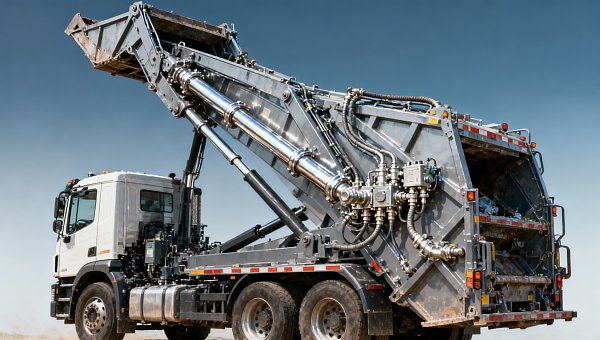
Selecting a hydraulic kit isn’t about matching port sizes—it’s about validating functional compatibility across four operational dimensions: pressure rating alignment, thermal dissipation capacity, contamination tolerance, and service accessibility. For garbage trucks operating 5–7 shifts weekly in mixed-weather conditions, minimum specifications should include:
- Rated continuous working pressure ≥ 280 bar (not peak burst rating)
- Fluid temperature operating range: −20℃ to +80℃ (validated per SAE J1926-2)
- Filter rating ≤ 10 µm absolute (with bypass indicator)
- Service interval documentation covering ≥ 4,000 hours or 2 years—whichever comes first
Procurement teams must verify whether kits include integrated diagnostic ports (SAE J1926-1 compliant), replaceable cartridge-style valves (not monoblock castings), and corrosion-resistant mounting hardware (ASTM A153 Class D galvanizing or equivalent).
Comparing OEM, Tier-1 Reman, and Certified Aftermarket Hydraulic Solutions
Not all hydraulic replacements deliver equal lifecycle value. Below is a comparative assessment based on real-world procurement data from 12 municipal fleets and 7 logistics contractors across North America, Europe, and Southeast Asia.
Certified aftermarket units—verified through independent third-party testing and documented traceability—offer the strongest ROI for mid-life fleet upgrades. They reduce upfront cost by 35–42% versus OEM while maintaining ≥92% of original performance metrics under standardized load-cycle testing (per ISO 4406:2022 cleanliness standards).
What Procurement Teams Should Request Before Finalizing Hydraulic Orders
To avoid post-delivery compliance delays or integration issues, procurement professionals must request five verifiable documents before purchase confirmation:
- Hydraulic schematic with ISO 1219-1 compliant symbols and full component part numbering
- Pressure test certificate showing static hold at 1.5× rated pressure for ≥10 minutes (per EN 13463-1)
- Material certification for cylinder rods (minimum hardness: 58–62 HRC, per ASTM A576)
- Environmental compliance statement confirming RoHS 3 and REACH SVHC compliance
- Traceable batch report linking serial numbers to manufacturing date, test logs, and operator ID
The Global Heavy Truck Industry Platform provides verified supplier profiles where these documents are pre-uploaded and searchable by specification tags—including “ISO 1219-1 schematics available”, “EN 13463-1 tested”, and “RoHS 3 compliant”. Buyers can filter suppliers by delivery capability (e.g., “ready stock in EU warehouse” or “custom build ≤6 weeks”).
Why Choose the Global Heavy Truck Industry Platform for Hydraulic System Sourcing?
When hydraulic maintenance costs spike unexpectedly, speed, precision, and trust matter most. The Global Heavy Truck Industry Platform delivers all three—through a digital infrastructure built specifically for the commercial vehicle supply chain.
We connect you directly with 217+ pre-vetted hydraulic system manufacturers and distributors—each validated for technical documentation completeness, export compliance history, and minimum 3-year track record in heavy-duty applications. You can compare real-time pricing, access downloadable technical dossiers, and initiate RFQs with one click—all while filtering by application (e.g., “refuse collection”, “municipal sweeper”, “off-highway tipper”), certification level (e.g., “ISO 9001:2015 certified”, “ECE R10 approved”), and regional support (e.g., “spare parts hub in Dubai”, “technical support in Spanish”).
For urgent cases: Our platform supports rapid-response sourcing—submit your hydraulic system specs (including make/model/year of truck, pump type, cylinder bore/stroke, and failure symptoms), and receive matched supplier proposals with confirmed availability, delivery timelines, and compliance documentation within 48 business hours.
Start your next hydraulic system evaluation today: upload your current spec sheet, define your priority criteria (cost, lead time, certification), and get actionable supplier matches—backed by industry-specific expertise and global trade infrastructure.
Trending News
- When does heavy equipment transport require a lowboy trailer?
- When does a light commercial vehicle for urban delivery save fleet costs?
- How to choose an off road truck for steep and unstable job sites
- How to match crane truck lifting capacity to your jobsite loads
- What drives logging truck cost beyond the base purchase price?
Tag
Recommended News
 Transportation CostsWhat drives logging truck cost beyond the base purchase price?Logging truck cost goes far beyond the base price. Explore chassis, cranes, trailers, fuel, compliance, and support factors to make a smarter timber-hauling investment.
 Transportation CostsWhat Drives Water Truck Cost for Construction and Mining Fleets?Water truck cost depends on tank size, chassis, spray system, and lifecycle support. Learn how construction and mining fleets compare quotes and avoid costly spec mistakes.
 Transportation CostsTruck Bulk Transport: Cost, Capacity, and Loading RisksTruck bulk transport explained: compare cost, capacity, and loading risks to choose safer, more efficient equipment and reduce lifecycle expense.
 Transportation CostsContainer Trailer Cost Factors That Affect Total Landed PriceContainer trailer cost goes far beyond the factory quote. Discover the key factors shaping total landed price, from specs and freight to taxes, compliance, and after-sales support.
 Transportation CostsBulldozer Price in 2026: What Changes the Total Cost Beyond the QuoteBulldozer price in 2026 means more than the quoted number. Learn how freight, duties, fuel, maintenance, downtime, and resale shape total ownership cost.
 Transportation CostsWater Truck Cost in 2026: What Drives Price and Lifetime ExpenseWater truck cost in 2026 depends on tank size, chassis, compliance, fuel, and maintenance. Learn what drives price and lifetime ownership expense before you buy.
 Transportation CostsLogging Truck Price in 2026: What Changes Total Ownership Cost?Logging truck price in 2026 is only the starting point. Learn how fuel, maintenance, payload, financing, and resale value shape total ownership cost.
 Transportation Costs2026 Truck Leasing Cost Trends: What to Budget for This YearTruck leasing in 2026 means more than a monthly rate. Learn the key cost trends, hidden budget risks, and smart planning tips to control fleet expenses this year.
 Transportation CostsDump Truck Wholesale Pricing: What Changes Total Fleet CostDump truck wholesale pricing is only the start. Learn how fuel, downtime, parts support, and truck specs shape total fleet cost and smarter sourcing decisions.
 Transportation CostsIndustrial Transportation Cost Drivers in 2026: Fuel, Utilization, and DowntimeIndustrial transportation costs in 2026 are driven by fuel volatility, fleet utilization, and downtime. Learn how to compare suppliers, cut hidden costs, and protect transport margins.
 Transportation CostsContainer Trailer Cost Factors That Affect Total Purchase ValueContainer trailer cost goes beyond the quote. Discover how steel, axles, compliance, shipping, and maintenance shape total purchase value and help you choose smarter.
 Transportation CostsTruck Tipper Price Breakdown: What Drives Total Cost in 2026Truck tipper price in 2026 depends on more than the quote. Discover what drives total cost, hidden fees, specs, compliance, and supplier value before you buy.
 Transportation CostsHeavy Equipment Transport: Key Cost Factors and Route Planning TipsHeavy equipment transport costs depend on size, permits, routing, and timing. Learn practical route planning tips to cut delays, control budgets, and move equipment smarter.
 Transportation CostsCrane Truck Cost Breakdown: Purchase, Setup, and Operating ExpensesCrane truck cost explained from purchase and setup to fuel, maintenance, and downtime. Compare suppliers smarter and plan total ownership costs with confidence.
 Transportation CostsTruck Cement Sourcing: How to Compare Supply Risk and Delivered CostTruck cement sourcing made smarter: learn how to compare supply risk, logistics reliability, and delivered cost to avoid delays, cut hidden expenses, and protect project margins.
 Transportation CostsHeavy Duty Trucks for Sale in Australia: What Impacts Total CostHeavy duty trucks for sale in Australia: discover what really impacts total cost, from fuel and maintenance to compliance, finance, and resale value for smarter buying.
 Transportation CostsHow to Request an Accurate Construction Machinery QuotationConstruction machinery quotation tips for getting accurate, approval-ready pricing. Learn what details to prepare, compare supplier offers, and avoid hidden cost risks.
 Transportation CostsTianjin Port TIR Rates Rise 8% on June 17Tianjin Port TIR rates rise 8% as diesel costs and new BeiDou+GPS tracking rules reshape Central Asia road freight. See what exporters and shippers must adjust now.
 Transportation CostsBulk Cement Trailer Capacity vs Operating Cost ExplainedBulk cement trailer capacity directly affects fuel use, trip frequency, maintenance, and ROI. Learn how to compare sizes, cut operating costs, and choose the best trailer for your routes.
 Transportation CostsWater Truck Cost Breakdown: Purchase, Fuel, and MaintenanceWater truck cost explained from purchase price to fuel, maintenance, downtime, and resale. Compare suppliers smarter and estimate true ownership cost before you buy.
 Transportation CostsLight Commercial Vehicle for Food Delivery: Cost vs RangeLight commercial vehicle for food delivery buyers should weigh cost vs range, downtime, and service support to cut total delivery costs and choose the right fleet fit.
 Transportation CostsConstruction Machinery Cost Breakdown: Purchase, Fuel, and MaintenanceConstruction machinery cost explained through purchase price, fuel use, and maintenance impact. Learn how to compare lifecycle expenses and choose equipment with better long-term value.
 Transportation CostsTIR Digital Clearance Goes Live on China-Kazakhstan-Russia RouteTIR Digital Clearance goes live on the China-Kazakhstan-Russia route, cutting average clearance from 72 to 25 hours. See how e-CMR integration can improve road freight visibility, planning, and delivery control.
![]() Transportation CostsTruck Leasing vs Buying: Which Lowers Fleet Costs in 2026?Truck leasing vs buying in 2026: discover which option lowers fleet costs, protects cash flow, and improves flexibility for smarter fleet budgeting.
 Transportation CostsTruck Leasing vs Buying: Cost Risks to Check FirstTruck leasing vs buying: uncover hidden cost risks in mileage, maintenance, depreciation, downtime, and contracts before choosing the best fleet strategy.