Chengdu Heavy-Load Transport Restriction on Apr 21, 2026 Affects Export Logistics
On April 21, 2026, temporary traffic restrictions were implemented on the Guanghan–Xinjin–Meishan corridor in Chengdu, impacting land-based transit timelines for exported truck chassis and specialized vehicle components—key cargo categories for China-Europe rail freight consolidation at Chengdu International Railway Port.
Event Overview
Effective April 21, 2026, Chengdu Traffic Police imposed temporary traffic control along the Guanghan to Xinjin–Meishan route. Electronic surveillance devices and traffic signals were temporarily removed to facilitate oversized load transport. This corridor serves as the primary overland link between Chengdu International Railway Port and inland rail consolidation hubs for heavy-duty truck chassis, construction machinery undercarriages, and specialized vehicle body structures. Land transport delays of 8–12 hours are expected on the day of implementation and for the subsequent 2–3 days.
Industries Affected by Segment
Direct Exporters (Truck & Special Vehicle OEMs)
These manufacturers rely on just-in-time road haulage from Chengdu’s production or assembly zones to the railway port for transshipment onto China-Europe trains. The restriction directly impacts their ability to meet scheduled loading windows—especially for time-sensitive export orders with fixed departure dates.
Component Suppliers (Chassis & Structural Parts Makers)
Suppliers delivering finished chassis or structural subassemblies to final assemblers near Chengdu International Railway Port face increased delivery variance. Late arrivals may trigger cascading delays in final assembly or rail loading coordination, particularly where batched shipments depend on synchronized component arrival.
Logistics & Multimodal Service Providers
Firms managing integrated road–rail handoffs along this corridor must adjust scheduling, driver deployment, and contingency planning. The removal of traffic infrastructure implies reduced predictability in travel times—not only for oversized loads but also for standard freight sharing adjacent lanes during peak periods.
Importers & Overseas Buyers Sourcing from Chengdu-Based Suppliers
International procurement teams monitoring lead times for heavy vehicle platforms or engineered parts sourced from Sichuan must account for potential 1–2-day slippage in confirmed delivery dates during April 21–24, 2026. Contractual delivery clauses referencing ‘FOB Chengdu Rail Port’ or similar terms may require reconfirmation of effective dispatch timing.
Key Points for Enterprises & Practitioners to Monitor and Act On
Track official updates from Chengdu Traffic Police and Chengdu International Railway Port
Confirm whether the restriction extends beyond the initial 2–3 day window or applies selectively to specific axle-load thresholds or vehicle dimensions. Official notices may clarify permitted transit windows (e.g., nighttime-only movement), which directly affect scheduling flexibility.
Verify impact scope against actual shipment profiles
Not all cargo qualifies as ‘oversized’. Assess whether your chassis or components fall under the regulated load category triggering the control measure—or if delays stem from secondary congestion due to lane reallocation. This distinction determines whether mitigation requires regulatory engagement or operational recalibration.
Adjust internal logistics buffers for April 21–24, 2026 shipments
For orders scheduled to move through the Guanghan–Xinjin–Meishan corridor during this period, add a minimum 10-hour buffer to planned road transit time. Reassess cut-off times for rail loading slots and coordinate revised documentation submission deadlines with port agents.
Communicate proactively with overseas buyers on revised ETAs
If shipments originate from Chengdu-based facilities and connect to China-Europe trains, flag the potential delay early—even if final confirmation is pending. Early transparency helps downstream partners adjust inventory planning or customs clearance sequencing.
Editorial Observation / Industry Perspective
This event is best understood not as an isolated disruption, but as a recurring operational signal tied to large-scale infrastructure-enabled freight movements. Analysis来看, such short-term corridor-level controls reflect the growing tension between standard urban traffic management and the expanding footprint of heavy industrial logistics—particularly where rail ports interface with regional highways. From industry angle, it highlights how localized transport policy decisions can propagate upstream into global supply chain commitments. Current more relevant interpretation is that this is a near-term execution constraint—not a systemic shift—but one requiring active monitoring, given Chengdu’s role as a top-tier China-Europe rail hub. Continued attention is warranted to see whether similar measures become routine ahead of major rail departures or seasonal export peaks.
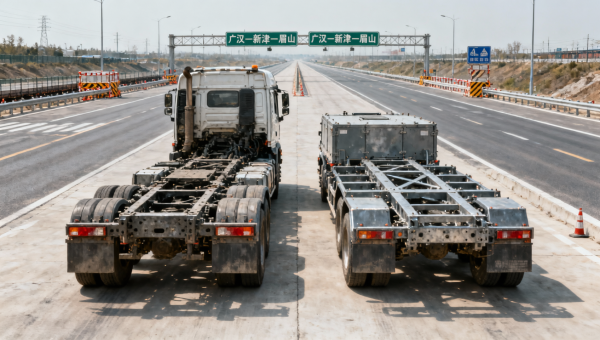
In summary, the April 21, 2026 traffic restriction in Chengdu represents a targeted, time-bound logistical friction point—not a structural bottleneck. Its significance lies in its specificity: it affects a defined geographic corridor, a narrow set of cargo types (heavy chassis and structural components), and a precise 2–3 day window. For stakeholders, the appropriate response is operational calibration—not strategic reassessment.
Source: Public notice issued by Chengdu Traffic Police; operational guidance referenced by Chengdu International Railway Port logistics coordination unit. Ongoing observation recommended for any extension beyond April 24, 2026, or replication on parallel corridors.
Trending News
- How to choose the right bulldozer size for a construction site
- How to choose a military truck for off-road transport
- Cummins Expects EPA to Finalize Heavy-Duty Truck NOx Rule in December
- How to choose the right bulk cement trailer capacity
- China Truckmakers' Third-Quarter Results Diverge as Exports Offset Weak Domestic Demand
Tag
Recommended News
 Logistics & FreightHow to load an excavator onto a lowbed trailer without tippingLoading an excavator onto a lowbed trailer? Discover essential ramp checks, alignment tips, and controlled loading practices to reduce tipping risks and protect your equipment.
 Logistics & FreightHow does a truck wing body improve loading and unloading efficiency?Truck wing bodies speed up loading and unloading with wide side access, faster forklift handling, and flexible pallet delivery. Discover whether they fit your operation.
 Logistics & FreightRed Sea Delays Push Ro-Ro Transit to 42 DaysRed Sea delays push Ro-Ro transit to 42 days, forcing heavy-truck exporters to rethink Suez route timing, freight costs, and delivery planning. Explore faster alternatives and key trade impacts.
 Logistics & FreightCai Mep Delays Stretch Truck Parts Clearance to 12 DaysTruck parts clearance at Cai Mep now stretches to 12 days, disrupting road transport equipment imports. Learn the impact on delivery, procurement, and logistics planning.
 Logistics & FreightTruck Logging: Common Route and Load Mistakes That Raise Operating RiskTruck logging mistakes in route and load planning can quietly raise fuel costs, delays, wear, and compliance risk. Learn the key errors and how to build safer, more reliable transport decisions.
 Logistics & FreightLight Commercial Vehicle for Urban Delivery: Best Fit for Stop-and-Go RoutesLight commercial vehicle for urban delivery choices can make or break stop-and-go efficiency. Discover how to match payload, maneuverability, and cost for smarter city routes.
 Logistics & FreightRed Sea Disruptions Push Equipment Exports to Rail and Caspian RouteRed Sea disruptions are pushing equipment exports to rail and the Caspian route, cutting transit to 18–21 days. See how exporters can balance delivery speed, cost, and supply chain reliability.
![]() Logistics & FreightAlashankou Opens Priority Clearance for NEV Heavy TrucksAlashankou opens priority clearance for NEV heavy trucks, cutting customs time to under 4 hours and removing key port fees. See what this means for exporters, logistics teams, and buyers.
 Logistics & FreightChina-Europe Rail Adds Emergency Fuel SurchargeChina-Europe rail adds an emergency fuel surcharge of USD 1,200/TEU for trucks, semi-trailers, and chassis exports. See route impact, cost risks, and planning actions now.
 Logistics & FreightKazakhstan AI Customs Review Lifts Truck Parts Checks to 37%Kazakhstan AI customs review lifts truck parts checks to 37%, raising HS 8708 inspection risks and delays. Learn what exporters, importers, and brokers must do now.
 Logistics & FreightSuez Fee Hike Reshapes Ro-Ro Truck BookingsSuez fee hike reshapes Ro-Ro truck bookings as heavy truck exporters face higher freight costs, 90-day booking windows, and tighter vessel space—see what to plan now.
 Logistics & FreightRed Sea Disruption Tightens Ro-Ro Capacity on Asia-Europe RouteRed Sea disruption squeezes Ro-Ro capacity on the Asia-Europe route, driving heavy-truck shipping costs and delays. See what exporters, buyers, and logistics teams must track now.
 Logistics & FreightBest Light Commercial Vehicle for Urban Delivery in Tight City RoutesLight commercial vehicle for urban delivery: discover how to choose the best model for tight city routes with better maneuverability, loading efficiency, and lower operating costs.
 Logistics & FreightGTRI Jumps 12.3% as Red Sea Diversions Tighten CapacityGTRI jumps 12.3% as Red Sea diversions tighten truck shipping capacity on Asia-Europe routes. See what rising costs, 62-75 day lead times, and booking suspensions mean for exporters.
 Logistics & FreightWing Van Truck Loading Problems and Practical Ways to Reduce Cargo DamageWing van truck loading mistakes can damage cargo even on short routes. Learn practical ways to improve load balance, restraint, and daily handling to cut losses.
 Logistics & FreightSuez Canal Fees Rise 35% as Heavy Truck Shipping Hits 68 DaysSuez Canal fees rise 35% as heavy truck shipping stretches to 68 days. See how higher costs and longer transit can disrupt Q3 truck and chassis delivery plans.
 Logistics & FreightDjibouti Port Clearance for Truck Chassis Extends to 18 DaysDjibouti Port clearance for truck chassis now extends to 18 days, disrupting East Africa transit. Learn the impact on truck chassis shipments, documents, and delivery planning.
 Logistics & FreightDjibouti Port Extends Truck Chassis Clearance to 18 WorkdaysDjibouti Port extends truck chassis clearance to 18 workdays, raising customs risks for East Africa and Middle East shipments. Learn the new VIN and drawing rules now.
 Logistics & FreightSuez Eastbound Rates Rise 12% as Rail Alternatives GainSuez eastbound rates rise 12% as rail alternatives gain amid Djibouti congestion. See how shippers, vehicle parts importers, and logistics providers can adapt routing and protect supply continuity.
 Logistics & FreightBulk Trailer vs Container Trailer for High-Volume FreightBulk trailer or container trailer? Discover which option cuts handling costs, speeds high-volume freight, and fits your cargo, route, and delivery goals best.
 Logistics & FreightCentral Asia Rail Rates Jump as Red Sea Diversions BiteCentral Asia rail rates jump as Red Sea diversions tighten capacity. See how rising costs on the China-Kyrgyzstan-Uzbekistan corridor affect heavy truck exports, documents, and delivery planning.
 Logistics & FreightRail Rate Jump Signals Cost Pressure on Eurasian DiversionRail rate jump on the China-Kyrgyzstan-Uzbekistan corridor signals rising Eurasian cost pressure. See how it may impact delivery timing, export quotes, and supply chain planning.
 Logistics & FreightWhen a Van Trailer Is the Right Choice for Secure FreightVan trailer solutions protect secure freight from weather, dust, and theft. Learn when a van trailer is the smart choice for safer delivery and better cargo control.
 Logistics & FreightRed Sea Disruption Lifts China-Kyrgyz-Uzbek Rail Rates 18%Red Sea disruption lifts China-Kyrgyz-Uzbek rail rates 18%, raising export costs for truck KD parts, chassis, and loose components. See what shippers must monitor now.
 Logistics & FreightChina-Europe Rail Eastern Route Passes 40,000 TripsChina-Europe Rail Eastern Route passes 40,000 trips as Manzhouli launches a smart warehouse for heavy truck KD exports. Discover how faster customs clearance may improve rail logistics planning.