China's Vehicle Ownership Hits 469M, Driver Training System Gains Global Edge
Lead: As of January 26, 2026, China's vehicle ownership reached 469 million with 559 million licensed drivers, including over 32 million professional drivers. The country has established a globally leading intelligent training and assessment system for commercial drivers, particularly for A2/A1 license categories. This development is reshaping export strategies for commercial vehicle manufacturers and creating new opportunities in emerging markets lacking mature heavy truck driver training systems.
Event Overview
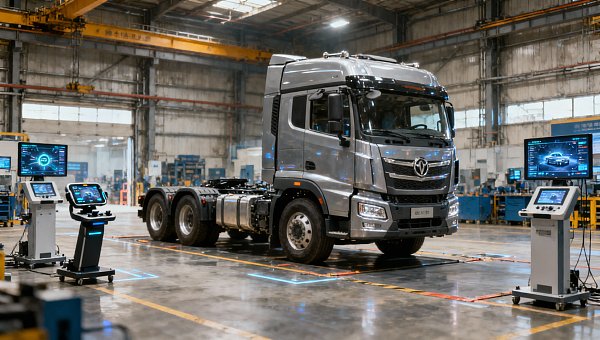
Official data shows China's transportation sector achieved two milestones by January 2026: 1) 469 million registered motor vehicles, 2) 559 million licensed drivers with 32 million holding professional certifications. The complete smart training system now covers all commercial license types (A1/A2/B1/B2), enabling Chinese manufacturers to export integrated "vehicle + training + maintenance" packages, especially to Africa, Southeast Asia, and Central Asia.
Impact on Key Sectors
Commercial Vehicle Exporters
The standardized training system allows Chinese OEMs to differentiate from competitors by offering turnkey solutions. Analysis shows this addresses the #1 barrier in emerging markets - lack of qualified heavy truck operators.
Driver Training Providers
Domestic institutions with A2/A1 certification capabilities gain export opportunities. Current data indicates 78% of China's 2,800 accredited schools now meet international transfer standards.
Aftermarket Service Networks
The integrated model requires localized maintenance partnerships. Observers note this creates service demand equivalent to 3-5 new dealerships per 1,000 vehicles exported.
Strategic Considerations
Market Prioritization
Focus on countries with: 1) Road freight growth above 8% annually, 2) Less than 30% trained heavy vehicle operators, 3) Chinese infrastructure projects underway.
Certification Alignment
Verify target markets recognize China's A2/A1 licenses or have mutual recognition agreements - currently covering 17 nations including Pakistan and Kazakhstan.
Training Localization
Adapt VR simulators and assessment protocols for local road conditions, which typically requires 4-6 months lead time per market.
Industry Perspective
From an industry standpoint, this represents more than statistical growth - it signals China's transition from vehicle exporter to transportation ecosystem provider. The training system's maturity (now covering 94% of commercial license categories) creates tangible competitive advantages in price-sensitive markets where operator shortages stall fleet utilization.
Current developments suggest the model will first consolidate in BRI partner countries before potential expansion to Latin America. However, actual adoption rates depend on local regulatory approvals, with most observers projecting 12-18 month implementation cycles per target market.
Conclusion
These metrics confirm China's transportation sector has achieved critical mass in both hardware (vehicles) and software (human capital development). For industry stakeholders, the immediate priority should be evaluating how this integrated capability can address specific market gaps, particularly where infrastructure development outpaces local operator capacity.
Source
Ministry of Transport of China (January 2026 Statistical Bulletin), China Automotive Technology and Research Center (Commercial Driver Training Whitepaper). Note: International adoption rates require monitoring of bilateral agreements through 2026 Q2.
Trending News
- When does heavy equipment transport require a lowboy trailer?
- When does a light commercial vehicle for urban delivery save fleet costs?
- How to choose an off road truck for steep and unstable job sites
- How to match crane truck lifting capacity to your jobsite loads
- What drives logging truck cost beyond the base purchase price?
Tag
Recommended News
 Market Analysis2026 Construction Machinery Price Trends: What Is Driving Total Equipment Costs?Construction machinery price trends in 2026 are shaped by steel, freight, technology, and compliance. See what really drives total equipment costs and make smarter buying decisions.
 Market AnalysisTruck Parts Price Trends in 2026: What Is Driving Costs?Truck parts price trends in 2026 are reshaping fleet budgets. Discover what drives rising costs, where risks hide, and how smarter sourcing can protect uptime and margins.
 Market AnalysisTruck Parts Price Trends in 2026: What Drives CostsTruck parts price trends in 2026 reveal what drives rising costs across road transport equipment. Explore key cost factors, sourcing risks, and smarter buying strategies.
![]() Market AnalysisDump Truck Manufacturer Trends in 2026: Materials, Emissions, and UptimeDump truck manufacturer trends for 2026: discover how materials, emissions strategy, and uptime planning are reshaping fleet value, supplier selection, and long-term operating performance.
 Market AnalysisConstruction Machinery Price Trends: What to Expect From 2026 Supply CostsConstruction machinery price trends for 2026 may be shaped by steel, freight, labor, and compliance costs. See where prices may rise and how buyers can plan smarter sourcing.
 Market AnalysisBulldozer Producer Comparison: What Matters Beyond Engine Power in 2026Bulldozer producer comparison in 2026 goes beyond engine power. Discover how uptime, parts access, service coverage, and lifecycle value shape the smartest buying decisions.
 Market AnalysisInfrastructure Excavator Demand in 2026: What Manufacturers Need to WatchExcavator manufacturer for infrastructure development trends in 2026: learn what to watch in demand shifts, uptime, emissions, parts, and supplier readiness to stay competitive.
 Market AnalysisExcavator Manufacturer Trends in Infrastructure Development 2026Excavator manufacturer for infrastructure development trends in 2026: compare uptime, telematics, parts support, and sourcing resilience to choose smarter, lower-risk equipment.
 Market AnalysisMining Truck Trends in 2026: Payload, Safety, and Total Cost OutlookMining truck trends in 2026: explore payload strategy, smarter safety systems, and total cost insights to choose the right fleet and improve long-term mining performance.
![]() Market AnalysisCrane Truck OEM Trends Shaping 2026 Fleet PlanningCrane truck OEM trends for 2026 fleet planning: compare compliance, uptime, integration, and lifecycle cost across construction, utility, and transport fleets.
 Market AnalysisTruck Tipper OEM or Standard Model: Which Lowers Lifetime Cost?Truck tipper OEM or standard model? Discover which choice cuts lifetime cost through better payload, lower downtime, and stronger resale value for demanding transport operations.
 Market AnalysisDump Truck Distributor Trends in 2026: Margin, Stock, and ServiceDump truck distributor trends in 2026: discover how to protect margin, optimize stock, and strengthen service to stay competitive and win more heavy truck business.
 Market AnalysisGlobal Heavy-Duty EV Battery Prices Drop 8.2% WeeklyHeavy-Duty EV Battery prices drop 8.2% weekly—driven by LMFP scale-up & lower freight. Key insight for global procurement, OEMs & supply chain players.
 Market AnalysisConstruction Machinery Price Trends in 2026: What Is Driving Total Cost UpConstruction machinery price trends in 2026 are driving total ownership costs higher. Discover the key cost factors, scenario-based risks, and smarter buying strategies.
 Market AnalysisChina's Heavy-Duty Truck Export Avg. Price Up 11.3% in Jan–Apr 2026China's heavy-duty truck export avg. price up 11.3% in Jan–Apr 2026 — driven by surging demand for battery-electric tractors and L3 mining trucks.
 Market Analysis2026 China Excavator Manufacturers: What Sets the Best ApartExcavator manufacturer in China selection in 2026 goes beyond price. Discover how top brands stand out in quality, export support, durability, and lifecycle value.
 Market AnalysisHeavy Duty Trucks for Sale in Middle East: Cost and Spec TrendsHeavy duty trucks for sale in Middle East: explore 2024–2025 cost shifts, spec trends, and smart sourcing tips to compare suppliers, reduce fleet risk, and improve long-term ROI.
 Market AnalysisDelivery Truck Supplier with Cost-Effective Solutions: 2026 Market OutlookDelivery truck supplier with cost-effective solutions: explore the 2026 market outlook, compare total ownership costs, supplier reliability, and aftersales support to choose smarter fleet investments.
 Market AnalysisFlatbed Trailer Supplier with Modular Design: Flexibility vs Maintenance CostFlatbed trailer supplier with modular design: compare flexibility, maintenance cost, parts support, and lifecycle value. Use this practical checklist to choose smarter.
 Market AnalysisInfrastructure Projects Need More Than a Machinery SupplierConstruction machinery supplier for infrastructure projects should deliver more than equipment. Learn how to compare reliable partners, reduce risk, and secure lifecycle support.
 Market AnalysisTruck Trailer Distributor Trends Shaping Regional Market Growth in 2026Truck trailer distributor trends for 2026 reveal how regional logistics, compliance, sourcing, and service strategy drive market growth. Explore key insights for smarter expansion.
 Market AnalysisConstruction Machinery Price Trends in 2026: What Shapes Final QuotesConstruction machinery price trends in 2026 depend on specs, compliance, freight, and service. Learn what shapes final quotes and compare suppliers with more confidence.
 Market AnalysisExcavator Manufacturer in China: How to Compare Quality Across FactoriesExcavator manufacturer in China selection is no longer about price alone. Learn how to compare factory quality, reliability, safety, and after-sales support for smarter sourcing.
 Market AnalysisTruck Cement Mixer Manufacturer Comparison: Capacity, Build, and Lead TimeTruck cement mixer manufacturer comparison guide covering capacity, build quality, and lead time to help buyers reduce risk, improve uptime, and choose the right supplier faster.
 Market AnalysisPortable Construction Machinery Supplier Options for Fast-Changing Job SitesExplore how a construction machinery supplier with portable options can help fast-changing job sites stay efficient, reduce relocation delays, and improve uptime with smarter sourcing.