Bulldozer Producer Comparison: What Matters Beyond Engine Power in 2026
Bulldozer producer comparison is shifting in 2026
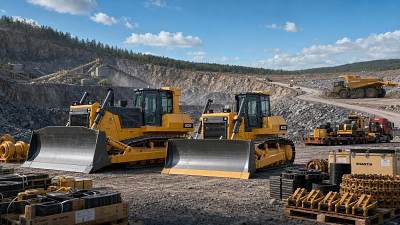
In 2026, a serious bulldozer producer comparison starts where old checklists usually end.
Engine power still matters, especially in mining, earthmoving, and municipal grading.
But recent demand signals show that raw horsepower no longer decides long-term equipment value on its own.
Downtime costs have risen, project schedules are tighter, and spare parts risk now influences fleet strategy earlier than before.
That is why more buyers are comparing each bulldozer producer through a wider operating lens.
Reliability, field service coverage, component commonality, fuel efficiency, telematics, and delivery stability have moved closer to the center.
This change is especially visible across construction machinery linked to transport corridors, quarry logistics, industrial sites, and infrastructure expansion.
It also fits a broader pattern in land transport equipment, where machine performance is increasingly judged by lifetime output, not brochure specifications.
A useful bulldozer producer comparison in this market therefore needs to read market signals, operational pressures, and supply realities together.
Why engine power is no longer the decisive filter
The first reason is simple: many mainstream models already meet baseline power expectations for common heavy-duty applications.
Once that threshold is met, performance differences often come from traction control, blade response, undercarriage durability, and operator efficiency.
The second reason is financial.
Fuel prices remain uneven across regions, financing costs are less forgiving, and idle equipment is harder to absorb in multi-site operations.
That pushes any bulldozer producer comparison toward total cost of ownership.
The third reason is supply chain visibility.
Project owners increasingly want predictable maintenance windows and clearer parts lead times before approving equipment plans.
A producer with slightly lower rated power may still win if it delivers better uptime over three working seasons.
From a market perspective, this is not a downgrade of engineering strength.
It is a more mature way to measure what engineering strength actually delivers on the ground.
The stronger signal is operational resilience
In practice, the better bulldozer producer is often the one that protects workflow continuity under imperfect conditions.
That includes heat, dust, inconsistent fuel quality, remote job locations, and mixed-skill operator teams.
Operational resilience usually shows up through several measurable areas:
- Undercarriage wear life under abrasive ground conditions.
- Hydraulic stability during long daily duty cycles.
- Ease of service access for routine checks and fast repairs.
- Availability of filters, seals, hoses, and common replacement parts.
- Remote diagnostics and fault alert quality.
- Local or regional technical support responsiveness.
These factors rarely dominate marketing headlines, yet they heavily shape machine economics.
A bulldozer producer comparison that ignores them can look precise on paper and still fail under field conditions.
More noticeably in 2026, fleet operators are asking whether one machine can remain productive across changing contracts, not just one peak-load task.
What is driving this change in producer evaluation
Several industry forces are reshaping how a bulldozer producer is assessed.
They come from both the equipment side and the project environment.
This is where digital B2B infrastructure has become more relevant.
Global industry platforms now help users compare suppliers, review market signals, and verify whether support promises match regional coverage.
Within the wider commercial vehicle and heavy equipment ecosystem, that transparency is changing how shortlist decisions are built.
The comparison now extends beyond the machine itself
A modern bulldozer producer comparison increasingly includes the producer’s ecosystem.
The machine is still the core asset, but the surrounding support model often determines realized value.
More buyers now look at four layers together.
Production consistency
Can the bulldozer producer maintain quality across batches, model updates, and export destinations?
Consistency matters more when fleets expand over time rather than through one-off purchases.
Service depth
A service promise is not the same as service capacity.
The practical questions are technician access, response time, warranty clarity, and local inventory of wear parts.
Integration with other heavy equipment
Bulldozers rarely operate alone.
They connect with haul trucks, trailers, excavators, loaders, and site logistics systems.
Producers that fit into a broader equipment planning approach often reduce coordination friction.
Global trade readiness
Documentation, compliance support, parts routing, and communication speed all affect deployment timing.
For internationally sourced equipment, this can outweigh a small power advantage.
Different applications are weighting producers differently
Not every bulldozer producer comparison follows the same logic, because site conditions are diverging.
Recent demand patterns suggest at least three distinct preference profiles.
- Mining and quarry work tends to prioritize undercarriage durability, structural robustness, and high parts availability.
- Infrastructure and road projects focus more on fuel efficiency, machine control precision, and schedule reliability.
- Municipal and diversified contractors often value versatility, easier maintenance, and lower training complexity.
That means a bulldozer producer ranked highly in one segment may not be the strongest fit elsewhere.
The better approach is to compare producers against workload patterns, transport conditions, and service geography.
This is also why broader heavy equipment marketplaces are gaining influence.
When trucks, construction machinery, trailers, and spare parts can be reviewed in one environment, decision quality improves.
It becomes easier to judge whether a bulldozer producer fits the full operating chain, not only one machine line.
What deserves closer attention before shortlisting a bulldozer producer
A useful shortlist in 2026 usually comes from asking harder questions earlier.
The following checkpoints are proving more valuable than headline power figures alone:
- Average parts lead time for high-wear items in the target region.
- Documented fuel consumption under comparable duty cycles.
- Real maintenance intervals and accessibility of service points.
- Telematics usefulness for mixed fleets and remote locations.
- Training support for operators and field technicians.
- Compatibility with local regulatory, environmental, and transport requirements.
More importantly, these checkpoints should be tested against project timing and utilization plans.
A bulldozer producer that performs well in static comparisons may look different once delivery risk and service distance are added.
The next move is better comparison, not faster comparison
The market is not abandoning performance.
It is redefining performance in more operational terms.
That is the key takeaway from any serious bulldozer producer comparison in 2026.
The stronger producers will be those that combine machine capability with dependable support, resilient supply, and credible lifecycle economics.
For the next stage, it makes sense to compare producers through actual use scenarios, verify regional parts pathways, and review service depth alongside technical data.
It is also worth using industry platforms that connect equipment listings, supplier information, market insight, and trade collaboration in one place.
That broader view helps separate strong specifications from truly durable business value.
Trending News
- When does heavy equipment transport require a lowboy trailer?
- When does a light commercial vehicle for urban delivery save fleet costs?
- How to choose an off road truck for steep and unstable job sites
- How to match crane truck lifting capacity to your jobsite loads
- What drives logging truck cost beyond the base purchase price?
Tag
Recommended News
 Market Analysis2026 Construction Machinery Price Trends: What Is Driving Total Equipment Costs?Construction machinery price trends in 2026 are shaped by steel, freight, technology, and compliance. See what really drives total equipment costs and make smarter buying decisions.
 Market AnalysisTruck Parts Price Trends in 2026: What Is Driving Costs?Truck parts price trends in 2026 are reshaping fleet budgets. Discover what drives rising costs, where risks hide, and how smarter sourcing can protect uptime and margins.
 Market AnalysisTruck Parts Price Trends in 2026: What Drives CostsTruck parts price trends in 2026 reveal what drives rising costs across road transport equipment. Explore key cost factors, sourcing risks, and smarter buying strategies.
![]() Market AnalysisDump Truck Manufacturer Trends in 2026: Materials, Emissions, and UptimeDump truck manufacturer trends for 2026: discover how materials, emissions strategy, and uptime planning are reshaping fleet value, supplier selection, and long-term operating performance.
 Market AnalysisConstruction Machinery Price Trends: What to Expect From 2026 Supply CostsConstruction machinery price trends for 2026 may be shaped by steel, freight, labor, and compliance costs. See where prices may rise and how buyers can plan smarter sourcing.
 Market AnalysisBulldozer Producer Comparison: What Matters Beyond Engine Power in 2026Bulldozer producer comparison in 2026 goes beyond engine power. Discover how uptime, parts access, service coverage, and lifecycle value shape the smartest buying decisions.
 Market AnalysisInfrastructure Excavator Demand in 2026: What Manufacturers Need to WatchExcavator manufacturer for infrastructure development trends in 2026: learn what to watch in demand shifts, uptime, emissions, parts, and supplier readiness to stay competitive.
 Market AnalysisExcavator Manufacturer Trends in Infrastructure Development 2026Excavator manufacturer for infrastructure development trends in 2026: compare uptime, telematics, parts support, and sourcing resilience to choose smarter, lower-risk equipment.
 Market AnalysisMining Truck Trends in 2026: Payload, Safety, and Total Cost OutlookMining truck trends in 2026: explore payload strategy, smarter safety systems, and total cost insights to choose the right fleet and improve long-term mining performance.
![]() Market AnalysisCrane Truck OEM Trends Shaping 2026 Fleet PlanningCrane truck OEM trends for 2026 fleet planning: compare compliance, uptime, integration, and lifecycle cost across construction, utility, and transport fleets.
 Market AnalysisTruck Tipper OEM or Standard Model: Which Lowers Lifetime Cost?Truck tipper OEM or standard model? Discover which choice cuts lifetime cost through better payload, lower downtime, and stronger resale value for demanding transport operations.
 Market AnalysisDump Truck Distributor Trends in 2026: Margin, Stock, and ServiceDump truck distributor trends in 2026: discover how to protect margin, optimize stock, and strengthen service to stay competitive and win more heavy truck business.
 Market AnalysisGlobal Heavy-Duty EV Battery Prices Drop 8.2% WeeklyHeavy-Duty EV Battery prices drop 8.2% weekly—driven by LMFP scale-up & lower freight. Key insight for global procurement, OEMs & supply chain players.
 Market AnalysisConstruction Machinery Price Trends in 2026: What Is Driving Total Cost UpConstruction machinery price trends in 2026 are driving total ownership costs higher. Discover the key cost factors, scenario-based risks, and smarter buying strategies.
 Market AnalysisChina's Heavy-Duty Truck Export Avg. Price Up 11.3% in Jan–Apr 2026China's heavy-duty truck export avg. price up 11.3% in Jan–Apr 2026 — driven by surging demand for battery-electric tractors and L3 mining trucks.
 Market Analysis2026 China Excavator Manufacturers: What Sets the Best ApartExcavator manufacturer in China selection in 2026 goes beyond price. Discover how top brands stand out in quality, export support, durability, and lifecycle value.
 Market AnalysisHeavy Duty Trucks for Sale in Middle East: Cost and Spec TrendsHeavy duty trucks for sale in Middle East: explore 2024–2025 cost shifts, spec trends, and smart sourcing tips to compare suppliers, reduce fleet risk, and improve long-term ROI.
 Market AnalysisDelivery Truck Supplier with Cost-Effective Solutions: 2026 Market OutlookDelivery truck supplier with cost-effective solutions: explore the 2026 market outlook, compare total ownership costs, supplier reliability, and aftersales support to choose smarter fleet investments.
 Market AnalysisFlatbed Trailer Supplier with Modular Design: Flexibility vs Maintenance CostFlatbed trailer supplier with modular design: compare flexibility, maintenance cost, parts support, and lifecycle value. Use this practical checklist to choose smarter.
 Market AnalysisInfrastructure Projects Need More Than a Machinery SupplierConstruction machinery supplier for infrastructure projects should deliver more than equipment. Learn how to compare reliable partners, reduce risk, and secure lifecycle support.
 Market AnalysisTruck Trailer Distributor Trends Shaping Regional Market Growth in 2026Truck trailer distributor trends for 2026 reveal how regional logistics, compliance, sourcing, and service strategy drive market growth. Explore key insights for smarter expansion.
 Market AnalysisConstruction Machinery Price Trends in 2026: What Shapes Final QuotesConstruction machinery price trends in 2026 depend on specs, compliance, freight, and service. Learn what shapes final quotes and compare suppliers with more confidence.
 Market AnalysisExcavator Manufacturer in China: How to Compare Quality Across FactoriesExcavator manufacturer in China selection is no longer about price alone. Learn how to compare factory quality, reliability, safety, and after-sales support for smarter sourcing.
 Market AnalysisTruck Cement Mixer Manufacturer Comparison: Capacity, Build, and Lead TimeTruck cement mixer manufacturer comparison guide covering capacity, build quality, and lead time to help buyers reduce risk, improve uptime, and choose the right supplier faster.
 Market AnalysisPortable Construction Machinery Supplier Options for Fast-Changing Job SitesExplore how a construction machinery supplier with portable options can help fast-changing job sites stay efficient, reduce relocation delays, and improve uptime with smarter sourcing.