Wuhan Central Asia Railway Express Hits 103 Trains in April 2026
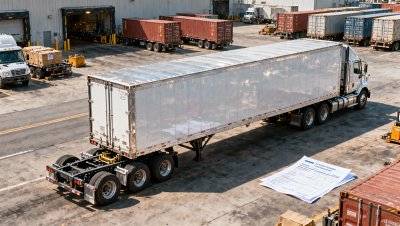
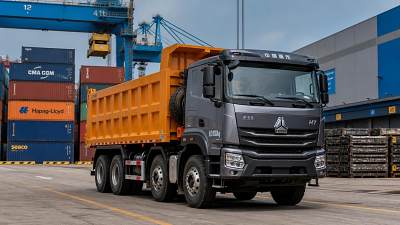
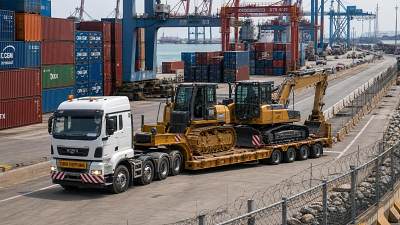
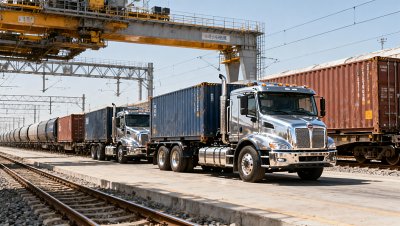
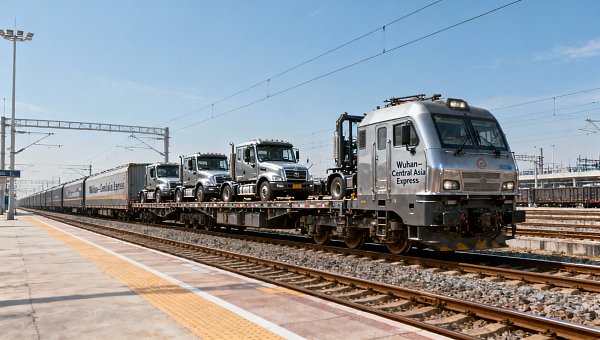
China’s Wuhan Central Asia Railway Express achieved a record monthly operation of 103 trains in April 2026 — the highest since its launch — with traction vehicles and specialized trailers accounting for 37% of export cargo value. This development signals notable shifts for rail freight logistics, heavy equipment exporters, and cross-border supply chain operators serving Central Asia.
Event Overview
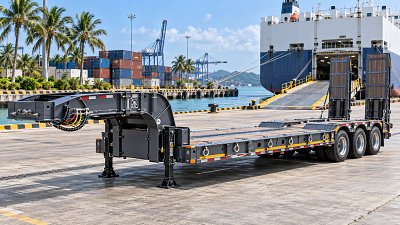
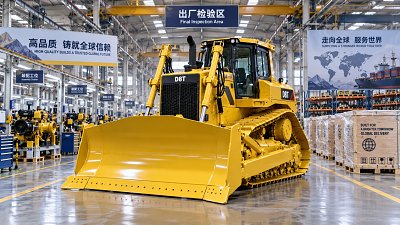
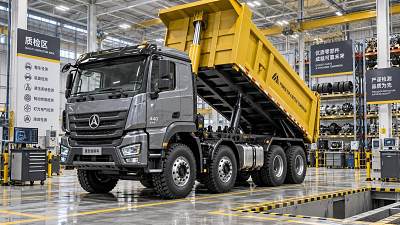
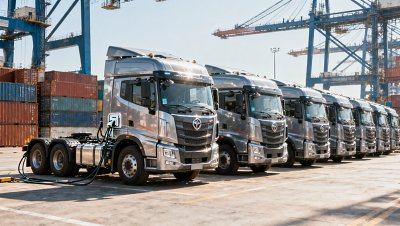
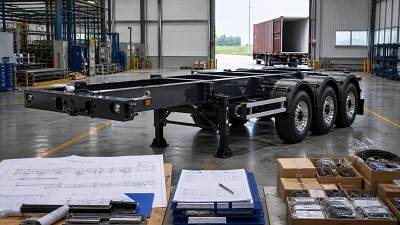
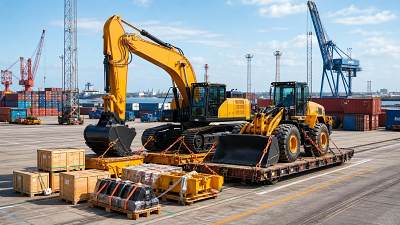
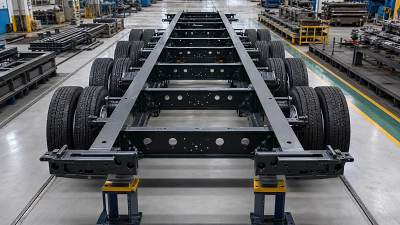
According to China State Railway Group Co., Ltd., released on May 17, 2026, the Wuhan Central Asia Railway Express operated 103 trains in April 2026. Of these, traction vehicles, low-bed semi-trailers, and modular wind turbine transport trailers collectively contributed 37% of total export cargo value — up 9 percentage points year-on-year. The service now connects stably to the railway networks of Kazakhstan, Uzbekistan, and Turkmenistan, with electronic consignment note mutual recognition fully implemented.
Industries Affected
Direct Exporters of Heavy Road Transport Equipment
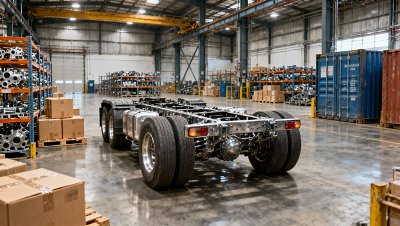
Manufacturers and traders of traction vehicles, low-bed trailers, and modular wind energy transport solutions are directly impacted: their product shipments now constitute a significantly larger share of consolidated rail capacity, indicating stronger demand visibility and channel prioritization. This affects pricing strategy, production scheduling, and documentation compliance requirements under new electronic rail protocols.
Wind Energy Project Developers & EPC Contractors
For firms deploying wind farms across Central Asia, the increased availability of dedicated modular transport trailers via this corridor improves reliability of oversized component delivery — especially tower sections and nacelles. This reduces dependency on ad-hoc road transport or slower maritime alternatives, thereby influencing logistics timelines and site commissioning schedules.
Rail Freight Forwarders & Multimodal Logistics Providers
Operators managing end-to-end rail-landed cargo from Wuhan to inland Central Asian destinations face revised operational benchmarks: electronic bill-of-lading interoperability means faster customs clearance and reduced document rework, but also requires system readiness for digital data exchange with three national rail administrations.
Importers and Distributors in Central Asia
Local importers handling heavy industrial equipment now have access to a more predictable and cost-efficient alternative to ocean shipping (higher schedule reliability) and road transport (lower unit cost for bulk consignments). This may shift procurement cycles and inventory planning toward leaner, more frequent rail-borne deliveries.
What Relevant Enterprises or Practitioners Should Monitor and Do Now
Track official updates on electronic consignment note implementation scope
While mutual recognition is confirmed for Kazakhstan, Uzbekistan, and Turkmenistan, further expansion to Kyrgyzstan or Tajikistan remains unconfirmed. Stakeholders should monitor announcements from China State Railway Group and respective national railways for eligibility changes affecting routing options.
Assess capacity allocation for Q3–Q4 2026 bookings
The April 2026 volume reflects sustained demand — not a one-off surge. Exporters should treat the 103-train benchmark as an operational floor when negotiating slot reservations and planning production ramp-ups, particularly for trailer types already overrepresented in current cargo mix.
Differentiate between policy enablement and actual service maturity
Electronic consignment note mutual recognition is a regulatory milestone, but real-world processing speed, error resolution mechanisms, and bilingual documentation support remain variable across terminals. Logistics teams should conduct test runs with small consignments before scaling full-volume shipments.
Prepare documentation workflows for dual-system compliance
Until legacy paper-based processes are fully phased out, shippers must maintain parallel readiness for both electronic and physical documentation — including certified translations for local customs authorities in each destination country. Internal training and checklist updates are recommended ahead of peak season.
Editorial Observation / Industry Insight
Observably, this milestone reflects consolidation rather than acceleration: the 9-percentage-point rise in transport equipment share suggests maturing trade patterns, not sudden market entry. Analysis shows that the route has transitioned from a general-purpose freight channel to a de facto backbone for heavy industrial logistics into Central Asia — especially where dimensional or weight constraints rule out air or sea alternatives. It is better understood as an infrastructure signal confirming long-term corridor viability, rather than an immediate commercial trigger. Continuous monitoring of quarterly volume trends and equipment-category breakdowns will be more informative than single-month highs.
Conclusion: The April 2026 performance confirms the Wuhan Central Asia Railway Express as a structurally significant channel for heavy equipment exports — not merely a supplementary option. Its growing specialization, coupled with digital interoperability, elevates its role in regional industrial supply chains. Current evidence supports viewing it as an established, scalable infrastructure asset — not an experimental or transitional initiative.
Source: China State Railway Group Co., Ltd. (official release dated May 17, 2026). Note: Expansion to additional Central Asian countries beyond Kazakhstan, Uzbekistan, and Turkmenistan remains unconfirmed and is subject to ongoing observation.
Trending News
- What drives logging truck cost beyond the base purchase price?
- How to match lowbed trailer deck height to your hauling equipment
- What documents are needed to export a low bed trailer to Southeast Asia?
- What to verify before choosing a delivery truck supplier for school transportation
- What an excavator manufacturer catalog should show before you compare models
Tag
Recommended News
 Truck ExportWhat documents are needed to export a low bed trailer to Southeast Asia?Low bed trailer export to Southeast Asia: discover essential shipping, customs, origin, and technical documents to avoid delays and ensure smooth import clearance.
 Truck ExportHow to verify supplier reliability when sourcing bulldozers overseasBulldozer sourcing made safer: learn how to verify overseas suppliers, inspect quality, confirm specifications, manage export documents, and reduce lifecycle risk.
 Truck ExportWhat paperwork is required for heavy equipment export shipments?Heavy equipment export paperwork explained: invoices, customs filings, bills of lading, origin certificates, technical approvals, and compliance records for smoother global shipments.
 Truck ExportHow to reduce quality risks when sourcing dump trucks overseasDump truck sourcing made safer: learn how to verify suppliers, control specifications, meet compliance rules, and inspect trucks before shipment.
 Truck ExportChina’s Electric Heavy Truck Exports Double in Four Months, With South and Southeast Asia LeadingChina’s electric heavy truck exports doubled in four months, with South and Southeast Asia leading demand. Explore compliance, delivery, and market-entry opportunities now.
 Truck ExportU.S. Final Ruling on Chinese Box Trailers Nears, Exporters Brace for ComplianceChinese box trailer exporters face the U.S. final ruling on anti-dumping duties. Learn how pricing, HS code compliance, contracts, and supply chains may be impacted.
 Truck ExportWhat to check before choosing a dump truck exporterDump truck exporter guide: discover the key checks before buying, from truck specs and compliance to export support, and avoid costly sourcing mistakes.
 Truck ExportBaosteel’s EN 15804+A2 EPD Signals a New Compliance Layer for Heavy Plate ExportsBaosteel’s EN 15804+A2 EPD Signals a New Compliance Layer for Heavy Plate Exports, showing how carbon disclosure and verified documentation may reshape export approval, sourcing, and OEM screening.
 Truck ExportHow to Evaluate a Water Truck Exporter for Build Quality and After-Sales SupportWater truck exporter selection starts with more than price. Learn how to assess build quality, compliance, parts support, and after-sales service before placing an order.
 Truck ExportHow to Evaluate a Semi Trailer Exporter for Compliance, Lead Time, and After-Sales SupportSemi trailer exporter evaluation made practical: learn how to verify compliance, compare real lead times, and assess after-sales support before choosing a reliable supplier.
 Truck ExportConstruction Machinery Exporter Checklist for Overseas Delivery RisksConstruction machinery exporter checklist for overseas delivery risks: learn how to reduce damage, customs delays, document errors, and cost exposure before shipment.
 Truck ExportChina Adds Battery Carbon Footprint Filing for NEV Truck ExportsChina adds battery carbon footprint filing for NEV truck exports, reshaping customs clearance, lead times, and export costs. Learn who is affected and how to prepare now.
 Truck ExportTruck Trailer OEM Checklist: Key Quality Points Before Supplier ApprovalTruck trailer OEM approval starts with the right checklist. Discover key quality, compliance, and audit points to screen suppliers, reduce sourcing risk, and choose with confidence.
 Truck ExportHeavy Equipment Export to Africa: Hidden Cost Risks Beyond Unit PriceHeavy equipment export to Africa involves more than unit price. Discover hidden costs in logistics, customs, parts, and after-sales support to make smarter, lower-risk buying decisions.
 Truck ExportTruck Tipper Exporter Checklist: 7 Risks to Review Before SigningTruck tipper exporter checklist: review 7 critical risks before signing, from compliance and quality control to delivery, warranty, and payment protection.
 Truck ExportChina Customs Rolls Out 2026 Export Truck GuideChina Customs Rolls Out 2026 Export Truck Guide: learn how new battery safety, automated driving data compliance, and GCC certification checks could impact truck exports and shipment readiness.
![]() Truck ExportWhat OEM Services Really Matter in a Commercial Trucks ManufacturerCommercial trucks manufacturer with OEM services: learn which OEM capabilities truly protect uptime, compliance, parts access, and fleet cost before you shortlist suppliers.
 Truck ExportCommercial Trucks Manufacturer in China: Export Quality Standards to CheckCommercial trucks manufacturer in China: learn which export quality standards, certifications, factory controls, and compliance checks reduce sourcing risk and protect fleet performance.
 Truck ExportMexico Cuts PROSEC Duty on Truck Chassis, Adds Audit RuleMexico Cuts PROSEC Duty on Truck Chassis to 0% from July 2026, but new audit rules and a 35% localization threshold raise compliance risks. Learn what importers must do to stay eligible.
 Truck ExportAlashankou Opens Priority Clearance for New Energy TrucksAlashankou opens priority clearance for new energy trucks, cutting export customs time by 3.2 days. Learn how UN38.3, GB 38031, and ECE R100.03 compliance can speed rail deliveries.
 Truck ExportDump Truck Supplier in Brazil: Import Costs, Lead Times, and Compliance PointsDump truck supplier in Brazil guide: compare real import costs, lead times, and compliance points to avoid delays, control landed cost, and choose a reliable supplier faster.
 Truck ExportCommercial Trucks Manufacturer in China: How to Compare Factory StrengthCommercial trucks manufacturer in China comparison guide: learn how to assess factory strength, quality control, certifications, and export capability for safer, smarter sourcing.
 Truck ExportTruck Cement Exporter Checklist for Cross-Border Compliance and DeliveryTruck cement exporter checklist for cross-border success: verify compliance, documents, packaging, and delivery planning to reduce risk and choose reliable suppliers with confidence.
 Truck ExportIndia Cuts HS 8701.20 Export Rebate to 9%India Cuts HS 8701.20 Export Rebate to 9%: learn how the DGFT move impacts electric heavy truck chassis pricing, margins, contracts, and India-bound supply chain planning.
 Truck ExportVietnam Halts Non-EVTA Truck Import FilingsVietnam Halts Non-EVTA Truck Import Filings: learn how MOIT’s new rule affects Chinese heavy trucks, EVTA Form EUR.1 compliance, shipment risk, and Vietnam delivery planning.