Low Bed Trailer Export for Mining: Load Limits, Route Planning, and Hidden Risks
Low bed trailer export for mining involves far more than matching trailer size to cargo weight. For project managers and engineering leaders, load limits, route constraints, border compliance, and unexpected operational risks can directly affect delivery schedules and total project cost. This article outlines the key factors behind safe, efficient, and reliable low bed trailer export decisions in demanding mining transport scenarios.
What low bed trailer export for mining really means
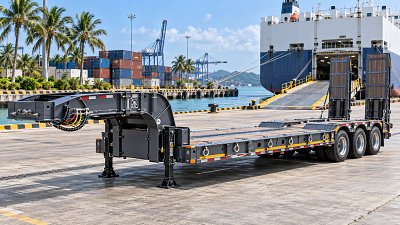
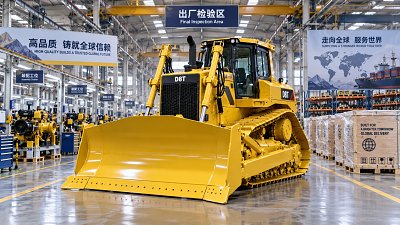
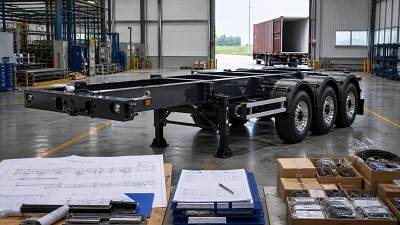
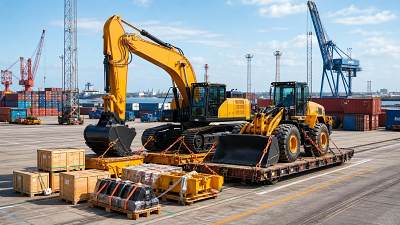
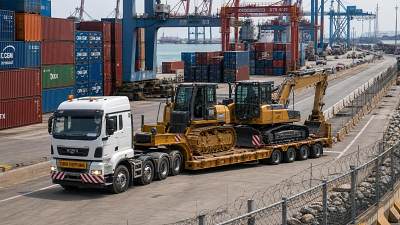
In mining logistics, a low bed trailer is not simply a heavy trailer with a lower deck. It is a specialized road transport solution designed for moving oversized, overweight, and high-center-of-gravity equipment that cannot be handled efficiently by standard flatbeds. Common export cargo includes excavators, wheel loaders, drilling rigs, crushers, bulldozers, graders, transformers, and modular plant components used at remote mining sites.
When companies discuss low bed trailer export for mining, they are usually dealing with a cross-border delivery chain that starts at a manufacturing plant and ends at a mine, EPC contractor yard, or project assembly point. The trailer itself is only one part of the decision. Export success also depends on axle configuration, deck height, gooseneck structure, suspension type, braking system, local road law, permit strategy, packaging protection, and after-sales support in the destination market.
For project leaders, this topic deserves attention because mining equipment transport failures are expensive. A single routing mistake may lead to bridge restrictions, escort requirements, customs delays, or cargo damage. In remote mining regions, every delay can interrupt construction sequences, commissioning plans, and contractor mobilization.
Why the mining sector pays close attention to this transport category
Mining projects are unusually sensitive to transport planning because the cargo is large, schedules are rigid, and routes are often difficult. Equipment may need to travel from coastal ports to inland areas through highways, mountain roads, industrial corridors, and temporary project access roads. That makes low bed trailer export for mining a risk management issue, not just a freight arrangement.
Several market trends make this even more important. First, mines are expanding into regions with weaker road infrastructure, where pavement quality, turning radius, and bridge condition can limit trailer choices. Second, equipment sizes continue to grow as operators seek higher productivity. Third, many buyers now prefer complete transport-ready procurement packages that include trailer specification advice, documentation support, and route feasibility review before shipment.
This is where a professional B2B platform serving the global heavy truck and transport equipment industry creates value. Instead of evaluating suppliers only by price, project teams can compare technical configurations, market experience, product scope, and support capability across the full supply chain, from trailer manufacturers to spare parts sources and logistics service partners.
Core technical factors behind trailer suitability
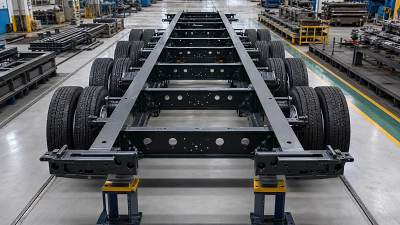
A suitable export trailer for mining applications must align with both the cargo profile and the operating environment. Payload capacity is the starting point, but not the only criterion. Engineering teams should review gross vehicle weight, axle load distribution, deck length, deck width, loaded height, kingpin load, tire specification, and frame strength. In many cases, a trailer that looks adequate on paper becomes impractical once route gradients, tight curves, or local axle regulations are considered.
Detachable gooseneck models are often preferred for self-propelled machinery because they simplify loading and unloading. Hydraulic steering may be essential on complex access roads. Air suspension can improve ride stability for sensitive equipment, while mechanical suspension may offer easier maintenance in isolated mining regions. Anti-corrosion treatment also matters for export to humid, coastal, or high-rainfall markets.
The hidden engineering issue is compatibility between export specification and destination operating reality. A trailer configured for one country’s legal axle pattern or service network may create maintenance and compliance problems in another. That is why low bed trailer export for mining should always be evaluated as a project-specific solution rather than a standard stock shipment.
Industry overview: key evaluation dimensions
For project managers, the following dimensions provide a practical framework for reviewing export options before confirming supplier selection.
Load limits are more complex than payload ratings
One of the most common mistakes in low bed trailer export for mining is treating the manufacturer’s payload rating as the final answer. In reality, legal and operational load limits are shaped by multiple layers: national road law, regional bridge restrictions, seasonal road controls, escort requirements, and even the type of tractor unit that will pull the trailer.
A 70-ton trailer does not automatically mean a 70-ton cargo can move freely on the destination route. The effective transport limit may be much lower after adding tractor weight, calculating axle group loads, and accounting for local permit thresholds. Mining cargo with uneven weight concentration, such as drilling equipment or tracked machines, creates further complexity because load distribution across the deck may exceed allowable axle pressure even when total weight appears acceptable.
Project teams should ask suppliers for engineering drawings, load distribution calculations, and recommended loading positions for the intended equipment family. This reduces dependence on assumptions and supports better communication with local carriers, permit agencies, and site logistics managers.
Route planning is a strategic part of export success
Route planning begins long before the trailer leaves the factory. For mining projects, it should include the entire corridor: plant to port, sea transport interface, port discharge, inland haulage, and final site approach. Each segment may impose different dimensional or weight restrictions. In some markets, the final 50 kilometers to the mine are more difficult than the first 500 kilometers from the port.
Effective route planning for low bed trailer export for mining should examine five practical issues. First, identify all choke points such as low bridges, toll gates, sharp intersections, and steep ramps. Second, confirm whether temporary road strengthening or civil works are needed. Third, review permit lead times because oversized transport windows may be limited to specific days or night hours. Fourth, check seasonal weather effects, especially in rainy regions where site roads may become inaccessible. Fifth, plan fallback routes in case of infrastructure closures or border disruption.
For engineering leaders, this planning discipline protects installation milestones. A delayed haul can affect crane bookings, labor sequencing, commissioning teams, and even financing milestones linked to project progress.
Typical mining transport scenarios and trailer considerations
Not every mining shipment has the same transport profile. Understanding cargo type helps narrow the right trailer specification and export support package.
Hidden risks that are often underestimated
The phrase “hidden risks” is especially relevant in low bed trailer export for mining because many failures emerge after shipment rather than during quotation. One hidden risk is document mismatch. Small differences in declared dimensions, HS classification, VIN data, or country-specific certification can create customs holds that delay the project more than any production issue.
Another hidden risk is equipment-trailer incompatibility. Ramps may be too steep for certain tracked machines, deck width may not support safe loading, or lashing points may be insufficient for dynamic road conditions. There is also the maintenance risk: if axle, brake, suspension, or tire components are not supported in the destination region, even a minor failure can immobilize a critical asset.
Commercial risk should not be ignored either. A low initial purchase price may conceal weak steel quality, incomplete test records, poor weld consistency, or limited export packaging. For mines operating in harsh environments, the long-term cost of downtime, repairs, and delayed mobilization usually exceeds the savings from a cheaper unit.
Practical guidance for project managers and engineering teams
A strong review process helps decision-makers convert technical complexity into manageable actions. Start by defining the transport mission clearly: what cargo will be moved, on which routes, under what local regulations, and with what tractor configuration. Then ask suppliers to align their proposal with those conditions rather than offering a generic model.
It is also wise to evaluate suppliers through a broader industry lens. Platforms focused on heavy truck and transport equipment markets can help buyers compare manufacturers, supporting components, and relevant service ecosystems in one place. This is valuable when a mining project requires not only a trailer, but also future spare parts access, technical data, and confidence in cross-border collaboration.
Before placing an order, consider this checklist:
- Confirm rated payload and legal load distribution for the actual destination route.
- Review loaded height, width, and turning performance with cargo in place.
- Check permit requirements, escort rules, and border documentation in advance.
- Verify spare parts availability and maintenance capability near the mining region.
- Request quality records, material specifications, and inspection evidence.
- Assess packaging, corrosion protection, and port handling suitability for export shipment.
A balanced approach to reliable low bed trailer export for mining
The most effective low bed trailer export for mining decisions combine technical fit, route realism, compliance discipline, and supplier reliability. For project managers, the goal is not simply to move cargo, but to protect the full project timeline from hidden transport disruption. For engineering leaders, trailer selection should be treated as part of system planning, because transport constraints can shape installation strategy, equipment sequencing, and site readiness.
As mining logistics becomes more global and infrastructure conditions remain uneven across regions, informed sourcing becomes a competitive advantage. By using specialized industry platforms to identify credible suppliers, compare configurations, and access broader market insight, buyers can make more confident decisions and reduce lifecycle risk. If your team is planning equipment deployment into a mining project, a structured review of load limits, route planning, and hidden risks is the right place to start.
Trending News
- When does heavy equipment transport require a lowboy trailer?
- When does a light commercial vehicle for urban delivery save fleet costs?
- How to choose an off road truck for steep and unstable job sites
- How to match crane truck lifting capacity to your jobsite loads
- What drives logging truck cost beyond the base purchase price?
Tag
Recommended News
 Truck ExportWhat documents are needed to export a low bed trailer to Southeast Asia?Low bed trailer export to Southeast Asia: discover essential shipping, customs, origin, and technical documents to avoid delays and ensure smooth import clearance.
 Truck ExportHow to verify supplier reliability when sourcing bulldozers overseasBulldozer sourcing made safer: learn how to verify overseas suppliers, inspect quality, confirm specifications, manage export documents, and reduce lifecycle risk.
 Truck ExportWhat paperwork is required for heavy equipment export shipments?Heavy equipment export paperwork explained: invoices, customs filings, bills of lading, origin certificates, technical approvals, and compliance records for smoother global shipments.
 Truck ExportHow to reduce quality risks when sourcing dump trucks overseasDump truck sourcing made safer: learn how to verify suppliers, control specifications, meet compliance rules, and inspect trucks before shipment.
 Truck ExportChina’s Electric Heavy Truck Exports Double in Four Months, With South and Southeast Asia LeadingChina’s electric heavy truck exports doubled in four months, with South and Southeast Asia leading demand. Explore compliance, delivery, and market-entry opportunities now.
 Truck ExportU.S. Final Ruling on Chinese Box Trailers Nears, Exporters Brace for ComplianceChinese box trailer exporters face the U.S. final ruling on anti-dumping duties. Learn how pricing, HS code compliance, contracts, and supply chains may be impacted.
 Truck ExportWhat to check before choosing a dump truck exporterDump truck exporter guide: discover the key checks before buying, from truck specs and compliance to export support, and avoid costly sourcing mistakes.
 Truck ExportBaosteel’s EN 15804+A2 EPD Signals a New Compliance Layer for Heavy Plate ExportsBaosteel’s EN 15804+A2 EPD Signals a New Compliance Layer for Heavy Plate Exports, showing how carbon disclosure and verified documentation may reshape export approval, sourcing, and OEM screening.
 Truck ExportHow to Evaluate a Water Truck Exporter for Build Quality and After-Sales SupportWater truck exporter selection starts with more than price. Learn how to assess build quality, compliance, parts support, and after-sales service before placing an order.
 Truck ExportHow to Evaluate a Semi Trailer Exporter for Compliance, Lead Time, and After-Sales SupportSemi trailer exporter evaluation made practical: learn how to verify compliance, compare real lead times, and assess after-sales support before choosing a reliable supplier.
 Truck ExportConstruction Machinery Exporter Checklist for Overseas Delivery RisksConstruction machinery exporter checklist for overseas delivery risks: learn how to reduce damage, customs delays, document errors, and cost exposure before shipment.
 Truck ExportChina Adds Battery Carbon Footprint Filing for NEV Truck ExportsChina adds battery carbon footprint filing for NEV truck exports, reshaping customs clearance, lead times, and export costs. Learn who is affected and how to prepare now.
 Truck ExportTruck Trailer OEM Checklist: Key Quality Points Before Supplier ApprovalTruck trailer OEM approval starts with the right checklist. Discover key quality, compliance, and audit points to screen suppliers, reduce sourcing risk, and choose with confidence.
 Truck ExportHeavy Equipment Export to Africa: Hidden Cost Risks Beyond Unit PriceHeavy equipment export to Africa involves more than unit price. Discover hidden costs in logistics, customs, parts, and after-sales support to make smarter, lower-risk buying decisions.
 Truck ExportTruck Tipper Exporter Checklist: 7 Risks to Review Before SigningTruck tipper exporter checklist: review 7 critical risks before signing, from compliance and quality control to delivery, warranty, and payment protection.
 Truck ExportChina Customs Rolls Out 2026 Export Truck GuideChina Customs Rolls Out 2026 Export Truck Guide: learn how new battery safety, automated driving data compliance, and GCC certification checks could impact truck exports and shipment readiness.
![]() Truck ExportWhat OEM Services Really Matter in a Commercial Trucks ManufacturerCommercial trucks manufacturer with OEM services: learn which OEM capabilities truly protect uptime, compliance, parts access, and fleet cost before you shortlist suppliers.
 Truck ExportCommercial Trucks Manufacturer in China: Export Quality Standards to CheckCommercial trucks manufacturer in China: learn which export quality standards, certifications, factory controls, and compliance checks reduce sourcing risk and protect fleet performance.
 Truck ExportMexico Cuts PROSEC Duty on Truck Chassis, Adds Audit RuleMexico Cuts PROSEC Duty on Truck Chassis to 0% from July 2026, but new audit rules and a 35% localization threshold raise compliance risks. Learn what importers must do to stay eligible.
 Truck ExportAlashankou Opens Priority Clearance for New Energy TrucksAlashankou opens priority clearance for new energy trucks, cutting export customs time by 3.2 days. Learn how UN38.3, GB 38031, and ECE R100.03 compliance can speed rail deliveries.
 Truck ExportDump Truck Supplier in Brazil: Import Costs, Lead Times, and Compliance PointsDump truck supplier in Brazil guide: compare real import costs, lead times, and compliance points to avoid delays, control landed cost, and choose a reliable supplier faster.
 Truck ExportCommercial Trucks Manufacturer in China: How to Compare Factory StrengthCommercial trucks manufacturer in China comparison guide: learn how to assess factory strength, quality control, certifications, and export capability for safer, smarter sourcing.
 Truck ExportTruck Cement Exporter Checklist for Cross-Border Compliance and DeliveryTruck cement exporter checklist for cross-border success: verify compliance, documents, packaging, and delivery planning to reduce risk and choose reliable suppliers with confidence.
 Truck ExportIndia Cuts HS 8701.20 Export Rebate to 9%India Cuts HS 8701.20 Export Rebate to 9%: learn how the DGFT move impacts electric heavy truck chassis pricing, margins, contracts, and India-bound supply chain planning.
 Truck ExportVietnam Halts Non-EVTA Truck Import FilingsVietnam Halts Non-EVTA Truck Import Filings: learn how MOIT’s new rule affects Chinese heavy trucks, EVTA Form EUR.1 compliance, shipment risk, and Vietnam delivery planning.