How to reduce quality risks when sourcing dump trucks overseas
How to Reduce Quality Risks When Sourcing Dump Trucks Overseas
Overseas dump truck sourcing can lower procurement costs and expand supplier options, but it also introduces quality, compliance, and delivery risks. For purchasing teams, a reliable sourcing strategy starts with clear technical specifications, thorough supplier verification, and independent quality control. The difficult part is that a dump truck may look acceptable in a quotation, catalogue, or factory video while still being unsuitable for the intended payload, road conditions, climate, maintenance capability, or local registration rules.
The lowest unit price is rarely the same as the lowest ownership cost. A truck with an underspecified frame, poorly matched hydraulic system, unfamiliar engine configuration, or unavailable wear parts can quickly erase the saving made at purchase. Effective dump truck sourcing is therefore less about finding the cheapest producer and more about reducing uncertainty before a purchase order is released.
Begin With the Job, Not the Truck Model
A common procurement mistake is to start by requesting a payload class and then comparing supplier prices. Payload is important, but it does not define the whole operating requirement. A truck carrying sand on paved regional roads faces a very different duty cycle from a vehicle moving blasted rock inside a quarry, hauling wet soil on construction access roads, or serving municipal waste and aggregate projects.
Before approaching suppliers, procurement and operations teams should agree on a written operating profile. It should cover material density, average and maximum load, haul distance, road gradient, road surface, expected daily cycles, ambient temperatures, fuel quality, maintenance access, and legal gross vehicle weight limits in the destination market. It should also clarify whether the truck will work mainly on public roads, private sites, or both.
This exercise often reveals that the requested configuration is not yet complete. For example, a body volume that appears practical for light bulk material may lead to overloading when used for dense aggregate. A high-capacity tipper body may also create stability concerns if the chassis, suspension, tyre specification, or centre of gravity is not matched to the actual load. The buyer needs the supplier to explain the intended operating envelope, not merely confirm that a body can be mounted on a chassis.
Turn operational needs into a controlled specification
The request for quotation should distinguish between mandatory requirements and preferred options. Mandatory items may include axle configuration, emission requirement, steering position, rated payload, tyre type, body material, hydraulic lifting arrangement, braking configuration, and required documents for import or registration. Preferred items may include cab trim, camera systems, telematics readiness, paint colour, or a particular accessory package.
Avoid descriptions such as “heavy-duty body,” “high-quality hydraulics,” or “export standard.” These terms are open to interpretation. Instead, ask for measurable details: chassis model and wheelbase; axle ratings; tyre size and load index; steel grade and thickness where relevant; body floor and side-wall construction; cylinder brand or specification; hydraulic pump arrangement; tank capacity; electrical system; and the stated payload basis. If the truck will require a body built by a different company, identify who is responsible for engineering compatibility and final acceptance.
Verify the Supplier Behind the Quotation
A polished quotation does not establish manufacturing capability. Overseas buyers should determine whether they are dealing with the vehicle manufacturer, a body builder, an authorised distributor, an exporter, or a trading company. None of these roles is automatically unsuitable, but the role changes the questions that need to be asked and the level of traceability available.
Ask who owns the production process, who procures critical components, and who will be contractually responsible if the delivered configuration differs from the approved specification. Where a complete dump truck combines a chassis from one manufacturer with a tipping body from another, the interfaces deserve special attention. The body subframe, power take-off, hydraulic pump, electrical connections, rear overhang, and weight distribution should not be treated as separate issues.
Supplier due diligence should include company registration and export capability, production address, basic factory capacity information, quality-control procedures, and evidence that the supplier has handled comparable configurations. A remote factory review can be useful when travel is not possible, but it should be structured. Request live walkthroughs of assembly, welding, paint preparation, component storage, inspection points, and finished-vehicle areas rather than relying only on edited promotional footage.
It is also sensible to inspect how a supplier manages changes. In international procurement, substitutions can occur because of component availability, production schedules, or local supply constraints. The contract should state that any material change to specified components, dimensions, or configuration requires written buyer approval. This is particularly important for engine and transmission variants, axles, tyres, hydraulic components, electrical equipment, and body steel.
Do Not Treat Compliance as a Shipping Document
Importing a dump truck is not simply a question of obtaining a commercial invoice, packing list, and bill of lading. The vehicle may need to meet local rules on emissions, brakes, lighting, dimensions, axle loads, steering position, safety equipment, and road registration. Requirements vary substantially by market and can also differ between public-road operation and closed-site use.
Compliance should be reviewed before the final configuration is frozen. Buyers should confirm which documents the local authority, customs broker, insurer, or registration office actually requires. Some projects may also impose their own requirements for rollover protection, warning devices, speed limitation, fire suppression, operator visibility, or site access. A supplier’s statement that a vehicle is “compliant” is not enough unless it identifies the relevant market and the supporting documentation.
The same caution applies to weights. A truck can be technically capable of carrying a certain load while still being unsuitable under local axle-load rules or bridge restrictions. Calculate likely axle loading in the configured form, including the body, fuel, accessories, and material distribution. This needs engineering confirmation where the project is demanding or the legal margins are narrow.
Use Inspection Gates Before Shipment
Quality inspection is most useful when it is planned before production begins. Waiting until the trucks are loaded for export limits the buyer’s ability to correct defects without affecting the delivery schedule. For larger orders, many teams use several acceptance gates: approval of drawings and component lists, inspection during body fabrication, pre-delivery inspection of the finished truck, and review of final documents before shipment.
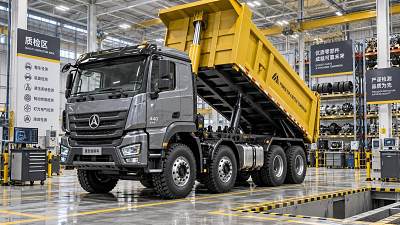
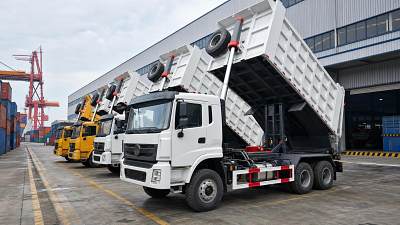
The inspection checklist should reflect the actual risk profile. On a tipper body, that may include weld appearance and accessible weld locations, body alignment, floor and side panel condition, tailgate operation, hinge and latch function, subframe mounting, hydraulic hose routing, leak checks, raised-body stability, safety supports, electrical lighting, tyre condition, chassis and engine identification, and the presence of agreed tools or accessories.
Independent third-party inspection can provide a more neutral record, especially when the buyer has no local engineering team. However, an inspection company can only assess against a defined checklist and agreed acceptance criteria. It cannot compensate for an unclear specification. Buyers should also decide in advance what happens if defects are found: rework before shipment, replacement components, price adjustment, delayed shipment, or rejection. Leaving that discussion until a failure occurs weakens the buyer’s position.
Witness the functions that matter in service
A static visual inspection is not sufficient for a dump truck. At minimum, the agreed pre-shipment test should include starting, braking checks within the available test conditions, steering response, basic gear engagement, lighting, warning systems, power take-off operation, body lifting and lowering, tailgate release, and checks for hydraulic leakage or abnormal movement. The exact test scope depends on the vehicle and factory conditions, but the principle is simple: critical functions should be demonstrated, recorded, and linked to the purchase specification.
Price the Whole Supply Chain, Including Downtime
Comparing FOB or CIF figures alone can lead to poor decisions. The more useful comparison is landed and operational cost: truck price, body configuration, inland transport, ocean freight, insurance, port charges, customs duties and taxes where applicable, local compliance work, commissioning, spare parts, training, and expected maintenance support.
A lower-priced offer may exclude the parts package needed for commissioning or routine repair. It may use an engine, gearbox, axle, or hydraulic brand with limited support in the destination region. Conversely, a higher initial quotation can be justified when it provides clearer parts identification, local service coverage, familiar consumables, and stronger documentation. The right decision depends on fleet scale, utilisation intensity, and the buyer’s ability to hold inventory and perform repairs internally.
For critical fleets, ask for a recommended initial spare-parts list based on the expected operating environment. This may include filters, belts, hoses, seals, lamps, brake-related consumables, electrical items, and hydraulic wear parts. The list should show part numbers and applicability, not just broad descriptions. It becomes much easier to compare supplier support when every item is traceable.
Build a More Transparent Sourcing Process
International purchasing is easier when technical, commercial, and supplier information can be reviewed in one place. The Global Heavy Truck Industry Platform connects manufacturers, suppliers, distributors, and buyers across commercial vehicles, trailers, construction machinery, and spare parts. For procurement teams, platforms of this kind can support an early-stage comparison process by making it easier to identify product categories, review supplier profiles, compare available configurations, and research the wider truck supply chain before narrowing a shortlist.
That research should not replace due diligence, site checks, or inspections. Its value is in reducing information gaps: comparing chassis and body options, identifying potential component sources, reviewing brand directories, and using industry guides to form better technical questions. In dump truck sourcing, better questions at the beginning often prevent the expensive surprises that appear after the vehicle reaches the port or the worksite.
A Reliable Order Is Defined Long Before Production Starts
The strongest overseas purchasing decisions are built around a controlled specification, a verified supplier role, documented compliance checks, and inspection rights that are practical to enforce. No process removes every risk, particularly when equipment crosses borders and operates in demanding conditions. But most avoidable problems can be identified earlier: a body that does not suit the material, an axle layout that conflicts with local limits, an undocumented component substitution, or a spare-parts plan that does not exist.
Before issuing a purchase order, confirm the operating profile, approved technical schedule, responsibility for integration, acceptance checklist, shipment documents, warranty route, and parts support plan. If any of these points remains vague, the quotation is not yet ready for a final cost comparison.
Trending News
- When does heavy equipment transport require a lowboy trailer?
- When does a light commercial vehicle for urban delivery save fleet costs?
- How to choose an off road truck for steep and unstable job sites
- How to match crane truck lifting capacity to your jobsite loads
- What drives logging truck cost beyond the base purchase price?
Tag
Recommended News
 Truck ExportWhat documents are needed to export a low bed trailer to Southeast Asia?Low bed trailer export to Southeast Asia: discover essential shipping, customs, origin, and technical documents to avoid delays and ensure smooth import clearance.
 Truck ExportHow to verify supplier reliability when sourcing bulldozers overseasBulldozer sourcing made safer: learn how to verify overseas suppliers, inspect quality, confirm specifications, manage export documents, and reduce lifecycle risk.
 Truck ExportWhat paperwork is required for heavy equipment export shipments?Heavy equipment export paperwork explained: invoices, customs filings, bills of lading, origin certificates, technical approvals, and compliance records for smoother global shipments.
 Truck ExportHow to reduce quality risks when sourcing dump trucks overseasDump truck sourcing made safer: learn how to verify suppliers, control specifications, meet compliance rules, and inspect trucks before shipment.
 Truck ExportChina’s Electric Heavy Truck Exports Double in Four Months, With South and Southeast Asia LeadingChina’s electric heavy truck exports doubled in four months, with South and Southeast Asia leading demand. Explore compliance, delivery, and market-entry opportunities now.
 Truck ExportU.S. Final Ruling on Chinese Box Trailers Nears, Exporters Brace for ComplianceChinese box trailer exporters face the U.S. final ruling on anti-dumping duties. Learn how pricing, HS code compliance, contracts, and supply chains may be impacted.
 Truck ExportWhat to check before choosing a dump truck exporterDump truck exporter guide: discover the key checks before buying, from truck specs and compliance to export support, and avoid costly sourcing mistakes.
 Truck ExportBaosteel’s EN 15804+A2 EPD Signals a New Compliance Layer for Heavy Plate ExportsBaosteel’s EN 15804+A2 EPD Signals a New Compliance Layer for Heavy Plate Exports, showing how carbon disclosure and verified documentation may reshape export approval, sourcing, and OEM screening.
 Truck ExportHow to Evaluate a Water Truck Exporter for Build Quality and After-Sales SupportWater truck exporter selection starts with more than price. Learn how to assess build quality, compliance, parts support, and after-sales service before placing an order.
 Truck ExportHow to Evaluate a Semi Trailer Exporter for Compliance, Lead Time, and After-Sales SupportSemi trailer exporter evaluation made practical: learn how to verify compliance, compare real lead times, and assess after-sales support before choosing a reliable supplier.
 Truck ExportConstruction Machinery Exporter Checklist for Overseas Delivery RisksConstruction machinery exporter checklist for overseas delivery risks: learn how to reduce damage, customs delays, document errors, and cost exposure before shipment.
 Truck ExportChina Adds Battery Carbon Footprint Filing for NEV Truck ExportsChina adds battery carbon footprint filing for NEV truck exports, reshaping customs clearance, lead times, and export costs. Learn who is affected and how to prepare now.
 Truck ExportTruck Trailer OEM Checklist: Key Quality Points Before Supplier ApprovalTruck trailer OEM approval starts with the right checklist. Discover key quality, compliance, and audit points to screen suppliers, reduce sourcing risk, and choose with confidence.
 Truck ExportHeavy Equipment Export to Africa: Hidden Cost Risks Beyond Unit PriceHeavy equipment export to Africa involves more than unit price. Discover hidden costs in logistics, customs, parts, and after-sales support to make smarter, lower-risk buying decisions.
 Truck ExportTruck Tipper Exporter Checklist: 7 Risks to Review Before SigningTruck tipper exporter checklist: review 7 critical risks before signing, from compliance and quality control to delivery, warranty, and payment protection.
 Truck ExportChina Customs Rolls Out 2026 Export Truck GuideChina Customs Rolls Out 2026 Export Truck Guide: learn how new battery safety, automated driving data compliance, and GCC certification checks could impact truck exports and shipment readiness.
![]() Truck ExportWhat OEM Services Really Matter in a Commercial Trucks ManufacturerCommercial trucks manufacturer with OEM services: learn which OEM capabilities truly protect uptime, compliance, parts access, and fleet cost before you shortlist suppliers.
 Truck ExportCommercial Trucks Manufacturer in China: Export Quality Standards to CheckCommercial trucks manufacturer in China: learn which export quality standards, certifications, factory controls, and compliance checks reduce sourcing risk and protect fleet performance.
 Truck ExportMexico Cuts PROSEC Duty on Truck Chassis, Adds Audit RuleMexico Cuts PROSEC Duty on Truck Chassis to 0% from July 2026, but new audit rules and a 35% localization threshold raise compliance risks. Learn what importers must do to stay eligible.
 Truck ExportAlashankou Opens Priority Clearance for New Energy TrucksAlashankou opens priority clearance for new energy trucks, cutting export customs time by 3.2 days. Learn how UN38.3, GB 38031, and ECE R100.03 compliance can speed rail deliveries.
 Truck ExportDump Truck Supplier in Brazil: Import Costs, Lead Times, and Compliance PointsDump truck supplier in Brazil guide: compare real import costs, lead times, and compliance points to avoid delays, control landed cost, and choose a reliable supplier faster.
 Truck ExportCommercial Trucks Manufacturer in China: How to Compare Factory StrengthCommercial trucks manufacturer in China comparison guide: learn how to assess factory strength, quality control, certifications, and export capability for safer, smarter sourcing.
 Truck ExportTruck Cement Exporter Checklist for Cross-Border Compliance and DeliveryTruck cement exporter checklist for cross-border success: verify compliance, documents, packaging, and delivery planning to reduce risk and choose reliable suppliers with confidence.
 Truck ExportIndia Cuts HS 8701.20 Export Rebate to 9%India Cuts HS 8701.20 Export Rebate to 9%: learn how the DGFT move impacts electric heavy truck chassis pricing, margins, contracts, and India-bound supply chain planning.
 Truck ExportVietnam Halts Non-EVTA Truck Import FilingsVietnam Halts Non-EVTA Truck Import Filings: learn how MOIT’s new rule affects Chinese heavy trucks, EVTA Form EUR.1 compliance, shipment risk, and Vietnam delivery planning.