Heavy Equipment Export to Mexico: Costs, Lead Times, and Customs Risks
For business evaluators, heavy equipment export to Mexico requires more than a price comparison. Freight costs, delivery lead times, customs compliance, and supplier reliability can all affect project budgets and market entry plans. This article outlines the key cost drivers, transit expectations, and customs risks importers should assess to make smarter sourcing decisions and reduce cross-border trade uncertainty.
Why is heavy equipment export to Mexico more complex than a standard cross-border shipment?
In the road transport equipment sector, exporting trucks, trailers, construction machinery, chassis, and related parts into Mexico involves a layered decision process. The purchase price is only one component. Business evaluators also need to examine inland transport, port handling, special loading methods, border clearance, local taxation, and the operational readiness of the delivered unit.
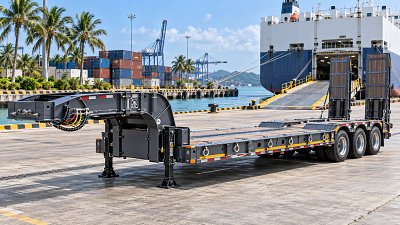
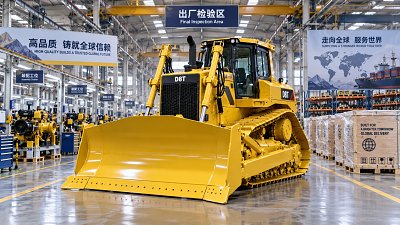
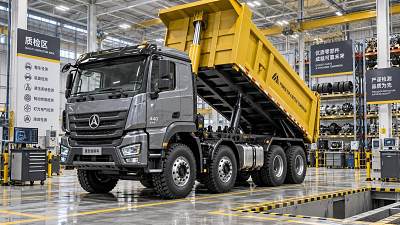
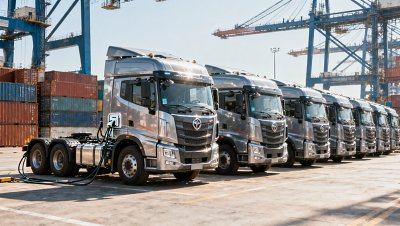
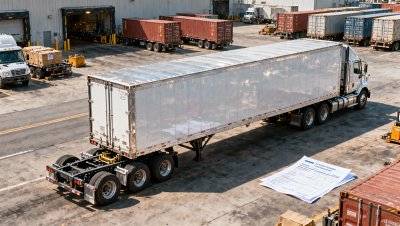
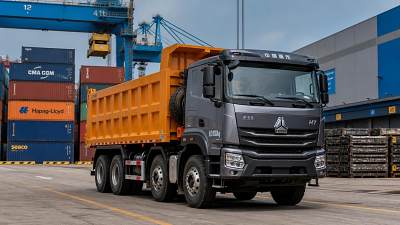
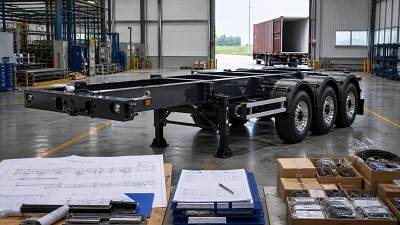
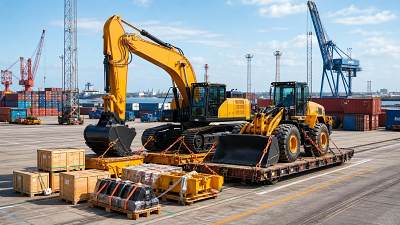
Heavy equipment export to Mexico can vary significantly depending on whether the cargo is a complete vehicle, CKD or SKD package, used machinery, trailer equipment, or oversized components. A wheel loader, a dump truck, and a semi-trailer may all enter the same market, but they often face different freight logic, documentary requirements, and customs attention points.
For commercial buyers and evaluation teams, the main risk is not just overpaying. It is underestimating the total landed cost and timeline impact. A shipment that appears economical at the quotation stage may become more expensive after storage fees, customs delays, document amendments, and compliance corrections are added.
- Oversized dimensions can increase freight planning complexity and reduce route flexibility.
- Incomplete technical documentation may trigger customs inspection or valuation review.
- Incorrect product classification can change duty exposure and clearance time.
- Weak supplier coordination can lead to missed vessel bookings or inconsistent packing details.
What business evaluators should verify first
Before comparing suppliers, confirm the cargo category, intended use in Mexico, destination region, and import structure. These four factors shape the feasibility of heavy equipment export to Mexico more than catalog specifications alone. They also determine whether sea freight, land transport, or multimodal routing provides the best balance of time and cost.
What drives the real cost of heavy equipment export to Mexico?
A realistic cost model should separate ex-works or FOB pricing from export execution costs and Mexican import-side costs. In many heavy equipment transactions, the largest budgeting mistakes happen because teams focus on unit price while ignoring pre-shipment preparation, route restrictions, and customs-related contingencies.
The table below highlights common cost elements that should be included when evaluating heavy equipment export to Mexico for trucks, construction machinery, trailers, and spare parts shipments.
For business evaluation, the practical question is not simply “What is the freight cost?” but “Which cost items are predictable and which are exposure points?” Customs reinspection, demurrage, and detention often fall into the second category. These can quickly erode margin if the shipment is not planned with technical accuracy.
Cost factors that often get overlooked
- Disassembly and reassembly costs when unit dimensions exceed standard transport limits.
- Battery isolation, fluid draining, or safety preparation for machinery shipment.
- Storage costs when the consignee cannot clear cargo immediately after arrival.
- Currency fluctuation between supplier quotation, freight booking, and customs payment dates.
How long does heavy equipment export to Mexico usually take?
Lead time depends on origin country, cargo type, transport mode, and customs readiness. In the heavy truck and equipment industry, transit timing is rarely just a sailing schedule or road transit estimate. The full lead time begins with production or cargo release and ends with delivery at the buyer’s yard or project site.
The table below is useful for planning expectations rather than setting fixed promises. Actual lead times for heavy equipment export to Mexico can shift because of port congestion, inland permits, customs inspection rates, and local holiday schedules.
For internal planning, evaluators should use three time bands: supplier readiness time, physical transit time, and customs-to-site time. This approach makes it easier to identify where schedule risk actually sits. In many projects, the customs and inland delivery segment is less visible than shipping time, but more likely to cause budget stress.
A practical lead-time checklist
- Confirm whether the supplier has the unit in stock, in production, or waiting for final inspection.
- Ask which shipment mode is planned and whether dimensions require special handling.
- Verify if all commercial and technical documents can be issued before cargo cut-off.
- Check whether a Mexican customs broker has reviewed the HS code and import requirements in advance.
Which customs risks matter most in heavy equipment export to Mexico?
Customs risk is one of the most important evaluation areas because it can affect cost, timing, and even cargo release eligibility. For road transport equipment, customs authorities may review not only the invoice value but also the product description, serial identification, country of origin statements, and condition of the equipment.
Risk increases when descriptions are too generic. For example, “machine parts” or “truck equipment” may be insufficient for smooth processing. Heavy equipment export to Mexico typically requires more precise documentation that reflects the actual item, function, and shipment condition.
Main customs exposure points
- HS code misclassification, especially for mixed shipments containing machinery, attachments, and spare parts.
- Declared value inconsistency between invoice, packing list, and payment records.
- Missing serial numbers or incomplete equipment identity information for regulated or high-value units.
- Incorrect indication of new, used, rebuilt, or disassembled condition.
- Importer-side permit, tax, or registration issues that are discovered only after cargo arrival.
A strong supplier helps reduce these risks by preparing accurate export documentation and sharing technical data early. A strong platform adds another layer by helping buyers compare suppliers not only by price, but also by documentation responsiveness, product transparency, and trade support capability.
Documents worth reviewing before shipment
Business evaluators should ask to review the draft commercial invoice, packing list, equipment specification sheet, serial number list if applicable, shipment photos, and agreed Incoterms before cargo departure. For some transactions, importer consultation with a local customs broker in Mexico is essential before final document issuance.
How should buyers compare shipping options and sourcing models?
When planning heavy equipment export to Mexico, comparing shipping methods is not only a logistics task. It is also a sourcing strategy decision. The correct option depends on unit size, urgency, cargo sensitivity, destination access, and whether the buyer is importing complete equipment or supply chain components.
The following comparison helps evaluators align transport method with procurement goals.
The best option is not always the cheapest per freight unit. For example, a lower sea rate can still produce a higher total cost if handling complexity leads to extended release time. Evaluators should compare total landed cost and operational fit, not freight line items in isolation.
Supplier comparison criteria beyond price
- Can the supplier provide consistent technical descriptions and export paperwork?
- Do they understand packaging and loading requirements for heavy equipment export to Mexico?
- Can they support spare parts follow-up after the first shipment?
- Are they responsive when buyers request serial data, dimensions, weights, and photos for customs review?
What should business evaluators include in a procurement risk framework?
A structured procurement framework reduces uncertainty and improves comparison accuracy. In road transport equipment sourcing, decisions often involve multiple stakeholders: procurement, finance, operations, logistics, and compliance. A shared framework keeps the evaluation grounded in operational facts instead of sales claims.
Recommended evaluation dimensions
- Product fit: Confirm payload class, technical suitability, axle configuration, attachment compatibility, and local operating conditions.
- Trade feasibility: Review Incoterms, packaging, loading plan, route restrictions, and expected customs process.
- Cost visibility: Build a landed cost model that includes freight, duties, inland delivery, broker fees, and contingency reserves.
- Delivery confidence: Assess supplier readiness, documentation discipline, and shipment milestone communication.
- After-sales continuity: Evaluate spare parts sourcing, technical support availability, and replacement lead times.
This is where an industry-focused B2B platform offers practical value. The Global Heavy Truck Industry Platform helps buyers move beyond isolated quotations by comparing suppliers across product categories such as truck chassis and cab, complete trucks, light trucks, construction machinery, trailers and semi-trailers, and spare parts. That broader visibility supports better commercial judgment.
Why platform-based sourcing improves evaluation quality
For heavy equipment export to Mexico, fragmented communication creates risk. A specialized platform can help buyers access product information, compare supplier profiles, review industry resources, and shorten the time needed to identify viable trade partners. This is especially important when the sourcing task involves both equipment procurement and future parts support.
FAQ: practical questions about heavy equipment export to Mexico
How can buyers reduce customs risk before booking a shipment?
Start with accurate product classification and detailed commercial descriptions. Ask the supplier for dimensions, weight, serial information, and equipment condition details early. Then review draft documents with the Mexican customs broker before shipment. This sequence is often more effective than trying to correct issues after arrival.
Is complete equipment always better than shipping parts or disassembled units?
Not always. Complete units may simplify assembly and speed deployment, but they can be harder to ship if dimensions are oversized or if customs requirements are stricter for certain categories. Disassembled shipments may reduce freight volume or improve loading efficiency, but they add reassembly planning and coordination costs. The best option depends on destination readiness, cost structure, and project urgency.
What lead-time buffer is reasonable for planning purposes?
A prudent buffer should account for both shipping variability and import processing variability. Rather than using one generic buffer, assign contingency days to each stage: supplier preparation, main transit, customs release, and inland delivery. This makes the schedule more defensible for internal approval and project planning.
What is the most common evaluation mistake in heavy equipment export to Mexico?
The most common mistake is comparing quotes without normalizing the cost basis and service scope. One supplier may quote product only, another may include export handling, and a third may build in partial logistics support. Unless the comparison aligns Incoterms, shipment mode, packaging scope, and customs assumptions, the result can be misleading.
Why choose us for sourcing and trade evaluation support?
The Global Heavy Truck Industry Platform is built for buyers, distributors, and sourcing teams working across the commercial vehicle and heavy equipment supply chain. Instead of treating heavy equipment export to Mexico as a simple catalog transaction, the platform supports a broader decision process that includes supplier comparison, product discovery, market insight, and trade collaboration.
If your team is evaluating trucks, construction machinery, trailers, chassis, or spare parts for the Mexican market, you can consult us on practical topics that affect both procurement and delivery execution.
- Parameter confirmation for heavy-duty trucks, trailers, machinery, and component compatibility.
- Product selection support based on use case, budget range, and transport constraints.
- Lead-time discussion for in-stock units, production orders, and shipment planning.
- Customized sourcing solutions for complete vehicles, parts packages, or mixed-category procurement.
- Documentation and compliance coordination support for smoother export preparation.
- Quotation communication based on target specifications, delivery terms, and commercial priorities.
When cost, timing, and customs exposure all matter, informed sourcing makes a measurable difference. Contact us to discuss your heavy equipment export to Mexico plan, compare suitable suppliers, confirm technical details, and build a more reliable procurement path for your next cross-border project.
Trending News
- When does heavy equipment transport require a lowboy trailer?
- When does a light commercial vehicle for urban delivery save fleet costs?
- How to choose an off road truck for steep and unstable job sites
- How to match crane truck lifting capacity to your jobsite loads
- What drives logging truck cost beyond the base purchase price?
Tag
Recommended News
 Truck ExportWhat documents are needed to export a low bed trailer to Southeast Asia?Low bed trailer export to Southeast Asia: discover essential shipping, customs, origin, and technical documents to avoid delays and ensure smooth import clearance.
 Truck ExportHow to verify supplier reliability when sourcing bulldozers overseasBulldozer sourcing made safer: learn how to verify overseas suppliers, inspect quality, confirm specifications, manage export documents, and reduce lifecycle risk.
 Truck ExportWhat paperwork is required for heavy equipment export shipments?Heavy equipment export paperwork explained: invoices, customs filings, bills of lading, origin certificates, technical approvals, and compliance records for smoother global shipments.
 Truck ExportHow to reduce quality risks when sourcing dump trucks overseasDump truck sourcing made safer: learn how to verify suppliers, control specifications, meet compliance rules, and inspect trucks before shipment.
 Truck ExportChina’s Electric Heavy Truck Exports Double in Four Months, With South and Southeast Asia LeadingChina’s electric heavy truck exports doubled in four months, with South and Southeast Asia leading demand. Explore compliance, delivery, and market-entry opportunities now.
 Truck ExportU.S. Final Ruling on Chinese Box Trailers Nears, Exporters Brace for ComplianceChinese box trailer exporters face the U.S. final ruling on anti-dumping duties. Learn how pricing, HS code compliance, contracts, and supply chains may be impacted.
 Truck ExportWhat to check before choosing a dump truck exporterDump truck exporter guide: discover the key checks before buying, from truck specs and compliance to export support, and avoid costly sourcing mistakes.
 Truck ExportBaosteel’s EN 15804+A2 EPD Signals a New Compliance Layer for Heavy Plate ExportsBaosteel’s EN 15804+A2 EPD Signals a New Compliance Layer for Heavy Plate Exports, showing how carbon disclosure and verified documentation may reshape export approval, sourcing, and OEM screening.
 Truck ExportHow to Evaluate a Water Truck Exporter for Build Quality and After-Sales SupportWater truck exporter selection starts with more than price. Learn how to assess build quality, compliance, parts support, and after-sales service before placing an order.
 Truck ExportHow to Evaluate a Semi Trailer Exporter for Compliance, Lead Time, and After-Sales SupportSemi trailer exporter evaluation made practical: learn how to verify compliance, compare real lead times, and assess after-sales support before choosing a reliable supplier.
 Truck ExportConstruction Machinery Exporter Checklist for Overseas Delivery RisksConstruction machinery exporter checklist for overseas delivery risks: learn how to reduce damage, customs delays, document errors, and cost exposure before shipment.
 Truck ExportChina Adds Battery Carbon Footprint Filing for NEV Truck ExportsChina adds battery carbon footprint filing for NEV truck exports, reshaping customs clearance, lead times, and export costs. Learn who is affected and how to prepare now.
 Truck ExportTruck Trailer OEM Checklist: Key Quality Points Before Supplier ApprovalTruck trailer OEM approval starts with the right checklist. Discover key quality, compliance, and audit points to screen suppliers, reduce sourcing risk, and choose with confidence.
 Truck ExportHeavy Equipment Export to Africa: Hidden Cost Risks Beyond Unit PriceHeavy equipment export to Africa involves more than unit price. Discover hidden costs in logistics, customs, parts, and after-sales support to make smarter, lower-risk buying decisions.
 Truck ExportTruck Tipper Exporter Checklist: 7 Risks to Review Before SigningTruck tipper exporter checklist: review 7 critical risks before signing, from compliance and quality control to delivery, warranty, and payment protection.
 Truck ExportChina Customs Rolls Out 2026 Export Truck GuideChina Customs Rolls Out 2026 Export Truck Guide: learn how new battery safety, automated driving data compliance, and GCC certification checks could impact truck exports and shipment readiness.
![]() Truck ExportWhat OEM Services Really Matter in a Commercial Trucks ManufacturerCommercial trucks manufacturer with OEM services: learn which OEM capabilities truly protect uptime, compliance, parts access, and fleet cost before you shortlist suppliers.
 Truck ExportCommercial Trucks Manufacturer in China: Export Quality Standards to CheckCommercial trucks manufacturer in China: learn which export quality standards, certifications, factory controls, and compliance checks reduce sourcing risk and protect fleet performance.
 Truck ExportMexico Cuts PROSEC Duty on Truck Chassis, Adds Audit RuleMexico Cuts PROSEC Duty on Truck Chassis to 0% from July 2026, but new audit rules and a 35% localization threshold raise compliance risks. Learn what importers must do to stay eligible.
 Truck ExportAlashankou Opens Priority Clearance for New Energy TrucksAlashankou opens priority clearance for new energy trucks, cutting export customs time by 3.2 days. Learn how UN38.3, GB 38031, and ECE R100.03 compliance can speed rail deliveries.
 Truck ExportDump Truck Supplier in Brazil: Import Costs, Lead Times, and Compliance PointsDump truck supplier in Brazil guide: compare real import costs, lead times, and compliance points to avoid delays, control landed cost, and choose a reliable supplier faster.
 Truck ExportCommercial Trucks Manufacturer in China: How to Compare Factory StrengthCommercial trucks manufacturer in China comparison guide: learn how to assess factory strength, quality control, certifications, and export capability for safer, smarter sourcing.
 Truck ExportTruck Cement Exporter Checklist for Cross-Border Compliance and DeliveryTruck cement exporter checklist for cross-border success: verify compliance, documents, packaging, and delivery planning to reduce risk and choose reliable suppliers with confidence.
 Truck ExportIndia Cuts HS 8701.20 Export Rebate to 9%India Cuts HS 8701.20 Export Rebate to 9%: learn how the DGFT move impacts electric heavy truck chassis pricing, margins, contracts, and India-bound supply chain planning.
 Truck ExportVietnam Halts Non-EVTA Truck Import FilingsVietnam Halts Non-EVTA Truck Import Filings: learn how MOIT’s new rule affects Chinese heavy trucks, EVTA Form EUR.1 compliance, shipment risk, and Vietnam delivery planning.