Changjiang 'Xing·Lan Yue' Smart Cruise Arrives — Boosts Export Demand for Inland Intelligent Logistics Equipment
On April 17, 2026, China’s first spatially intelligent river cruise vessel, the Changjiang Xing·Lan Yue, arrived at port after completion. The project signals emerging demand for intelligent port traction vehicles and shore-based charging systems — particularly among export-oriented manufacturers serving inland waterway logistics infrastructure.
Event Overview
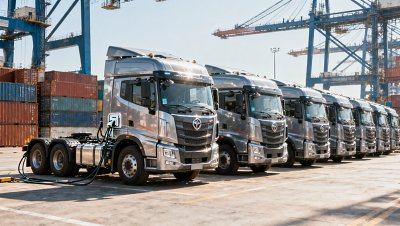
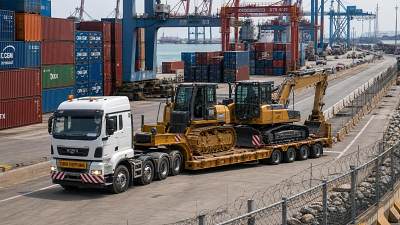
On April 17, 2026, the Changjiang Xing·Lan Yue, recognized as the Yangtze River’s first spatially intelligent cruise vessel, completed construction and docked at its designated port. It integrates BeiDou + UWB high-precision positioning, digital twin dispatching, and a full-scenario shore power fast-charging system. Supporting equipment — including intelligent port traction vehicles, dual-power-source container transporters, and 30 kW flexible charging piles — was supplied by domestic enterprises. The demonstration project has drawn inspection delegations from ports in Southeast Asia and the Middle East.
Industries Affected
Direct export trading firms: These firms are affected because the project has catalyzed interest in bundled export packages of intelligent inland logistics equipment. Impact manifests as rising inbound inquiries for integrated solutions — not standalone components — especially from ports seeking turnkey upgrades to electric, digitally coordinated operations.
Manufacturers of intelligent port handling equipment: Companies producing automated guided vehicles (AGVs), electric terminal tractors, or dual-source (diesel-electric/battery-grid) container carriers are impacted as the Xing·Lan Yue project validates technical specifications and operational requirements for such equipment in real-world inland port environments.
Suppliers of medium-power EV charging infrastructure: Firms developing 20–50 kW flexible AC/DC charging units for non-automotive industrial use face new application validation pathways. The project specifies 30 kW shore-based chargers, indicating growing demand for modular, grid-integrated, and weather-resilient charging hardware tailored to port-side deployment.
Systems integration and digital twin service providers: Entities offering digital twin platforms for port logistics coordination are affected as the project confirms market readiness for real-time, multi-asset simulation and scheduling — particularly when fused with high-accuracy indoor/outdoor positioning (UWB + BeiDou).
What Relevant Enterprises or Practitioners Should Monitor and Do Now
Track official follow-up announcements on export facilitation policies
Current attention is focused on whether this pilot will inform new national guidelines for ‘systematic export’ of intelligent inland transport infrastructure — e.g., bundled certification, financing support, or overseas technical assistance frameworks. Enterprises should monitor Ministry of Commerce and MIIT notices issued after May 2026.
Monitor procurement patterns in ASEAN and Gulf Cooperation Council (GCC) port authorities
The presence of inspection delegations from Southeast Asia and the Middle East suggests early-stage evaluation — not confirmed orders. Firms should prioritize intelligence-gathering on tender timelines, interoperability standards (e.g., ISO/IEC 15118 compatibility), and local grid connection requirements in target jurisdictions — rather than scaling production prematurely.
Distinguish between demonstration validation and commercial scalability
The Xing·Lan Yue project is a single-vessel, single-port demonstration. Its success does not automatically imply near-term demand for full fleet or port-wide rollouts. Suppliers should avoid overextending capacity planning; instead, focus on documenting performance data (e.g., charger uptime, positioning accuracy under fog/rain, twin-model synchronization latency) to strengthen future bids.
Prepare for cross-functional technical alignment with system integrators
Since the project emphasizes ‘system packaging’, suppliers of traction vehicles or chargers must be ready to share communication protocols (e.g., CAN bus mapping, MQTT topic structures), safety interface documentation, and cybersecurity test reports — not just mechanical or electrical specs. Early engagement with integrators involved in similar port pilots is advisable.
Editorial Perspective / Industry Observation
From an industry perspective, this event is best understood as a policy-anchored technology validation signal — not yet a commercial inflection point. It confirms that domestic intelligent inland logistics subsystems can meet integrated functional requirements under real operational conditions. However, the transition from pilot acceptance to repeatable export contracts remains contingent on foreign port authorities’ budget cycles, regulatory harmonization, and local partner capacity. Observation shows that international interest is currently exploratory; sustained traction will depend less on vessel-level innovation and more on replicable, low-risk implementation blueprints for mid-sized ports.
It is more accurate to interpret this development as an early indicator of shifting procurement logic — from component-level sourcing toward interoperable, certified system packages — rather than evidence of immediate volume growth. The sector should therefore treat it as a signal to refine technical documentation, interoperate with adjacent subsystems, and align with evolving export support mechanisms — not as grounds for rapid capacity expansion.
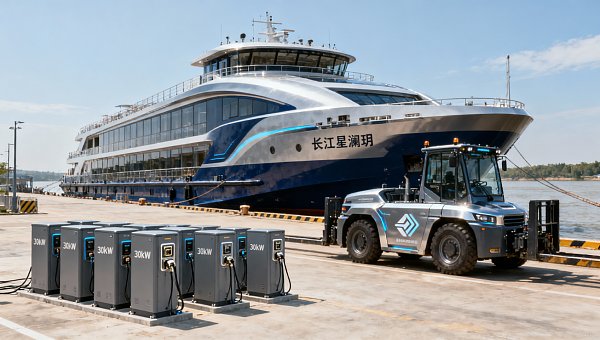
Conclusion: The arrival of the Changjiang Xing·Lan Yue marks a milestone in the functional integration of intelligent technologies for inland waterway logistics. Its primary significance lies in demonstrating feasibility and stimulating structured international inquiry — not in triggering immediate order flows. Current understanding should emphasize capability validation and system-level readiness, rather than assuming imminent commercial scale.
Information Source: Official announcement issued by China State Shipbuilding Corporation (CSSC) on April 17, 2026; supplementary details confirmed via press briefing by Yangtze River Navigation Administration. Note: Follow-up export contract awards, policy updates, and foreign port tender activity remain under observation and are not yet publicly confirmed.
Trending News
- When does heavy equipment transport require a lowboy trailer?
- When does a light commercial vehicle for urban delivery save fleet costs?
- How to choose an off road truck for steep and unstable job sites
- How to match crane truck lifting capacity to your jobsite loads
- What drives logging truck cost beyond the base purchase price?
Tag
Recommended News
 Truck ExportWhat documents are needed to export a low bed trailer to Southeast Asia?Low bed trailer export to Southeast Asia: discover essential shipping, customs, origin, and technical documents to avoid delays and ensure smooth import clearance.
 Truck ExportHow to verify supplier reliability when sourcing bulldozers overseasBulldozer sourcing made safer: learn how to verify overseas suppliers, inspect quality, confirm specifications, manage export documents, and reduce lifecycle risk.
 Truck ExportWhat paperwork is required for heavy equipment export shipments?Heavy equipment export paperwork explained: invoices, customs filings, bills of lading, origin certificates, technical approvals, and compliance records for smoother global shipments.
 Truck ExportHow to reduce quality risks when sourcing dump trucks overseasDump truck sourcing made safer: learn how to verify suppliers, control specifications, meet compliance rules, and inspect trucks before shipment.
 Truck ExportChina’s Electric Heavy Truck Exports Double in Four Months, With South and Southeast Asia LeadingChina’s electric heavy truck exports doubled in four months, with South and Southeast Asia leading demand. Explore compliance, delivery, and market-entry opportunities now.
 Truck ExportU.S. Final Ruling on Chinese Box Trailers Nears, Exporters Brace for ComplianceChinese box trailer exporters face the U.S. final ruling on anti-dumping duties. Learn how pricing, HS code compliance, contracts, and supply chains may be impacted.
 Truck ExportWhat to check before choosing a dump truck exporterDump truck exporter guide: discover the key checks before buying, from truck specs and compliance to export support, and avoid costly sourcing mistakes.
 Truck ExportBaosteel’s EN 15804+A2 EPD Signals a New Compliance Layer for Heavy Plate ExportsBaosteel’s EN 15804+A2 EPD Signals a New Compliance Layer for Heavy Plate Exports, showing how carbon disclosure and verified documentation may reshape export approval, sourcing, and OEM screening.
 Truck ExportHow to Evaluate a Water Truck Exporter for Build Quality and After-Sales SupportWater truck exporter selection starts with more than price. Learn how to assess build quality, compliance, parts support, and after-sales service before placing an order.
 Truck ExportHow to Evaluate a Semi Trailer Exporter for Compliance, Lead Time, and After-Sales SupportSemi trailer exporter evaluation made practical: learn how to verify compliance, compare real lead times, and assess after-sales support before choosing a reliable supplier.
 Truck ExportConstruction Machinery Exporter Checklist for Overseas Delivery RisksConstruction machinery exporter checklist for overseas delivery risks: learn how to reduce damage, customs delays, document errors, and cost exposure before shipment.
 Truck ExportChina Adds Battery Carbon Footprint Filing for NEV Truck ExportsChina adds battery carbon footprint filing for NEV truck exports, reshaping customs clearance, lead times, and export costs. Learn who is affected and how to prepare now.
 Truck ExportTruck Trailer OEM Checklist: Key Quality Points Before Supplier ApprovalTruck trailer OEM approval starts with the right checklist. Discover key quality, compliance, and audit points to screen suppliers, reduce sourcing risk, and choose with confidence.
 Truck ExportHeavy Equipment Export to Africa: Hidden Cost Risks Beyond Unit PriceHeavy equipment export to Africa involves more than unit price. Discover hidden costs in logistics, customs, parts, and after-sales support to make smarter, lower-risk buying decisions.
 Truck ExportTruck Tipper Exporter Checklist: 7 Risks to Review Before SigningTruck tipper exporter checklist: review 7 critical risks before signing, from compliance and quality control to delivery, warranty, and payment protection.
 Truck ExportChina Customs Rolls Out 2026 Export Truck GuideChina Customs Rolls Out 2026 Export Truck Guide: learn how new battery safety, automated driving data compliance, and GCC certification checks could impact truck exports and shipment readiness.
![]() Truck ExportWhat OEM Services Really Matter in a Commercial Trucks ManufacturerCommercial trucks manufacturer with OEM services: learn which OEM capabilities truly protect uptime, compliance, parts access, and fleet cost before you shortlist suppliers.
 Truck ExportCommercial Trucks Manufacturer in China: Export Quality Standards to CheckCommercial trucks manufacturer in China: learn which export quality standards, certifications, factory controls, and compliance checks reduce sourcing risk and protect fleet performance.
 Truck ExportMexico Cuts PROSEC Duty on Truck Chassis, Adds Audit RuleMexico Cuts PROSEC Duty on Truck Chassis to 0% from July 2026, but new audit rules and a 35% localization threshold raise compliance risks. Learn what importers must do to stay eligible.
 Truck ExportAlashankou Opens Priority Clearance for New Energy TrucksAlashankou opens priority clearance for new energy trucks, cutting export customs time by 3.2 days. Learn how UN38.3, GB 38031, and ECE R100.03 compliance can speed rail deliveries.
 Truck ExportDump Truck Supplier in Brazil: Import Costs, Lead Times, and Compliance PointsDump truck supplier in Brazil guide: compare real import costs, lead times, and compliance points to avoid delays, control landed cost, and choose a reliable supplier faster.
 Truck ExportCommercial Trucks Manufacturer in China: How to Compare Factory StrengthCommercial trucks manufacturer in China comparison guide: learn how to assess factory strength, quality control, certifications, and export capability for safer, smarter sourcing.
 Truck ExportTruck Cement Exporter Checklist for Cross-Border Compliance and DeliveryTruck cement exporter checklist for cross-border success: verify compliance, documents, packaging, and delivery planning to reduce risk and choose reliable suppliers with confidence.
 Truck ExportIndia Cuts HS 8701.20 Export Rebate to 9%India Cuts HS 8701.20 Export Rebate to 9%: learn how the DGFT move impacts electric heavy truck chassis pricing, margins, contracts, and India-bound supply chain planning.
 Truck ExportVietnam Halts Non-EVTA Truck Import FilingsVietnam Halts Non-EVTA Truck Import Filings: learn how MOIT’s new rule affects Chinese heavy trucks, EVTA Form EUR.1 compliance, shipment risk, and Vietnam delivery planning.