What Changes Most in a Truck Cement OEM Project Timeline
In a truck cement OEM project, the timeline often shifts most around design confirmation, component sourcing, and factory coordination. For buyers comparing truck cement price, truck trailer price, or evaluating a semi trailer supplier, understanding these changing stages is essential to reduce delays and control costs. Whether you are planning truck cement sourcing, a truck cement bulk order, or broader truck trailer wholesale, knowing what affects delivery helps you make smarter purchasing decisions.
Where the Timeline Usually Changes First in a Truck Cement OEM Project
A truck cement OEM project rarely moves in a straight line from inquiry to shipment. In most road transport equipment programs, the first major changes appear in the period between initial specification alignment and final drawing approval. This stage often takes 1–3 weeks for standard configurations, but it can extend to 4–8 weeks when buyers request local compliance changes, body dimension adjustments, axle brand substitutions, or discharge system modifications.
For procurement teams, the issue is not only technical complexity. Timeline movement usually comes from decision gaps between the buyer, the semi trailer supplier, the truck chassis source, and the factory engineering team. If one side confirms drum volume, but another side later changes the engine power range or PTO arrangement, the whole truck cement sourcing schedule may need to be revised. Even a single mismatch in hydraulic interface or wheelbase can trigger rework.
This is especially common when comparing truck cement price and truck trailer price across several suppliers. Quotations may look similar at first, yet the project schedule differs because one supplier includes drawing review, production slot reservation, and component lead-time checks, while another only prices the visible unit. For business evaluation personnel, timeline transparency is often a stronger indicator than a low opening quotation.
On a global B2B platform serving heavy truck, trailer, and construction machinery buyers, these early-stage changes matter because cross-border procurement usually adds another 7–20 days for clarification, multilingual communication, and export document alignment. Buyers who understand where the timeline shifts first can reduce back-and-forth and lock in more realistic delivery expectations.
Three stages that most often create schedule movement
In practice, truck cement OEM project delays are usually concentrated in 3 stages rather than across the whole order. That distinction helps distributors, sourcing managers, and agents focus on the right control points instead of pushing every department at once.
- Design confirmation: drum capacity, chassis compatibility, transmission matching, axle layout, loading requirement, and local road regulation checks are finalized here.
- Component sourcing: hydraulic pumps, reducers, axles, steel grades, tires, and electrical components may have lead times ranging from 7 days to more than 30 days depending on brand and market availability.
- Factory coordination: welding queue, painting line, assembly slot, inspection schedule, and export packing preparation must be aligned with production capacity and shipping windows.
If buyers treat all three stages as one simple “production lead time,” they often underestimate project risk. A more reliable purchasing approach is to evaluate each stage separately, then combine them into a full project calendar with milestone checks.
Why Design Confirmation Can Add More Time Than Buyers Expect
Design confirmation is often the biggest source of timeline change because a truck cement unit is not a generic cargo product. It must match a specific application, such as urban concrete delivery, infrastructure construction, municipal projects, or mining support logistics. A 6–8 m³ mixer truck and a 10–12 m³ configuration may require different chassis strength, turning radius expectations, and legal payload considerations in the target market.
Buyers focused mainly on truck cement price may ask for several revisions after the first quotation. Common revision points include left-hand or right-hand drive, engine emission level, axle load target, tire specification, drum material thickness, water tank layout, and ladder or safety rail arrangement. Each revision may look small, but once drawings have entered approval flow, even a 2–3 day engineering revision can push production allocation back by another week.
Another common issue is mismatched assumptions. The buyer may assume the truck cement bulk order will follow a reference truck seen elsewhere, while the supplier is quoting against a different chassis family or a different loading standard. In road transport equipment, dimensions such as wheelbase, overhang, and total vehicle height are not minor details. They directly affect legal transport, plant access, and unloading performance.
For this reason, an experienced international B2B platform adds value by helping buyers compare suppliers not only by unit price, but also by specification depth, component visibility, and project readiness. When product discovery and supplier comparison happen in one environment, procurement teams can identify design gaps earlier and shorten the revision cycle.
Key design items that should be frozen before production booking
The following table highlights the design elements that most often change a truck cement OEM project timeline. It also shows why buyers comparing truck trailer wholesale and mixer truck sourcing should ask for detailed confirmation before paying a deposit.
The lesson is simple: the earlier these items are frozen, the more stable the truck cement sourcing plan becomes. For procurement staff, a quotation with detailed technical scope is often more valuable than a lower quote with open-ended assumptions.
A practical document checklist before final approval
Before confirming a truck cement bulk order, ask the supplier to align at least 5 core documents or records. These are a specification sheet, general drawing, major component list, compliance requirement list, and delivery milestone plan. If any of these are missing, timeline uncertainty increases immediately.
For distributors and agents, this checklist also improves communication with end customers. It gives them a structured way to compare truck trailer price, evaluate customization limits, and prevent last-minute commercial disputes over configuration.
How Component Sourcing Changes Delivery Risk and Final Cost
After drawings are approved, component sourcing becomes the next major variable. In truck cement OEM work, the most sensitive items are usually reducers, hydraulic pumps, motors, gearboxes, axles, suspension parts, tires, and electrical systems. Some items may be available in 7–10 days, while branded or export-specific parts may require 20–45 days depending on supplier inventory and shipping status.
This is where truck cement price can separate sharply from the actual landed procurement cost. A lower quote may use alternative components with shorter lead times, but the buyer may later request a preferred brand for local service support. That switch affects both cost and schedule. The same issue appears in truck trailer wholesale when buyers first accept a standard axle package and later ask for a different service network brand.
For business evaluators, component sourcing should be reviewed as a risk matrix, not as a purchasing afterthought. If the project serves a seasonal construction window or a government tender schedule, a 14-day delay in one imported component can cost more than the original price difference between two suppliers. Procurement strategy should therefore balance unit cost, replacement convenience, and lead-time stability.
A professional heavy truck industry platform supports this work by helping buyers compare broader supplier capability, not just single-product pages. Access to truck brand directories, spare parts categories, and supplier profiles can shorten evaluation time and improve visibility into which suppliers are better prepared for OEM coordination.
Typical sourcing variables buyers should compare
The table below can be used during truck cement sourcing or semi trailer supplier evaluation to compare lead-time stability against procurement risk. It is especially useful when reviewing multiple offers in parallel.
The most useful purchasing takeaway is that not all components deserve the same level of urgency. Buyers should identify 3 categories early: long-lead items, compliance-sensitive items, and service-critical items. This approach improves both cost control and delivery reliability.
How to protect your project during sourcing
When asking for quotations, request more than one number. Ask each supplier to break the offer into chassis status, body lead time, critical component source, and expected production slot. This makes truck cement price comparisons more realistic and reveals whether the supplier actually understands the OEM schedule.
- Confirm whether key parts are in stock, on rolling purchase, or ordered after deposit.
- Ask for alternative component options if one brand exceeds a 20–30 day lead time.
- Check whether after-sales spare parts can be supplied in the destination market within a practical time frame.
- Align Incoterms, packing method, and export document requirements before production starts.
These steps are straightforward, but they reduce a large share of avoidable delay in road transport equipment purchasing.
What Happens Inside the Factory and Why Coordination Changes the Schedule
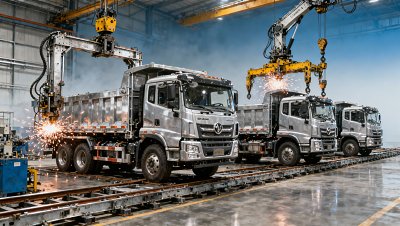
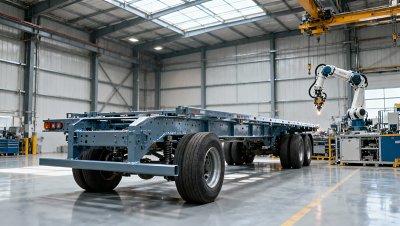
Even after specification and sourcing are settled, factory coordination remains a major reason project timelines move. In a truck cement OEM project, the production flow usually includes steel preparation, drum fabrication, chassis integration, hydraulic installation, painting, final assembly, inspection, and shipment preparation. Depending on configuration and plant loading, the production phase often takes 15–35 days for standard builds and longer for customized units.
Schedule changes often happen because buyers think production begins the day payment is made. In reality, factories allocate slots based on drawing approval, material readiness, workshop capacity, and upstream supplier delivery. If a truck chassis arrives later than expected, the body may be ready while final assembly waits. If painting is delayed during a peak export period, finished units may still miss the target vessel booking.
This is one reason why experienced buyers ask for milestone-based updates rather than general promises. A better question is not “When will it be done?” but “Which stage is completed, which stage is waiting, and what is the next gating item?” That level of visibility matters for truck trailer wholesale, truck cement bulk order planning, and dealer inventory management.
A global commercial vehicle platform helps here by giving buyers a broader view of supplier specialization, category coverage, and communication efficiency. When buyers can compare complete trucks, trailers, chassis, and spare parts in one sourcing environment, they can coordinate mixed procurement programs more effectively and reduce hidden handoff delays.
A simple way to monitor factory progress
For practical control, buyers should request 6 milestone checks during production. This is especially important when project timing affects construction contracts or dealer delivery commitments.
- Milestone 1: drawing and BOM released for production.
- Milestone 2: major materials and critical components received.
- Milestone 3: drum and structural fabrication completed.
- Milestone 4: chassis and upper body integration completed.
- Milestone 5: painting, installation, and functional testing finished.
- Milestone 6: pre-shipment inspection, packing, and export document preparation completed.
When these milestones are tracked, timeline discussions become evidence-based. Procurement teams can also identify whether a delay comes from engineering, supply chain, manufacturing, or shipping preparation.
Where factory coordination and shipping meet
In export orders, final delivery timing also depends on document accuracy and loading method. Depending on vehicle size and destination, inland transfer, port booking, and customs preparation can add another 5–15 days. This means a “finished unit” is not always a “shippable unit.” Buyers evaluating truck trailer price should include this distinction in their schedule reviews.
For agents and distributors, this is also where supplier discipline becomes visible. A supplier that provides clear packing plans, photo records, and export document coordination usually reduces overall delivery uncertainty more effectively than a supplier offering only verbal progress updates.
How Buyers Can Compare Suppliers Without Missing Timeline Risks
Many buyers compare truck cement price, truck trailer price, and semi trailer supplier offers primarily by final number. That is understandable, but it is not enough for an OEM project. A better comparison method uses at least 5 dimensions: technical completeness, lead-time clarity, component transparency, compliance readiness, and communication speed. This is particularly important for importers and distributors managing several projects at once.
A supplier with a competitive price may still be the weaker choice if it cannot confirm key interfaces, lacks stable sourcing for major assemblies, or does not provide realistic production milestones. On the other hand, a slightly higher quote may include better chassis matching, documented lead times, and fewer revision risks. In many road transport equipment projects, that difference saves more money than the opening quote suggests.
This is also why buyers increasingly use industry platforms rather than isolated supplier contacts. A structured B2B platform can shorten supplier screening, support cross-category sourcing, and help procurement teams compare trucks, trailers, construction machinery, and spare parts within one information flow. For commercial decision-makers, this reduces fragmented communication and speeds up evaluation.
The goal is not to find the cheapest line item. The goal is to choose a supplier combination that can meet the required delivery window, compliance expectation, and operating scenario without hidden cost escalation.
Supplier evaluation table for timeline-sensitive purchasing
If your team is comparing several truck cement sourcing options, the table below can be used as a quick decision tool during RFQ review, internal approval, or distributor negotiation.
Using this framework improves internal decision quality for sourcing managers and commercial reviewers. It also gives dealers and agents a clearer basis for discussing delivery commitments with end buyers.
FAQ: Practical Questions Buyers Ask Before Placing a Truck Cement Order
The questions below come up frequently in truck cement sourcing, truck trailer wholesale discussions, and semi trailer supplier evaluations. They matter because procurement risk usually comes from unclear assumptions rather than from visible technical issues.
How long does a truck cement OEM project usually take?
For a standard configuration with stable component supply, the full process may take around 4–8 weeks from confirmed specification to shipment readiness. A more customized project can extend beyond that range if the chassis source, hydraulic system, or compliance documents need extra coordination. Buyers should ask for a stage-based schedule instead of relying on one total number.
What should I prioritize more: truck cement price or delivery certainty?
If the project supports a fixed construction window or resale commitment, delivery certainty often deserves equal or greater weight than the opening price. A lower truck cement price can become more expensive if the supplier cannot secure key components, misses a production slot, or requires repeated design changes. A balanced decision usually looks at 3 factors together: price, lead-time reliability, and after-sales support.
Why do similar truck trailer price offers lead to different delivery dates?
Because the quotation may not include the same supply assumptions. One supplier may have stock or rolling purchase access to axles, tires, or hydraulic assemblies, while another orders only after deposit. Some suppliers also reserve production capacity earlier. This is why buyers should request a component and milestone breakdown before comparing truck trailer price offers.
What are the most common mistakes in a truck cement bulk order?
The most common mistakes are incomplete specification confirmation, weak review of destination compliance, and insufficient attention to spare parts continuity. Buyers also sometimes approve a quotation before confirming whether the chosen chassis, drum volume, and component brands are truly aligned. In a bulk order, even a small mismatch can affect several units at once, multiplying delay and rework cost.
Why Choose Us for Truck Cement Sourcing and Heavy Truck Project Support
For buyers in the road transport equipment sector, the challenge is rarely limited to finding a product page. The real challenge is comparing suppliers, understanding configuration differences, checking lead-time logic, and reducing cross-border sourcing risk. The Global Heavy Truck Industry Platform supports this process by connecting buyers with manufacturers, suppliers, distributors, and relevant industry resources across the heavy truck supply chain.
Because the platform covers key categories such as truck chassis and cab, complete trucks, trailers and semi-trailers, construction machinery, and spare parts, buyers can review related sourcing elements in one place instead of managing fragmented channels. This is useful when a truck cement OEM project depends on linked decisions involving chassis availability, body configuration, parts support, and market-specific purchasing requirements.
If you are evaluating truck cement price, truck trailer price, or looking for a semi trailer supplier for a time-sensitive project, you can use the platform to compare product options, review supplier capabilities, and gather industry insights before moving into quotation and order negotiation. This approach helps information researchers, procurement teams, business evaluators, and distributors make faster and more informed decisions.
Contact us to discuss concrete mixer truck parameters, product selection, delivery timeline planning, customization scope, destination compliance requirements, spare parts support, sample or specification confirmation, and quotation communication. If your project includes truck cement sourcing, truck cement bulk order planning, or broader truck trailer wholesale needs, a structured discussion at the beginning can save weeks later in the process.
Trending News
- How to choose a military truck for off-road transport
- Cummins Expects EPA to Finalize Heavy-Duty Truck NOx Rule in December
- How to choose the right bulk cement trailer capacity
- China Truckmakers' Third-Quarter Results Diverge as Exports Offset Weak Domestic Demand
- How to check if truck spare parts are compatible with your vehicle
Tag
Recommended News
 Company NewsTata Motors Returns to Q2 Profit on Strong Commercial Vehicle DemandTata Motors returns to Q2 profit as strong commercial vehicle demand and heavy truck sales support recovery. Explore how pricing and costs could shape the outlook for fleet buyers.
 Company NewsVolvo Group Forms Volvo Mining to Integrate Equipment and Autonomous SolutionsVolvo Mining will unite Volvo Group trucks, construction equipment and autonomous solutions from January 2027. Explore what this could mean for mining procurement and operational support.
 Company NewsWater Truck Factory Checklist: What to Confirm Before Factory AuditWater truck factory audit checklist: confirm certifications, tank quality, welding, traceability, and testing before approval. Reduce sourcing risk and choose a reliable supplier.
 Company NewsWhat Sets a Reliable Truck Cement Manufacturer Apart in 2026Truck cement manufacturer selection in 2026 depends on compliance, quality consistency, and service support. Learn how to compare suppliers by use case and reduce procurement risk.
 Company NewsInside a Water Truck Factory: What Quality-Control Steps Matter MostWater truck factory quality starts with material checks, tank welding, pump testing, chassis integration, and corrosion control. Learn what matters most for safer, longer-lasting fleet performance.
 Company NewsInside a Water Truck Factory: What Affects Build QualityWater truck factory quality starts with materials, welding, sealing, and testing. Learn what buyers should inspect to reduce risk and choose a reliable manufacturer.
 Company NewsWhat a Truck Cement Mixer Manufacturer Should Prove Before ApprovalTruck cement mixer manufacturer approval requires more than capacity. Learn the key proof points in compliance, welding, chassis integration, and after-sales support to reduce sourcing risk.
 Company NewsConstruction Machinery Manufacturer Review: Capacity, Lead Time, and SupportConstruction machinery manufacturer review covering production capacity, lead time, and after-sales support. Compare reliable suppliers, reduce sourcing risk, and make smarter equipment buying decisions.
 Company NewsInside a Water Truck Factory: Key Steps That Affect Build QualityWater truck factory quality starts with materials, welding, sealing, and testing. Learn the key build steps that reduce risk, improve compliance, and ensure reliable truck performance.
 Company NewsDelivery Truck Supplier in USA: What Signals Better Service After DeliveryDelivery truck supplier in USA: learn the key signs of better after-delivery service, from warranty clarity to parts support, and choose a supplier that reduces downtime and protects long-term value.
 Company NewsHow a Truck Trailer Distributor Can Improve After-Sales ResponseTruck trailer distributor strategies that speed up after-sales response, reduce downtime, improve parts accuracy, and strengthen fleet maintenance efficiency. Learn practical service advantages.
 Company NewsInside a Modern Water Truck Factory: What Affects Product ReliabilityExplore how a modern water truck factory ensures product reliability through chassis integration, tank fabrication, welding, corrosion protection, and testing—essential insights for smarter supplier selection.
 Company NewsWhat Makes an Excavator Supplier Reliable for Long-Term ProjectsExcavator supplier selection can make or break long-term projects. Learn how reliable support, parts availability, and global delivery reduce downtime and risk.
 Company NewsWhat Changes Most in a Truck Cement OEM Project TimelineTruck cement OEM timelines shift most in design, sourcing, and factory coordination. Compare truck trailer price, semi trailer supplier options, and truck cement bulk order risks before you buy.
 Company NewsFoton Motor's Stock Surge Highlights Export Growth and New Energy TransitionFoton Motor's stock surge reflects 42% overseas order growth and rising新能源重卡 exports, signaling China's commercial vehicle export upgrade. Discover key impacts on新能源供应链 and global trade strategies.
 Company NewsDelivery truck supplier scalability challenges: What happens when order volume jumps from 5 to 50 units per quarter?Truck spare parts supplier & dump truck supplier scalability tested: Can your SHACMAN L3000/X5000 partner handle 5→50 units/quarter? Discover proven export-ready solutions.
 Company NewsBulldozer OEM partnerships: When co-branding signals shared IP—and when it’s just a rebadge dealDiscover genuine bulldozer OEM partnerships vs. rebadge deals—verify excavator manufacturer in USA/Germany, ISO certification, R&D capability & price transparency.
 Company NewsHow Semi Trailer Manufacturer Production Capacity Affects Custom Order FlexibilityDiscover how a semi trailer manufacturer's production capacity boosts custom order flexibility—ideal for flatbed trailer supplier, low bed trailer export & SHACMAN truck integration needs.
 Company NewsExcavator manufacturer catalog updates you missed in Q2 2026 — hydraulic coupler revisions includedExcavator manufacturer catalog updates for Q2 2026 — featuring excavator bucket, parts, mining & pipeline models, CE-certified OEMs, and hydraulic coupler revisions. Act now!
 Company NewsBulldozer manufacturer lead times jumped 42% in early 2026 — but not for all modelsExcavator rental, for sale & construction options—plus bulldozer manufacturer lead times up 42%. Discover delay-resilient excavator attachments, suppliers & sourcing strategies now.
 Company NewsBulldozer manufacturer vs. bulldozer factory: Why the distinction changes warranty coverage and service lead timesBulldozer manufacturer vs. factory: Discover how OEM engineering control impacts warranty, service lead times, and TCO—critical for excavator rental, sale, or construction sourcing.
 Company NewsBYD's Qianyuan Heavy Truck Unit Reports Q1 Revenue Surge of 97% but Net Loss Widens to RMB420 MillionBYD's Qianyuan Heavy Truck reports 97% revenue surge to RMB2.86B in Q1 2026, driven by electric tractors, but net loss widens to RMB420M due to R&D costs. Key focus: upcoming battery-swap network launch for heavy trucks. Essential read for EV commercial vehicle stakeholders.