Water Truck Factory Checklist: What to Confirm Before Factory Audit
Before starting a water truck factory audit, quality control and safety teams need a clear checklist to avoid compliance gaps, production risks, and costly sourcing mistakes. In the current road transport equipment market, a water truck factory is no longer judged only by assembly output or price. Buyers now look at traceability, regulatory readiness, welding consistency, tank safety, and post-sale support as part of a broader risk review. This shift matters because water trucks are used in municipal sanitation, road dust suppression, mining, construction, and emergency water delivery, where reliability failures can quickly become operational and legal problems.
The audit process has also changed with the globalization of heavy truck sourcing. A water truck factory may assemble chassis, tanks, pumps, piping, and spraying systems from different supply chains, sometimes across several countries. That means factory audits must go beyond a visual workshop visit. They should confirm whether the supplier can maintain stable quality, document critical processes, and adapt products to local regulations and operating conditions. For any business evaluating a water truck factory, the real goal is to verify whether the factory can deliver repeatable performance over time, not just produce one acceptable unit during inspection week.
Why water truck factory audits are becoming more demanding
Several market signals show why a water truck factory now faces higher audit expectations. Fleet operators increasingly demand multi-function vehicles with front flushing, rear spraying, side watering, high-pressure cleaning, and cannon systems in one platform. At the same time, road transport equipment buyers are under pressure to reduce downtime, improve safety records, and document environmental compliance. As a result, an audit must examine not only production lines but also engineering control, testing discipline, and the reliability of outsourced components.
Another important change is the rise of project-based sourcing. Water trucks are often purchased for infrastructure contracts, mining support, municipal sanitation programs, and public service fleets. In these scenarios, delivery delays, tank leaks, spray instability, or missing homologation documents can disrupt entire operations. A strong water truck factory should therefore demonstrate controlled production planning, qualified suppliers, and clear pre-delivery inspection standards.
The main forces shaping audit priorities at a water truck factory
Audit expectations are being shaped by technical, commercial, and compliance pressures across the heavy truck industry. The table below highlights the main drivers and what they mean during a factory review.
What a reliable water truck factory should prove during an audit
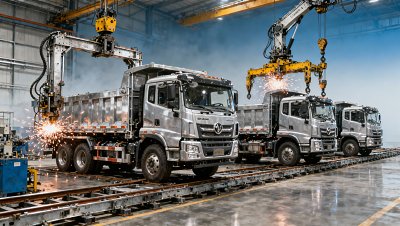
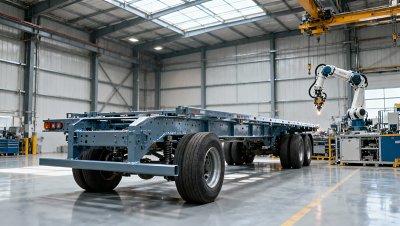
A capable water truck factory should be able to prove manufacturing discipline, not just describe it. Start with the workshop layout. Confirm whether material flow is organized from cutting and forming to welding, assembly, painting, testing, and dispatch. Disorder in production areas often signals weak process control. Check whether chassis modification, tank fabrication, and piping installation are completed in defined workstations with inspection checkpoints between them.
Then verify the factory’s technical capability. A serious water truck factory should have current engineering drawings, revision control, process instructions, and a bill of materials linked to each model. If multiple tank sizes or spray systems are offered, ask how engineering changes are approved and communicated to production. This is especially important for export orders where axle loads, water tank volume, road regulations, and climate conditions vary by destination.
Core production points to inspect on site
- Tank material grade, thickness consistency, and storage conditions
- Welding qualification records and visual weld quality on seams and reinforcements
- Baffle structure design inside the tank to reduce liquid surge during transport
- Anti-corrosion preparation, blasting or surface cleaning, and paint curing control
- Pump installation alignment, PTO integration, and hose routing protection
- Electrical harness organization, connector sealing, and safety labeling
A dependable water truck factory should also show traceability from raw steel and purchased pumps to the finished vehicle serial record. If a supplier cannot quickly connect a completed truck to component sources, inspection data, and repair history, long-term quality management may be weak.
Where quality and safety risks usually emerge first
In many audits, the highest risks are not always obvious on the exterior of the truck. Internal tank workmanship, hidden piping joints, spray pressure stability, and corrosion protection are common weak points. A water truck factory may present a clean finished vehicle, yet still have poor internal baffling, uneven weld penetration, or insufficient pressure testing. These problems often appear later as leaks, poor handling, or unstable spray performance during field use.
Safety review should focus on both road transport and operational use. Confirm ladder and platform security, guardrails where applicable, access cover sealing, emergency shutoff arrangement, and whether moving parts are shielded. If the water truck factory produces units for municipal or construction environments, visibility aids, warning lamps, and anti-slip surfaces should also be reviewed carefully.
Typical warning signs during a water truck factory audit
- No standardized inspection records for tank leak testing or spray performance
- Frequent rework marks with no root-cause documentation
- Key components sourced from changing suppliers without approval records
- Paint defects, rust spots, or inconsistent coating thickness in storage areas
- Mismatch between technical documents and actual assembled configuration
How audit findings affect sourcing decisions across the supply chain
The results of a water truck factory audit influence more than one purchase order. They affect delivery reliability, maintenance planning, after-sales cost, and the credibility of project timelines. When factory controls are strong, buyers can standardize specifications, reduce incoming inspection disputes, and forecast spare parts needs more accurately. When controls are weak, every shipment may require extra verification, adding cost and uncertainty across the supply chain.
Audit outcomes also shape long-term supplier development. A water truck factory with good documentation and stable processes can usually adapt faster to market changes such as new emission platforms, larger tank demands, or higher-pressure cleaning systems. In contrast, a factory that relies heavily on manual fixes and informal quality decisions may struggle as technical requirements become more complex in the road transport equipment sector.
The most important items to confirm before approving a water truck factory
Before approval, focus on the factors that most directly predict future delivery quality and compliance. The following checklist can help structure final review priorities.
- Factory license, export documentation capability, and applicable vehicle certifications
- Chassis sourcing stability and compatibility with the intended water truck configuration
- Tank fabrication quality, internal structure design, and corrosion protection method
- Traceability for pumps, valves, nozzles, hoses, PTO systems, and electrical components
- Functional testing for leak resistance, spray range, pressure stability, braking, and road readiness
- Quality complaint handling process, spare parts readiness, and service response capability
A practical way to judge audit results and next steps
Not every nonconformity should lead to rejection, but every nonconformity should be ranked by operational impact. Structural weld concerns, missing compliance records, failed pressure tests, or uncontrolled design changes should be treated as critical. Cosmetic paint inconsistency or minor labeling errors may be correctable if the water truck factory provides a clear action plan with timeline, responsibility, and verification method.
A strong final decision should combine workshop observations, document review, test evidence, and supply chain consistency. If the water truck factory performs well in all four areas, confidence in future orders is significantly higher than relying on price or brochures alone.
For broader supplier comparison, market visibility, and global commercial vehicle sourcing insight, using an industry-focused B2B platform can improve the audit preparation stage. The Global Heavy Truck Industry Platform supports this process by connecting buyers with water truck factory resources, truck chassis and complete truck suppliers, industry directories, and practical market information across the road transport equipment ecosystem. That combination helps turn a single audit into a more informed long-term sourcing strategy.
Trending News
- How to choose the right bulldozer size for a construction site
- How to choose a military truck for off-road transport
- Cummins Expects EPA to Finalize Heavy-Duty Truck NOx Rule in December
- How to choose the right bulk cement trailer capacity
- China Truckmakers' Third-Quarter Results Diverge as Exports Offset Weak Domestic Demand
Tag
Recommended News
 Company NewsTata Motors Returns to Q2 Profit on Strong Commercial Vehicle DemandTata Motors returns to Q2 profit as strong commercial vehicle demand and heavy truck sales support recovery. Explore how pricing and costs could shape the outlook for fleet buyers.
 Company NewsVolvo Group Forms Volvo Mining to Integrate Equipment and Autonomous SolutionsVolvo Mining will unite Volvo Group trucks, construction equipment and autonomous solutions from January 2027. Explore what this could mean for mining procurement and operational support.
 Company NewsWater Truck Factory Checklist: What to Confirm Before Factory AuditWater truck factory audit checklist: confirm certifications, tank quality, welding, traceability, and testing before approval. Reduce sourcing risk and choose a reliable supplier.
 Company NewsWhat Sets a Reliable Truck Cement Manufacturer Apart in 2026Truck cement manufacturer selection in 2026 depends on compliance, quality consistency, and service support. Learn how to compare suppliers by use case and reduce procurement risk.
 Company NewsInside a Water Truck Factory: What Quality-Control Steps Matter MostWater truck factory quality starts with material checks, tank welding, pump testing, chassis integration, and corrosion control. Learn what matters most for safer, longer-lasting fleet performance.
 Company NewsInside a Water Truck Factory: What Affects Build QualityWater truck factory quality starts with materials, welding, sealing, and testing. Learn what buyers should inspect to reduce risk and choose a reliable manufacturer.
 Company NewsWhat a Truck Cement Mixer Manufacturer Should Prove Before ApprovalTruck cement mixer manufacturer approval requires more than capacity. Learn the key proof points in compliance, welding, chassis integration, and after-sales support to reduce sourcing risk.
 Company NewsConstruction Machinery Manufacturer Review: Capacity, Lead Time, and SupportConstruction machinery manufacturer review covering production capacity, lead time, and after-sales support. Compare reliable suppliers, reduce sourcing risk, and make smarter equipment buying decisions.
 Company NewsInside a Water Truck Factory: Key Steps That Affect Build QualityWater truck factory quality starts with materials, welding, sealing, and testing. Learn the key build steps that reduce risk, improve compliance, and ensure reliable truck performance.
 Company NewsDelivery Truck Supplier in USA: What Signals Better Service After DeliveryDelivery truck supplier in USA: learn the key signs of better after-delivery service, from warranty clarity to parts support, and choose a supplier that reduces downtime and protects long-term value.
 Company NewsHow a Truck Trailer Distributor Can Improve After-Sales ResponseTruck trailer distributor strategies that speed up after-sales response, reduce downtime, improve parts accuracy, and strengthen fleet maintenance efficiency. Learn practical service advantages.
 Company NewsInside a Modern Water Truck Factory: What Affects Product ReliabilityExplore how a modern water truck factory ensures product reliability through chassis integration, tank fabrication, welding, corrosion protection, and testing—essential insights for smarter supplier selection.
 Company NewsWhat Makes an Excavator Supplier Reliable for Long-Term ProjectsExcavator supplier selection can make or break long-term projects. Learn how reliable support, parts availability, and global delivery reduce downtime and risk.
 Company NewsWhat Changes Most in a Truck Cement OEM Project TimelineTruck cement OEM timelines shift most in design, sourcing, and factory coordination. Compare truck trailer price, semi trailer supplier options, and truck cement bulk order risks before you buy.
 Company NewsFoton Motor's Stock Surge Highlights Export Growth and New Energy TransitionFoton Motor's stock surge reflects 42% overseas order growth and rising新能源重卡 exports, signaling China's commercial vehicle export upgrade. Discover key impacts on新能源供应链 and global trade strategies.
 Company NewsDelivery truck supplier scalability challenges: What happens when order volume jumps from 5 to 50 units per quarter?Truck spare parts supplier & dump truck supplier scalability tested: Can your SHACMAN L3000/X5000 partner handle 5→50 units/quarter? Discover proven export-ready solutions.
 Company NewsBulldozer OEM partnerships: When co-branding signals shared IP—and when it’s just a rebadge dealDiscover genuine bulldozer OEM partnerships vs. rebadge deals—verify excavator manufacturer in USA/Germany, ISO certification, R&D capability & price transparency.
 Company NewsHow Semi Trailer Manufacturer Production Capacity Affects Custom Order FlexibilityDiscover how a semi trailer manufacturer's production capacity boosts custom order flexibility—ideal for flatbed trailer supplier, low bed trailer export & SHACMAN truck integration needs.
 Company NewsExcavator manufacturer catalog updates you missed in Q2 2026 — hydraulic coupler revisions includedExcavator manufacturer catalog updates for Q2 2026 — featuring excavator bucket, parts, mining & pipeline models, CE-certified OEMs, and hydraulic coupler revisions. Act now!
 Company NewsBulldozer manufacturer lead times jumped 42% in early 2026 — but not for all modelsExcavator rental, for sale & construction options—plus bulldozer manufacturer lead times up 42%. Discover delay-resilient excavator attachments, suppliers & sourcing strategies now.
 Company NewsBulldozer manufacturer vs. bulldozer factory: Why the distinction changes warranty coverage and service lead timesBulldozer manufacturer vs. factory: Discover how OEM engineering control impacts warranty, service lead times, and TCO—critical for excavator rental, sale, or construction sourcing.
 Company NewsBYD's Qianyuan Heavy Truck Unit Reports Q1 Revenue Surge of 97% but Net Loss Widens to RMB420 MillionBYD's Qianyuan Heavy Truck reports 97% revenue surge to RMB2.86B in Q1 2026, driven by electric tractors, but net loss widens to RMB420M due to R&D costs. Key focus: upcoming battery-swap network launch for heavy trucks. Essential read for EV commercial vehicle stakeholders.