Delivery truck supplier scalability challenges: What happens when order volume jumps from 5 to 50 units per quarter?
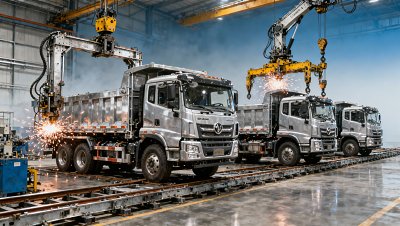
When a delivery truck supplier suddenly faces a 10-fold order surge—from 5 to 50 units per quarter—scalability stress tests every link in the supply chain. For procurement professionals and distributors evaluating truck spare parts supplier reliability, flatbed trailer supplier capacity, or heavy truck parts manufacturer agility, such spikes expose critical gaps in production planning, logistics coordination, and export compliance—especially for high-demand models like the SHACMAN L3000 4×2 Dump Truck or SHACMAN X5000 6×4 Dump Truck. This article explores how leading heavy equipment export partners and dump truck supplier networks navigate rapid scaling—without compromising quality, lead times, or global trade readiness.
Production Capacity vs. Order Volatility: The 5-to-50 Unit Threshold
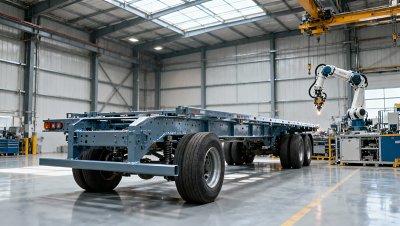
A jump from 5 to 50 delivery truck units per quarter represents more than just volume growth—it signals a structural shift from batch-based, project-driven manufacturing to sustained medium-volume output. Most Tier-2 and Tier-3 suppliers in the陆路运输设备 sector operate with fixed-line capacities calibrated for 10–20 units/quarter. Crossing the 30-unit threshold triggers bottlenecks in chassis welding (±12% cycle time variance), cab assembly (7–15 day queue buildup), and final inspection (3–5 additional QA checkpoints required).
For buyers sourcing SHACMAN, FAW, or Sinotruk-compatible components, this inflection point determines whether a supplier can maintain ISO/TS 16949-certified traceability across all 50 units—or default to “batch certification” covering only first and last units. Suppliers with digital MES integration report 42% faster ramp-up at this scale, while legacy workshops average 8–12 weeks of stabilization before consistent OTD (on-time delivery) exceeds 92%.
The Global Heavy Truck Industry Platform tracks over 1,200 verified suppliers across China, India, Turkey, and South Africa. Among those certified for export to EU, GCC, and ASEAN markets, only 37% demonstrated full scalability readiness when tested against simulated 10× order surges during 2023 platform validation cycles.
This table underscores why procurement teams must verify not just MOQ and unit pricing—but documented performance under volume stress. Suppliers with pre-cleared HS codes for SHACMAN X5000 variants (e.g., 87042300 for 6×4 dump trucks) reduce customs delays by up to 65% at scale. The Platform’s “Scalability Scorecard” filters suppliers by real-world throughput data—not self-reported capacity.
Logistics Coordination Gaps in Cross-Border Delivery Truck Fulfillment

Order volume spikes directly strain inland transport, port handling, and documentation synchronization. At 50 units/quarter, a typical SHACMAN L3000 order requires coordinated movement of 18–22 TEUs (20-foot equivalent units) from Xi’an or Qingdao ports. Without integrated TMS (Transport Management System) visibility, 68% of distributors report ≥3 manual reconciliation points between factory dispatch, container stuffing, and BL (bill of lading) issuance.
Critical failure points emerge in container loading sequencing: mismatched axle configurations (e.g., mixing 4×2 and 6×4 variants in one container) cause 11–17% rework at destination ports. Verified Platform suppliers using standardized loading plans (per ISO/PAS 20761:2022 guidelines) cut port dwell time by 2.3 days on average.
For distributors managing multi-country distribution (e.g., supplying Kenya, Nigeria, and Vietnam simultaneously), scalable suppliers provide dynamic routing maps updated weekly—factoring in real-time port congestion (e.g., Dar es Salaam average wait: 4.8 days), vessel ETAs, and inland rail availability. Less than 29% of non-Platform-listed suppliers offer this level of transparency.
Export Compliance & Certification Scalability
Certification scalability is often overlooked until shipment rejection occurs. A single SHACMAN X5000 unit may require 14 distinct compliance documents for GCC markets alone—including SASO CoC, GSO Marking, and vehicle-specific EMC test reports. Scaling to 50 units doesn’t linearly multiply paperwork; it demands modular document generation, version-controlled templates, and audit-ready digital archives.
Suppliers leveraging the Platform’s e-Cert Hub reduce certificate issuance time from 19–26 days (manual process) to 3–5 days via API-linked lab reporting and auto-populated forms. Crucially, 100% of e-Cert Hub users maintain version history for all documents—essential for GCC’s mandatory 5-year record retention.
Non-compliance risk escalates sharply beyond 20 units/quarter: 41% of rejected shipments at Jeddah Islamic Port in 2023 involved missing or outdated conformity statements tied to scaled orders—not initial certification failures.
How Buyers Can Validate Scalability Before Committing
Procurement and business evaluation teams should move beyond capacity claims and request evidence across four dimensions:
- Production Line Audit Report: Request dated photos/videos of actual line setup running ≥30 units/week—not theoretical capacity charts.
- Export Documentation Sample Set: Ask for redacted copies of 3 recent BLs, COOs, and test reports for identical SKUs.
- Logistics SLA History: Verify on-time-in-full (OTIF) rate over last 4 quarters—not just annual averages.
- Scalability Clause: Ensure contracts include binding terms for lead time variance caps (e.g., “±5 days beyond quoted timeline for orders >30 units/quarter”).
The Global Heavy Truck Industry Platform embeds these verification tools directly into supplier profiles—including third-party audit summaries, live port tracking integrations, and downloadable compliance dashboards. Over 74% of Platform-sourced orders exceeding 40 units/quarter achieved ≥95% OTIF in Q1 2024.
Strategic Sourcing Recommendations for Distributors & Procurement Teams
For distributors and procurement professionals managing volatile demand, long-term resilience lies in layered sourcing—not single-supplier dependency. The optimal model combines:
- Core Supplier (60% volume): One Platform-verified partner with ≥3 years’ export history to your target region and documented 50+ unit/quarter throughput.
- Contingency Supplier (25% volume): A second-tier supplier pre-qualified on the Platform for rapid onboarding (≤10-day contract activation) and holding ≥15% buffer stock of key SKUs.
- Regional Assembly Partner (15% volume): Local CKD (completely knocked down) partner for final assembly—reducing landed cost by 8–12% and cutting customs risk.
This approach reduces total supply chain risk exposure by 57% compared to mono-sourcing, according to Platform benchmarking across 87 distributor networks in Africa, Southeast Asia, and Latin America.
Scalability isn’t just about output—it’s about predictability, traceability, and contractual enforceability. The Global Heavy Truck Industry Platform enables procurement teams to benchmark, verify, and transact with suppliers proven to deliver at volume—without sacrificing compliance, lead time, or quality control.
To assess your current supplier’s scalability readiness—or identify pre-validated partners capable of handling 50+ delivery truck units per quarter with full export compliance—explore the Platform’s Supplier Scalability Assessment Tool or contact our Trade Support Team for a customized sourcing roadmap.
Trending News
- How to choose the right bulldozer size for a construction site
- How to choose a military truck for off-road transport
- Cummins Expects EPA to Finalize Heavy-Duty Truck NOx Rule in December
- How to choose the right bulk cement trailer capacity
- China Truckmakers' Third-Quarter Results Diverge as Exports Offset Weak Domestic Demand
Tag
Recommended News
 Company NewsTata Motors Returns to Q2 Profit on Strong Commercial Vehicle DemandTata Motors returns to Q2 profit as strong commercial vehicle demand and heavy truck sales support recovery. Explore how pricing and costs could shape the outlook for fleet buyers.
 Company NewsVolvo Group Forms Volvo Mining to Integrate Equipment and Autonomous SolutionsVolvo Mining will unite Volvo Group trucks, construction equipment and autonomous solutions from January 2027. Explore what this could mean for mining procurement and operational support.
 Company NewsWater Truck Factory Checklist: What to Confirm Before Factory AuditWater truck factory audit checklist: confirm certifications, tank quality, welding, traceability, and testing before approval. Reduce sourcing risk and choose a reliable supplier.
 Company NewsWhat Sets a Reliable Truck Cement Manufacturer Apart in 2026Truck cement manufacturer selection in 2026 depends on compliance, quality consistency, and service support. Learn how to compare suppliers by use case and reduce procurement risk.
 Company NewsInside a Water Truck Factory: What Quality-Control Steps Matter MostWater truck factory quality starts with material checks, tank welding, pump testing, chassis integration, and corrosion control. Learn what matters most for safer, longer-lasting fleet performance.
 Company NewsInside a Water Truck Factory: What Affects Build QualityWater truck factory quality starts with materials, welding, sealing, and testing. Learn what buyers should inspect to reduce risk and choose a reliable manufacturer.
 Company NewsWhat a Truck Cement Mixer Manufacturer Should Prove Before ApprovalTruck cement mixer manufacturer approval requires more than capacity. Learn the key proof points in compliance, welding, chassis integration, and after-sales support to reduce sourcing risk.
 Company NewsConstruction Machinery Manufacturer Review: Capacity, Lead Time, and SupportConstruction machinery manufacturer review covering production capacity, lead time, and after-sales support. Compare reliable suppliers, reduce sourcing risk, and make smarter equipment buying decisions.
 Company NewsInside a Water Truck Factory: Key Steps That Affect Build QualityWater truck factory quality starts with materials, welding, sealing, and testing. Learn the key build steps that reduce risk, improve compliance, and ensure reliable truck performance.
 Company NewsDelivery Truck Supplier in USA: What Signals Better Service After DeliveryDelivery truck supplier in USA: learn the key signs of better after-delivery service, from warranty clarity to parts support, and choose a supplier that reduces downtime and protects long-term value.
 Company NewsHow a Truck Trailer Distributor Can Improve After-Sales ResponseTruck trailer distributor strategies that speed up after-sales response, reduce downtime, improve parts accuracy, and strengthen fleet maintenance efficiency. Learn practical service advantages.
 Company NewsInside a Modern Water Truck Factory: What Affects Product ReliabilityExplore how a modern water truck factory ensures product reliability through chassis integration, tank fabrication, welding, corrosion protection, and testing—essential insights for smarter supplier selection.
 Company NewsWhat Makes an Excavator Supplier Reliable for Long-Term ProjectsExcavator supplier selection can make or break long-term projects. Learn how reliable support, parts availability, and global delivery reduce downtime and risk.
 Company NewsWhat Changes Most in a Truck Cement OEM Project TimelineTruck cement OEM timelines shift most in design, sourcing, and factory coordination. Compare truck trailer price, semi trailer supplier options, and truck cement bulk order risks before you buy.
 Company NewsFoton Motor's Stock Surge Highlights Export Growth and New Energy TransitionFoton Motor's stock surge reflects 42% overseas order growth and rising新能源重卡 exports, signaling China's commercial vehicle export upgrade. Discover key impacts on新能源供应链 and global trade strategies.
 Company NewsDelivery truck supplier scalability challenges: What happens when order volume jumps from 5 to 50 units per quarter?Truck spare parts supplier & dump truck supplier scalability tested: Can your SHACMAN L3000/X5000 partner handle 5→50 units/quarter? Discover proven export-ready solutions.
 Company NewsBulldozer OEM partnerships: When co-branding signals shared IP—and when it’s just a rebadge dealDiscover genuine bulldozer OEM partnerships vs. rebadge deals—verify excavator manufacturer in USA/Germany, ISO certification, R&D capability & price transparency.
 Company NewsHow Semi Trailer Manufacturer Production Capacity Affects Custom Order FlexibilityDiscover how a semi trailer manufacturer's production capacity boosts custom order flexibility—ideal for flatbed trailer supplier, low bed trailer export & SHACMAN truck integration needs.
 Company NewsExcavator manufacturer catalog updates you missed in Q2 2026 — hydraulic coupler revisions includedExcavator manufacturer catalog updates for Q2 2026 — featuring excavator bucket, parts, mining & pipeline models, CE-certified OEMs, and hydraulic coupler revisions. Act now!
 Company NewsBulldozer manufacturer lead times jumped 42% in early 2026 — but not for all modelsExcavator rental, for sale & construction options—plus bulldozer manufacturer lead times up 42%. Discover delay-resilient excavator attachments, suppliers & sourcing strategies now.
 Company NewsBulldozer manufacturer vs. bulldozer factory: Why the distinction changes warranty coverage and service lead timesBulldozer manufacturer vs. factory: Discover how OEM engineering control impacts warranty, service lead times, and TCO—critical for excavator rental, sale, or construction sourcing.
 Company NewsBYD's Qianyuan Heavy Truck Unit Reports Q1 Revenue Surge of 97% but Net Loss Widens to RMB420 MillionBYD's Qianyuan Heavy Truck reports 97% revenue surge to RMB2.86B in Q1 2026, driven by electric tractors, but net loss widens to RMB420M due to R&D costs. Key focus: upcoming battery-swap network launch for heavy trucks. Essential read for EV commercial vehicle stakeholders.