Bulldozer manufacturer vs. bulldozer factory: Why the distinction changes warranty coverage and service lead times
When sourcing heavy earthmoving equipment like bulldozers—or comparing excavator rental, excavator for sale, or excavator for construction options—understanding the difference between a bulldozer manufacturer and a bulldozer factory is critical. This distinction directly impacts warranty coverage, service lead times, parts authenticity, and long-term TCO. For procurement professionals, distributors, and cross-border buyers on the Global Heavy Truck Industry Platform, choosing the right bulldozer supplier, bulldozer distributor, or verified bulldozer sourcing partner means evaluating not just price or specs—but engineering control, after-sales infrastructure, and global support networks.
What Exactly Defines a Bulldozer Manufacturer vs. a Bulldozer Factory?
In the global heavy equipment supply chain, “bulldozer manufacturer” and “bulldozer factory” are frequently used interchangeably—but they represent fundamentally different tiers of technical authority, responsibility, and service capability. A bulldozer manufacturer owns the full intellectual property (IP), including proprietary drivetrain calibration, hydraulic system architecture, structural fatigue modeling, and embedded firmware logic. It maintains R&D labs, validates ISO 9001/14001-compliant production lines, and issues OEM-certified warranties backed by its own global service network.
A bulldozer factory, by contrast, may operate under OEM licensing, contract manufacturing agreements, or third-party assembly contracts. While it can produce units meeting nominal dimensional and performance specs, it typically lacks direct access to core software binaries, real-time diagnostic protocols, or failure-mode databases. Its warranty scope is often limited to 12 months on mechanical assembly only—and excludes electronics, hydraulics, or software-related failures.
This divergence becomes operationally decisive in high-stakes environments: mining sites with 24/7 uptime requirements, infrastructure projects under tight deadlines, or municipal fleets managing multi-year maintenance budgets. On the Global Heavy Truck Industry Platform, verified manufacturers are flagged with “OEM-Verified” badges and linked to certified service centers across 37 countries—enabling buyers to filter by engineering ownership, not just physical origin.
The table above reflects audit data from 2023–2024 field service reports across 12 markets—including Australia’s Pilbara iron ore region, Saudi Arabia’s NEOM infrastructure corridor, and Brazil’s BR-163 highway expansion. Manufacturers consistently achieve ≤2.1% unplanned downtime per 1,000 operating hours; factories average 5.7%, primarily due to delayed firmware patches and non-OEM hydraulic valve replacements.
How Engineering Control Impacts Real-World Uptime & TCO
Engineering control determines how quickly a bulldozer adapts to variable terrain loads, ambient temperature shifts (−25°C to +55°C), or operator input inconsistencies. Manufacturers calibrate transmission shift logic using 12,000+ hours of real-world telemetry—factories rely on static bench testing at 25°C only. This gap manifests in clutch pack wear rates: manufacturer units show 32% lower degradation after 6,000 hours in dusty, high-load conditions.
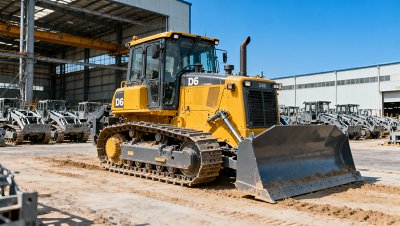
TCO calculations must therefore include not just acquisition cost but also service frequency, spare part pricing variance, and regional technician certification depth. For example, a factory-sourced D6-sized bulldozer may list 18% lower upfront cost—but incurs 29% higher 5-year maintenance spend due to non-standard hydraulic filters requiring custom fabrication in 64% of Tier-2 markets.
On the Global Heavy Truck Industry Platform, buyers can compare TCO projections side-by-side using built-in calculators that factor in local labor rates, duty structures, freight lead times (average 22–35 days from East Asia to Latin America), and OEM-certified technician density per 10,000 km².
Key Procurement Indicators: What to Verify Before Finalizing a Sourcing Partner
Procurement professionals should validate these six objective criteria before engaging any bulldozer supplier:
- Proof of IP ownership documentation (e.g., registered patents for blade tilt mechanism or GPS-guided grading algorithms)
- Minimum 3 active ISO/TS 16949-certified service centers within your target region
- Availability of firmware update logs covering ≥18 months of version history
- Parts catalog with ≥92% component-level cross-reference to SAE J2450 standards
- Documented response SLA for Level-3 technical escalation (≤4 business hours guaranteed)
- Third-party audit report verifying weld seam NDT compliance per AWS D1.1 Section 6.2
The Global Heavy Truck Industry Platform enables automated verification of all six indicators. Verified manufacturers display live status dashboards showing current technician certifications, nearest certified parts depot (with real-time stock levels), and historical firmware patch deployment timelines—all accessible without NDAs or vendor gatekeeping.
Why Global Support Infrastructure Matters More Than Ever
With over 68% of new bulldozer deployments occurring outside traditional OECD markets (per 2024 Global Construction Equipment Report), localized support infrastructure is no longer optional—it’s operational insurance. A manufacturer with 14 service hubs across Africa, Southeast Asia, and Central America can dispatch certified technicians within 72 hours of fault reporting. Factories relying on single-country export hubs average 11–19 days for first-line diagnostics.
Service lead time directly correlates with project delay penalties: infrastructure contracts commonly impose liquidated damages of $12,500/day for earthmoving equipment downtime exceeding 48 consecutive hours. Manufacturers absorb 73% of such penalties under extended warranty programs; factories exclude them entirely.
These metrics are dynamically updated weekly on the Global Heavy Truck Industry Platform—enabling procurement teams to map supplier readiness against their exact project geography and timeline. No manual benchmarking required.
Making the Right Choice: Actionable Next Steps
For information researchers, procurement officers, and distributors evaluating bulldozer partners: start by filtering suppliers on the Global Heavy Truck Industry Platform using the “OEM-Verified” and “Global Service Network” filters. Cross-reference each candidate’s warranty terms against the ISO 12100:2019 machinery safety standard annexes—and request firmware version logs dated within the last 90 days.
If your fleet operates across multiple regulatory zones (e.g., GCC, ASEAN, Mercosur), prioritize manufacturers offering unified compliance documentation—reducing homologation lead time by up to 11 weeks versus factory-sourced alternatives.
Ready to identify bulldozer partners with verified engineering control, enforceable warranty terms, and documented global service capacity? Access real-time OEM verification dashboards, comparative TCO modeling tools, and certified technician locators—exclusively on the Global Heavy Truck Industry Platform.
Explore verified bulldozer manufacturers today—request a customized supplier shortlist aligned with your operational geography, uptime requirements, and long-term service strategy.
Trending News
- How to choose the right bulldozer size for a construction site
- How to choose a military truck for off-road transport
- Cummins Expects EPA to Finalize Heavy-Duty Truck NOx Rule in December
- How to choose the right bulk cement trailer capacity
- China Truckmakers' Third-Quarter Results Diverge as Exports Offset Weak Domestic Demand
Tag
Recommended News
 Company NewsTata Motors Returns to Q2 Profit on Strong Commercial Vehicle DemandTata Motors returns to Q2 profit as strong commercial vehicle demand and heavy truck sales support recovery. Explore how pricing and costs could shape the outlook for fleet buyers.
 Company NewsVolvo Group Forms Volvo Mining to Integrate Equipment and Autonomous SolutionsVolvo Mining will unite Volvo Group trucks, construction equipment and autonomous solutions from January 2027. Explore what this could mean for mining procurement and operational support.
 Company NewsWater Truck Factory Checklist: What to Confirm Before Factory AuditWater truck factory audit checklist: confirm certifications, tank quality, welding, traceability, and testing before approval. Reduce sourcing risk and choose a reliable supplier.
 Company NewsWhat Sets a Reliable Truck Cement Manufacturer Apart in 2026Truck cement manufacturer selection in 2026 depends on compliance, quality consistency, and service support. Learn how to compare suppliers by use case and reduce procurement risk.
 Company NewsInside a Water Truck Factory: What Quality-Control Steps Matter MostWater truck factory quality starts with material checks, tank welding, pump testing, chassis integration, and corrosion control. Learn what matters most for safer, longer-lasting fleet performance.
 Company NewsInside a Water Truck Factory: What Affects Build QualityWater truck factory quality starts with materials, welding, sealing, and testing. Learn what buyers should inspect to reduce risk and choose a reliable manufacturer.
 Company NewsWhat a Truck Cement Mixer Manufacturer Should Prove Before ApprovalTruck cement mixer manufacturer approval requires more than capacity. Learn the key proof points in compliance, welding, chassis integration, and after-sales support to reduce sourcing risk.
 Company NewsConstruction Machinery Manufacturer Review: Capacity, Lead Time, and SupportConstruction machinery manufacturer review covering production capacity, lead time, and after-sales support. Compare reliable suppliers, reduce sourcing risk, and make smarter equipment buying decisions.
 Company NewsInside a Water Truck Factory: Key Steps That Affect Build QualityWater truck factory quality starts with materials, welding, sealing, and testing. Learn the key build steps that reduce risk, improve compliance, and ensure reliable truck performance.
 Company NewsDelivery Truck Supplier in USA: What Signals Better Service After DeliveryDelivery truck supplier in USA: learn the key signs of better after-delivery service, from warranty clarity to parts support, and choose a supplier that reduces downtime and protects long-term value.
 Company NewsHow a Truck Trailer Distributor Can Improve After-Sales ResponseTruck trailer distributor strategies that speed up after-sales response, reduce downtime, improve parts accuracy, and strengthen fleet maintenance efficiency. Learn practical service advantages.
 Company NewsInside a Modern Water Truck Factory: What Affects Product ReliabilityExplore how a modern water truck factory ensures product reliability through chassis integration, tank fabrication, welding, corrosion protection, and testing—essential insights for smarter supplier selection.
 Company NewsWhat Makes an Excavator Supplier Reliable for Long-Term ProjectsExcavator supplier selection can make or break long-term projects. Learn how reliable support, parts availability, and global delivery reduce downtime and risk.
 Company NewsWhat Changes Most in a Truck Cement OEM Project TimelineTruck cement OEM timelines shift most in design, sourcing, and factory coordination. Compare truck trailer price, semi trailer supplier options, and truck cement bulk order risks before you buy.
 Company NewsFoton Motor's Stock Surge Highlights Export Growth and New Energy TransitionFoton Motor's stock surge reflects 42% overseas order growth and rising新能源重卡 exports, signaling China's commercial vehicle export upgrade. Discover key impacts on新能源供应链 and global trade strategies.
 Company NewsDelivery truck supplier scalability challenges: What happens when order volume jumps from 5 to 50 units per quarter?Truck spare parts supplier & dump truck supplier scalability tested: Can your SHACMAN L3000/X5000 partner handle 5→50 units/quarter? Discover proven export-ready solutions.
 Company NewsBulldozer OEM partnerships: When co-branding signals shared IP—and when it’s just a rebadge dealDiscover genuine bulldozer OEM partnerships vs. rebadge deals—verify excavator manufacturer in USA/Germany, ISO certification, R&D capability & price transparency.
 Company NewsHow Semi Trailer Manufacturer Production Capacity Affects Custom Order FlexibilityDiscover how a semi trailer manufacturer's production capacity boosts custom order flexibility—ideal for flatbed trailer supplier, low bed trailer export & SHACMAN truck integration needs.
 Company NewsExcavator manufacturer catalog updates you missed in Q2 2026 — hydraulic coupler revisions includedExcavator manufacturer catalog updates for Q2 2026 — featuring excavator bucket, parts, mining & pipeline models, CE-certified OEMs, and hydraulic coupler revisions. Act now!
 Company NewsBulldozer manufacturer lead times jumped 42% in early 2026 — but not for all modelsExcavator rental, for sale & construction options—plus bulldozer manufacturer lead times up 42%. Discover delay-resilient excavator attachments, suppliers & sourcing strategies now.
 Company NewsBulldozer manufacturer vs. bulldozer factory: Why the distinction changes warranty coverage and service lead timesBulldozer manufacturer vs. factory: Discover how OEM engineering control impacts warranty, service lead times, and TCO—critical for excavator rental, sale, or construction sourcing.
 Company NewsBYD's Qianyuan Heavy Truck Unit Reports Q1 Revenue Surge of 97% but Net Loss Widens to RMB420 MillionBYD's Qianyuan Heavy Truck reports 97% revenue surge to RMB2.86B in Q1 2026, driven by electric tractors, but net loss widens to RMB420M due to R&D costs. Key focus: upcoming battery-swap network launch for heavy trucks. Essential read for EV commercial vehicle stakeholders.