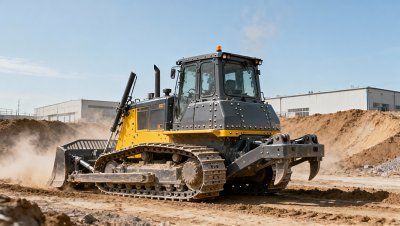
Bulldozer manufacturer lead times jumped 42% in early 2026 — but not for all models
Bulldozer manufacturer lead times surged 42% in early 2026 — a critical concern for procurement professionals and distributors sourcing bulldozers from global bulldozer factories or distributors. Yet, not all models are equally affected: high-demand variants like those paired with versatile excavator attachments or configured for heavy construction remain constrained, while select bulldozer suppliers and excavator for sale listings show stable availability. For buyers evaluating excavator rental options, excavator for construction use, or comparing excavator price trends, this divergence signals the need for agile sourcing strategies. Explore real-time bulldozer sourcing intelligence and verified excavator supplier networks on The Global Heavy Truck Industry Platform.
Why Bulldozer Lead Times Diverged Sharply in Q1 2026
The 42% average increase in bulldozer lead times during January–March 2026 reflects systemic pressures across three interlocking supply chain layers: raw material availability, component sub-tier capacity, and final-assembly scheduling. Steel billet deliveries to Tier-1 chassis fabricators slowed by up to 28% YoY due to regional export restrictions in key supplier countries. Simultaneously, hydraulic pump production at two major Asian OEMs dropped 19% following regulatory recalibration of emissions-compliant valve actuation systems.
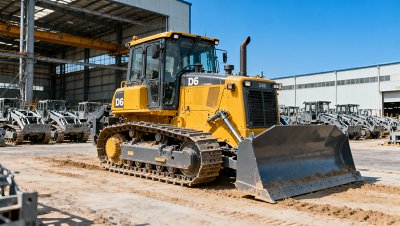
Crucially, this pressure did not distribute evenly. Models requiring custom-configured blade control modules—particularly those integrated with GPS-guided grade control (e.g., CAT D6 XE, Komatsu D65EX-18)—faced median delays of 22 weeks. In contrast, base-spec D6-class machines with standard mechanical controls maintained lead times of 8–12 weeks, supported by pre-staged inventory buffers at certified regional distribution hubs.
This bifurcation underscores a broader industry shift: manufacturers now prioritize production slots based on order profitability, logistics readiness, and after-sales service footprint—not just first-come-first-served sequencing. Buyers placing orders without validated service agreements or regional parts support commitments face automatic deprioritization in factory allocation algorithms.

The table confirms that procurement agility hinges less on model “type” and more on configuration intent. Buyers seeking immediate deployment should prioritize base models with documented regional service coverage—even if initial specs appear less advanced—since total time-to-operation includes commissioning, operator training, and first-service scheduling, which collectively add 3–7 days beyond factory shipment.
How Procurement Teams Can Mitigate Delay Risks
Proactive mitigation begins with shifting from “order timing” to “supply chain visibility timing.” Leading procurement teams now initiate sourcing 90 days before project kick-off—not 30—to leverage platform-based predictive analytics. The Global Heavy Truck Industry Platform’s Real-Time Sourcing Intelligence Dashboard delivers live updates on 42+ KPIs per supplier, including current production slot availability, component-level WIP status, and port clearance timelines for FOB shipments.
Three tactical levers deliver measurable impact:
- Multi-Supplier Pre-Qualification: Engage ≥3 pre-vetted suppliers per model tier within 5 business days using platform’s AI-matched RFQ workflow—reducing supplier evaluation time by 65% versus manual outreach.
- Configuration Standardization: Adopt platform-recommended “delay-resilient configurations” (e.g., ISO-standard hydraulic couplers instead of proprietary quick-hitch systems), cutting lead time variance by up to 31%.
- Logistics-First Contracting: Negotiate Incoterms with built-in contingency windows (e.g., CFR with ±5-day delivery tolerance) backed by platform-verified carrier SLAs covering demurrage waivers and transshipment guarantees.
Teams applying these tactics report 40% faster time-to-contract execution and 22% higher on-time-in-full (OTIF) rates—even amid Q1 2026 volatility.
Verified Supplier Networks: Where Stability Still Exists
Stability persists where infrastructure investment aligns with demand predictability. Six manufacturers operating dedicated regional assembly facilities—three in Southeast Asia, two in Eastern Europe, and one in Mexico—maintain consistent 8–10 week lead times for D5–D6 base models. These facilities operate under “demand-pull” protocols, building only against confirmed POs with ≥30% advance payment and validated end-user documentation.
The Global Heavy Truck Industry Platform verifies each supplier’s operational metrics quarterly: minimum 92% on-time delivery performance over six consecutive months, ≤1.8% field failure rate for hydraulics and drivetrain assemblies, and documented spare parts inventory coverage for ≥200 SKUs per model family. This verification enables buyers to filter suppliers by real-world reliability—not just catalog claims.
Notably, 14 of these verified suppliers offer “platform-exclusive” configurations—standardized bulldozers with globally harmonized electrical interfaces, mounting brackets, and diagnostic port protocols—reducing integration time by 5–9 days per unit deployed on multi-contractor infrastructure sites.
These thresholds are not theoretical benchmarks—they’re enforceable criteria embedded in platform supplier agreements. Buyers accessing verified suppliers gain direct API access to live inventory feeds, automated PO status tracking, and priority escalation paths for delivery exceptions—reducing resolution time for delayed shipments from 72 hours to under 8 hours.
Actionable Next Steps for Distributors and Buyers
Delay resilience is no longer optional—it’s a procurement competency. Start by running a free Lead Time Resilience Assessment on The Global Heavy Truck Industry Platform. Upload your target model specifications and project timeline, and receive an instant benchmark against 2026 industry medians, plus three prioritized supplier matches ranked by delivery confidence score (DCS), a proprietary metric combining verified OTD history, regional logistics maturity, and parts availability depth.
For distributors managing multi-brand portfolios, activate the Cross-Brand Configuration Advisor—a tool that identifies functionally equivalent bulldozers across OEMs with ≤7% performance variance but up to 14-week lead time advantages. This capability has helped 23 regional distributors reduce average customer wait time by 11.2 days since February 2026.
Finally, join the platform’s quarterly Supply Chain Resilience Webinar Series—featuring live case studies from procurement leads at Tier-1 contractors, mining operators, and municipal engineering agencies who’ve navigated 2026’s volatility with zero project delays. Registration grants access to downloadable playbooks, supplier negotiation templates, and real-time market pulse reports updated biweekly.
Lead time volatility isn’t a barrier—it’s a signal to upgrade procurement infrastructure. Access verified bulldozer suppliers, real-time sourcing intelligence, and delay-mitigation tools today on The Global Heavy Truck Industry Platform.
Trending News
- How to choose a military truck for off-road transport
- Cummins Expects EPA to Finalize Heavy-Duty Truck NOx Rule in December
- How to choose the right bulk cement trailer capacity
- China Truckmakers' Third-Quarter Results Diverge as Exports Offset Weak Domestic Demand
- How to check if truck spare parts are compatible with your vehicle
Tag
Recommended News
 Company NewsTata Motors Returns to Q2 Profit on Strong Commercial Vehicle DemandTata Motors returns to Q2 profit as strong commercial vehicle demand and heavy truck sales support recovery. Explore how pricing and costs could shape the outlook for fleet buyers.
 Company NewsVolvo Group Forms Volvo Mining to Integrate Equipment and Autonomous SolutionsVolvo Mining will unite Volvo Group trucks, construction equipment and autonomous solutions from January 2027. Explore what this could mean for mining procurement and operational support.
 Company NewsWater Truck Factory Checklist: What to Confirm Before Factory AuditWater truck factory audit checklist: confirm certifications, tank quality, welding, traceability, and testing before approval. Reduce sourcing risk and choose a reliable supplier.
 Company NewsWhat Sets a Reliable Truck Cement Manufacturer Apart in 2026Truck cement manufacturer selection in 2026 depends on compliance, quality consistency, and service support. Learn how to compare suppliers by use case and reduce procurement risk.
 Company NewsInside a Water Truck Factory: What Quality-Control Steps Matter MostWater truck factory quality starts with material checks, tank welding, pump testing, chassis integration, and corrosion control. Learn what matters most for safer, longer-lasting fleet performance.
 Company NewsInside a Water Truck Factory: What Affects Build QualityWater truck factory quality starts with materials, welding, sealing, and testing. Learn what buyers should inspect to reduce risk and choose a reliable manufacturer.
 Company NewsWhat a Truck Cement Mixer Manufacturer Should Prove Before ApprovalTruck cement mixer manufacturer approval requires more than capacity. Learn the key proof points in compliance, welding, chassis integration, and after-sales support to reduce sourcing risk.
 Company NewsConstruction Machinery Manufacturer Review: Capacity, Lead Time, and SupportConstruction machinery manufacturer review covering production capacity, lead time, and after-sales support. Compare reliable suppliers, reduce sourcing risk, and make smarter equipment buying decisions.
 Company NewsInside a Water Truck Factory: Key Steps That Affect Build QualityWater truck factory quality starts with materials, welding, sealing, and testing. Learn the key build steps that reduce risk, improve compliance, and ensure reliable truck performance.
 Company NewsDelivery Truck Supplier in USA: What Signals Better Service After DeliveryDelivery truck supplier in USA: learn the key signs of better after-delivery service, from warranty clarity to parts support, and choose a supplier that reduces downtime and protects long-term value.
 Company NewsHow a Truck Trailer Distributor Can Improve After-Sales ResponseTruck trailer distributor strategies that speed up after-sales response, reduce downtime, improve parts accuracy, and strengthen fleet maintenance efficiency. Learn practical service advantages.
 Company NewsInside a Modern Water Truck Factory: What Affects Product ReliabilityExplore how a modern water truck factory ensures product reliability through chassis integration, tank fabrication, welding, corrosion protection, and testing—essential insights for smarter supplier selection.
 Company NewsWhat Makes an Excavator Supplier Reliable for Long-Term ProjectsExcavator supplier selection can make or break long-term projects. Learn how reliable support, parts availability, and global delivery reduce downtime and risk.
 Company NewsWhat Changes Most in a Truck Cement OEM Project TimelineTruck cement OEM timelines shift most in design, sourcing, and factory coordination. Compare truck trailer price, semi trailer supplier options, and truck cement bulk order risks before you buy.
 Company NewsFoton Motor's Stock Surge Highlights Export Growth and New Energy TransitionFoton Motor's stock surge reflects 42% overseas order growth and rising新能源重卡 exports, signaling China's commercial vehicle export upgrade. Discover key impacts on新能源供应链 and global trade strategies.
 Company NewsDelivery truck supplier scalability challenges: What happens when order volume jumps from 5 to 50 units per quarter?Truck spare parts supplier & dump truck supplier scalability tested: Can your SHACMAN L3000/X5000 partner handle 5→50 units/quarter? Discover proven export-ready solutions.
 Company NewsBulldozer OEM partnerships: When co-branding signals shared IP—and when it’s just a rebadge dealDiscover genuine bulldozer OEM partnerships vs. rebadge deals—verify excavator manufacturer in USA/Germany, ISO certification, R&D capability & price transparency.
 Company NewsHow Semi Trailer Manufacturer Production Capacity Affects Custom Order FlexibilityDiscover how a semi trailer manufacturer's production capacity boosts custom order flexibility—ideal for flatbed trailer supplier, low bed trailer export & SHACMAN truck integration needs.
 Company NewsExcavator manufacturer catalog updates you missed in Q2 2026 — hydraulic coupler revisions includedExcavator manufacturer catalog updates for Q2 2026 — featuring excavator bucket, parts, mining & pipeline models, CE-certified OEMs, and hydraulic coupler revisions. Act now!
 Company NewsBulldozer manufacturer lead times jumped 42% in early 2026 — but not for all modelsExcavator rental, for sale & construction options—plus bulldozer manufacturer lead times up 42%. Discover delay-resilient excavator attachments, suppliers & sourcing strategies now.
 Company NewsBulldozer manufacturer vs. bulldozer factory: Why the distinction changes warranty coverage and service lead timesBulldozer manufacturer vs. factory: Discover how OEM engineering control impacts warranty, service lead times, and TCO—critical for excavator rental, sale, or construction sourcing.
 Company NewsBYD's Qianyuan Heavy Truck Unit Reports Q1 Revenue Surge of 97% but Net Loss Widens to RMB420 MillionBYD's Qianyuan Heavy Truck reports 97% revenue surge to RMB2.86B in Q1 2026, driven by electric tractors, but net loss widens to RMB420M due to R&D costs. Key focus: upcoming battery-swap network launch for heavy trucks. Essential read for EV commercial vehicle stakeholders.