BYD's Qianyuan Heavy Truck Unit Reports Q1 Revenue Surge of 97% but Net Loss Widens to RMB420 Million
Introduction
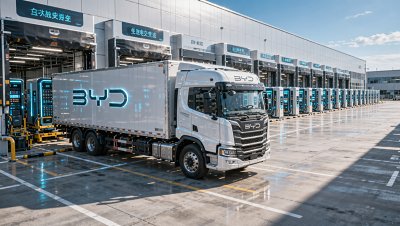
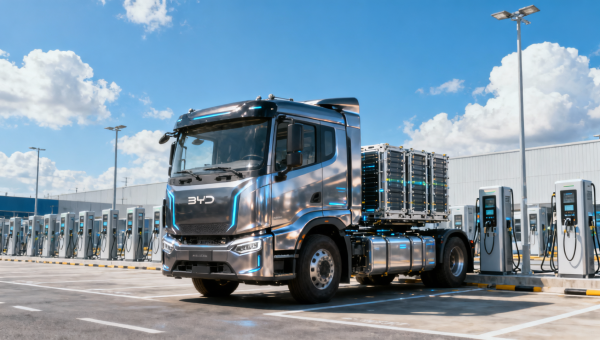
On March 25, 2026, BYD disclosed the Q1 financial results of its independently operated heavy truck subsidiary, Qianyuan Heavy Truck. The company reported a 97% year-on-year revenue increase to RMB2.86 billion, driven by batch deliveries of pure electric tractors. However, net losses expanded to RMB420 million due to a 120% surge in R&D investments and battery cost fluctuations. Notably, Qianyuan announced plans to launch its first heavy-duty truck battery-swap network in Q2. This development warrants attention from the new energy commercial vehicle sector, battery supply chain stakeholders, and infrastructure providers, as it signals accelerated electrification in heavy logistics despite short-term profitability challenges.
Event Overview
Qianyuan Heavy Truck, under BYD, released its Q1 2026 financials with the following confirmed data:
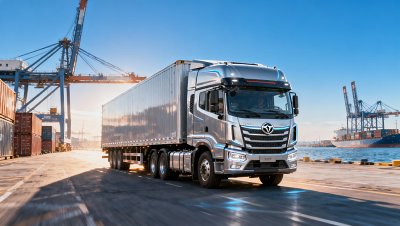
- Revenue: RMB2.86 billion (+97% YoY), primarily from pure electric tractor deliveries.
- Net Loss: RMB420 million (widened YoY), attributed to increased R&D spending (+120%) and battery cost volatility.
- Key Initiative: Construction of a dedicated battery-swap network for heavy trucks to commence in Q2 2026.
Impacted Sub-Sectors
1. New Energy Commercial Vehicle Manufacturers
Qianyuan’s revenue growth validates market demand for electric heavy trucks but highlights profitability pressures from R&D and supply chain costs. Competitors may recalibrate investment timelines for electrification projects.
2. Battery and Component Suppliers
The widened loss underscores ongoing cost instability in battery raw materials. Suppliers should anticipate demand fluctuations linked to Qianyuan’s swap-network rollout, which may prioritize standardized battery modules.
3. Charging/Swap Infrastructure Providers
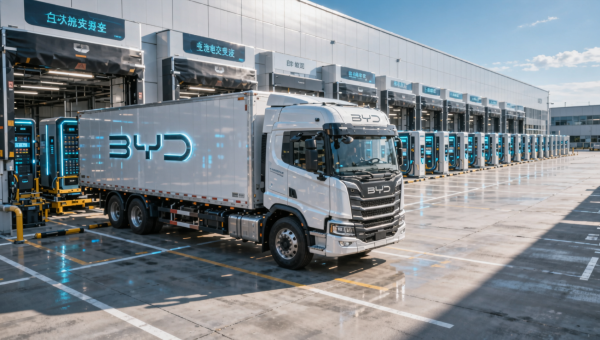
The planned heavy truck-specific swap network presents collaboration opportunities but requires high-power compatibility. Infrastructure firms should monitor technical standards and pilot project outcomes.
Key Focus Areas and Recommendations
1. Track Battery Cost Trends and Swap Standards
Given Qianyuan’s loss drivers, industry players should analyze battery price forecasts and engage early with swap-network specifications to align product designs.
2. Evaluate Public-Private Partnerships
Heavy truck electrification relies on infrastructure support. Local governments and energy firms may introduce incentives; proactive dialogue is advised.
3. Differentiate Short-Term Losses vs. Long-Term Strategy
Qianyuan’s R&D surge reflects preemptive scaling. Competitors should assess whether similar investments are necessary to remain competitive in the 3–5 year horizon.
Editor’s Observation
Analysis来看, Qianyuan’s report reflects a transitional phase where market adoption outpaces profitability in heavy EV trucks. The swap-network initiative suggests BYD is prioritizing operational scale over immediate margins—a signal for the industry to prepare for infrastructure-heavy electrification models. However, the viability of such models hinges on battery cost control and policy backing, which require continuous monitoring.
Conclusion
Qianyuan’s Q1 results highlight both the growth potential and financial complexities of heavy truck electrification. While revenue growth demonstrates market traction, the sector must navigate R&D-intensive scaling and supply chain risks. The upcoming swap-network launch serves as a critical test case for operational efficiency. Stakeholders should view this as a directional indicator rather than a finalized outcome, with flexibility to adapt to evolving cost and technology dynamics.
Source
BYD’s official financial disclosure (March 25, 2026). Pending updates on swap-network implementation progress.
Trending News
- How to choose the right bulldozer size for a construction site
- How to choose a military truck for off-road transport
- Cummins Expects EPA to Finalize Heavy-Duty Truck NOx Rule in December
- How to choose the right bulk cement trailer capacity
- China Truckmakers' Third-Quarter Results Diverge as Exports Offset Weak Domestic Demand
Tag
Recommended News
 Company NewsTata Motors Returns to Q2 Profit on Strong Commercial Vehicle DemandTata Motors returns to Q2 profit as strong commercial vehicle demand and heavy truck sales support recovery. Explore how pricing and costs could shape the outlook for fleet buyers.
 Company NewsVolvo Group Forms Volvo Mining to Integrate Equipment and Autonomous SolutionsVolvo Mining will unite Volvo Group trucks, construction equipment and autonomous solutions from January 2027. Explore what this could mean for mining procurement and operational support.
 Company NewsWater Truck Factory Checklist: What to Confirm Before Factory AuditWater truck factory audit checklist: confirm certifications, tank quality, welding, traceability, and testing before approval. Reduce sourcing risk and choose a reliable supplier.
 Company NewsWhat Sets a Reliable Truck Cement Manufacturer Apart in 2026Truck cement manufacturer selection in 2026 depends on compliance, quality consistency, and service support. Learn how to compare suppliers by use case and reduce procurement risk.
 Company NewsInside a Water Truck Factory: What Quality-Control Steps Matter MostWater truck factory quality starts with material checks, tank welding, pump testing, chassis integration, and corrosion control. Learn what matters most for safer, longer-lasting fleet performance.
 Company NewsInside a Water Truck Factory: What Affects Build QualityWater truck factory quality starts with materials, welding, sealing, and testing. Learn what buyers should inspect to reduce risk and choose a reliable manufacturer.
 Company NewsWhat a Truck Cement Mixer Manufacturer Should Prove Before ApprovalTruck cement mixer manufacturer approval requires more than capacity. Learn the key proof points in compliance, welding, chassis integration, and after-sales support to reduce sourcing risk.
 Company NewsConstruction Machinery Manufacturer Review: Capacity, Lead Time, and SupportConstruction machinery manufacturer review covering production capacity, lead time, and after-sales support. Compare reliable suppliers, reduce sourcing risk, and make smarter equipment buying decisions.
 Company NewsInside a Water Truck Factory: Key Steps That Affect Build QualityWater truck factory quality starts with materials, welding, sealing, and testing. Learn the key build steps that reduce risk, improve compliance, and ensure reliable truck performance.
 Company NewsDelivery Truck Supplier in USA: What Signals Better Service After DeliveryDelivery truck supplier in USA: learn the key signs of better after-delivery service, from warranty clarity to parts support, and choose a supplier that reduces downtime and protects long-term value.
 Company NewsHow a Truck Trailer Distributor Can Improve After-Sales ResponseTruck trailer distributor strategies that speed up after-sales response, reduce downtime, improve parts accuracy, and strengthen fleet maintenance efficiency. Learn practical service advantages.
 Company NewsInside a Modern Water Truck Factory: What Affects Product ReliabilityExplore how a modern water truck factory ensures product reliability through chassis integration, tank fabrication, welding, corrosion protection, and testing—essential insights for smarter supplier selection.
 Company NewsWhat Makes an Excavator Supplier Reliable for Long-Term ProjectsExcavator supplier selection can make or break long-term projects. Learn how reliable support, parts availability, and global delivery reduce downtime and risk.
 Company NewsWhat Changes Most in a Truck Cement OEM Project TimelineTruck cement OEM timelines shift most in design, sourcing, and factory coordination. Compare truck trailer price, semi trailer supplier options, and truck cement bulk order risks before you buy.
 Company NewsFoton Motor's Stock Surge Highlights Export Growth and New Energy TransitionFoton Motor's stock surge reflects 42% overseas order growth and rising新能源重卡 exports, signaling China's commercial vehicle export upgrade. Discover key impacts on新能源供应链 and global trade strategies.
 Company NewsDelivery truck supplier scalability challenges: What happens when order volume jumps from 5 to 50 units per quarter?Truck spare parts supplier & dump truck supplier scalability tested: Can your SHACMAN L3000/X5000 partner handle 5→50 units/quarter? Discover proven export-ready solutions.
 Company NewsBulldozer OEM partnerships: When co-branding signals shared IP—and when it’s just a rebadge dealDiscover genuine bulldozer OEM partnerships vs. rebadge deals—verify excavator manufacturer in USA/Germany, ISO certification, R&D capability & price transparency.
 Company NewsHow Semi Trailer Manufacturer Production Capacity Affects Custom Order FlexibilityDiscover how a semi trailer manufacturer's production capacity boosts custom order flexibility—ideal for flatbed trailer supplier, low bed trailer export & SHACMAN truck integration needs.
 Company NewsExcavator manufacturer catalog updates you missed in Q2 2026 — hydraulic coupler revisions includedExcavator manufacturer catalog updates for Q2 2026 — featuring excavator bucket, parts, mining & pipeline models, CE-certified OEMs, and hydraulic coupler revisions. Act now!
 Company NewsBulldozer manufacturer lead times jumped 42% in early 2026 — but not for all modelsExcavator rental, for sale & construction options—plus bulldozer manufacturer lead times up 42%. Discover delay-resilient excavator attachments, suppliers & sourcing strategies now.
 Company NewsBulldozer manufacturer vs. bulldozer factory: Why the distinction changes warranty coverage and service lead timesBulldozer manufacturer vs. factory: Discover how OEM engineering control impacts warranty, service lead times, and TCO—critical for excavator rental, sale, or construction sourcing.
 Company NewsBYD's Qianyuan Heavy Truck Unit Reports Q1 Revenue Surge of 97% but Net Loss Widens to RMB420 MillionBYD's Qianyuan Heavy Truck reports 97% revenue surge to RMB2.86B in Q1 2026, driven by electric tractors, but net loss widens to RMB420M due to R&D costs. Key focus: upcoming battery-swap network launch for heavy trucks. Essential read for EV commercial vehicle stakeholders.