Cement tanker residual value drops faster than other heavy trucks—what drives depreciation?
Cement tanker residual value drops faster than other heavy trucks—raising urgent questions for buyers, dealers, and fleet evaluators. As a specialized type of cargo truck widely used in construction machinery logistics and infrastructure projects, the cement tanker faces steeper depreciation due to high wear, regulatory shifts, and limited secondary-market demand compared to tractor truck, tipper trailer, or lowbed trailer segments. This trend directly impacts procurement strategies, financing terms, and resale planning—especially for mining truck operators and distributors sourcing truck parts globally. Understanding the drivers behind this accelerated depreciation is critical for stakeholders across the heavy truck supply chain.
Why Cement Tankers Depreciate Faster: Core Drivers
Cement tankers typically lose 35–45% of their original value within the first 3 years—compared to 25–30% for standard tractor-trailers and 28–33% for tipper trailers. This accelerated decline stems from three interlocking factors: mechanical stress, regulatory exposure, and market liquidity constraints.
First, the constant loading/unloading cycle subjects the tank body, pneumatic system, and discharge auger to abrasive wear. Cement particles act as micro-abrasives, accelerating corrosion in carbon steel tanks—especially under humid or coastal operating conditions. Field data shows average liner replacement every 24–36 months in high-frequency operations (≥5 trips/week).
Second, evolving emissions standards disproportionately affect older cement tankers. Unlike general freight units, many pre-2018 models lack retrofit-ready SCR systems or compliant engine control modules—making compliance upgrades cost-prohibitive relative to residual value. Over 60% of cement tankers registered before 2015 face restricted access in EU Stage V and China VIb zones.
Third, buyer pools are narrow. Secondary-market demand comes almost exclusively from regional concrete producers or small-scale infrastructure contractors—not diversified fleets. This limits competitive bidding and compresses resale windows to 7–12 days versus 18–25 days for mainstream heavy trucks.
How Depreciation Impacts Procurement Decisions
Financing & Lease Structuring
Lenders apply higher risk premiums to cement tanker financing—typically 1.8–2.5 percentage points above standard commercial truck loans. Lease terms rarely exceed 48 months, with balloon payments often set at 25–30% of MSRP to offset residual uncertainty.
Total Cost of Ownership (TCO) Modeling
A 5-year TCO analysis reveals cement tankers incur 18–22% higher maintenance costs per mile than comparable dry-bulk trailers. Key contributors include: pneumatic system overhauls ($8,500–$12,000 every 2 years), tank lining reapplication ($4,200–$6,800), and axle bearing replacements every 120,000–150,000 km.
This table highlights how cement tankers’ lower residual stability translates directly into tighter financing terms and reduced asset flexibility—critical considerations when evaluating multi-unit fleet expansions or supplier-led equipment programs.
Procurement Strategies to Mitigate Depreciation Risk
Buyers and distributors can reduce exposure through four tactical levers: specification control, lifecycle alignment, supplier diversification, and digital verification.
- Specify stainless-steel or abrasion-resistant alloy liners (e.g., AR400 or Hardox 450)—extending service life by 30–40% and improving residual appeal in regulated markets.
- Align purchase timing with OEM model-year transitions: acquiring units 6–9 months post-launch captures warranty coverage while avoiding first-year depreciation cliffs.
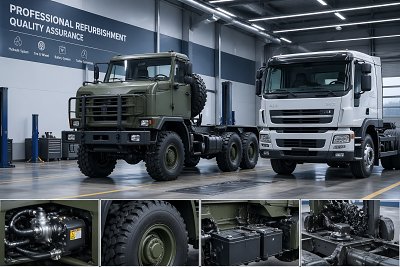
- Source from manufacturers offering certified refurbishment programs—verified units retain 12–15% higher residuals than non-certified equivalents after 3 years.
- Leverage real-time valuation tools on The Global Heavy Truck Industry Platform to benchmark prices across 12+ global regions, adjusting bids based on local demand spikes (e.g., +22% inquiry volume in GCC during Q2 infrastructure tenders).
These actions shift decision-making from passive ownership to active asset management—particularly valuable for distributors managing cross-border inventory rotations or mining operators evaluating mixed-fleet standardization.
Why Partner With The Global Heavy Truck Industry Platform
For procurement professionals and distributors navigating volatile residual values, platform-based intelligence reduces guesswork and accelerates validation. Our verified supplier network includes 320+ cement tanker manufacturers and specialists—each profiled with ISO 9001 certification status, export compliance documentation (ECE R107, GB 1589), and real-time stock visibility.
You can immediately access: comparative TCO calculators tailored to cement transport applications; downloadable spec sheets covering 12 key durability parameters (including tank wall thickness, pressure rating, and discharge angle); and quarterly residual value reports segmented by region, age band, and chassis configuration.
Whether you need to validate a supplier’s claim of “low-depreciation design,” compare liner material options across 7 OEMs, or request a custom quote with delivery timelines for 10+ units to Southeast Asia—we support your evaluation at every stage. Contact our industry specialists today for a free equipment assessment report, including residual value forecasting and alternative configuration recommendations.
Trending News
- When does heavy equipment transport require a lowboy trailer?
- When does a light commercial vehicle for urban delivery save fleet costs?
- How to choose an off road truck for steep and unstable job sites
- How to match crane truck lifting capacity to your jobsite loads
- What drives logging truck cost beyond the base purchase price?
Tag
Recommended News
 Used Truck MarketVietnam Tightens Used Heavy Truck Import RecordsVietnam Tightens Used Heavy Truck Import Records: learn how Vietnam’s 2026 rule on used heavy truck imports affects licensing, sourcing, and compliance for traders and fleet buyers.
 Used Truck MarketUsed or New Heavy Duty Trucks for Sale in Canada: Which Pays Off?Heavy duty trucks for sale in Canada: compare used vs new by total cost, downtime risk, fuel savings, and ROI. Find the smartest fleet buy and source with confidence.
 Used Truck MarketVietnam Tightens Rules for Used Commercial Vehicle ImportsVietnam tightens rules for used commercial vehicle imports with certified maintenance records and bilingual VCEM reports. See what exporters and buyers must do now.
 Used Truck MarketVietnam Tightens Used Commercial Vehicle Import FilesVietnam tightens used commercial vehicle import files from July 1, 2026. Learn the new bilingual maintenance and emissions document rules, customs risks, and key compliance steps.
 Used Truck MarketSoutheast Asia Tightens Used Truck Import RulesUsed truck import rules in Southeast Asia tighten from Sept. 2026, requiring OBD-II SAE J1939 compliance and local platform access. See how exporters can stay compliant.
 Used Truck MarketVietnam Tightens Used Commercial Vehicle Import RulesUsed commercial vehicle exporters face tighter Vietnam import rules from July 2026. Learn how new compliance documents may affect customs clearance, inventory turnover, and shipment planning.
 Used Truck MarketVietnam Tightens Proof Rules for Used Commercial Vehicle ImportsVietnam tightens proof rules for used commercial vehicle imports from July 1, 2026. Learn key compliance risks, certificate requirements, and how importers can avoid port refusal.
 Used Truck MarketVietnam Tightens Papers for Used Commercial Vehicle ImportsVietnam tightens papers for used commercial vehicle imports from July 1, 2026. Learn the new certificate and re-inspection rules, key compliance risks, and how exporters can avoid costly delays.
 Used Truck MarketVietnam to Enforce Used Truck Import Rules from Q4 2026Used truck import rules in Vietnam: OEM-certified remanufactured trucks required from Q4 2026 — key implications for Chinese exporters & logistics providers.
 Used Truck MarketSemi Trailer Wholesale: Which Specs Matter Most for Resale ValueSemi trailer wholesale buyers: learn which specs most influence resale value, from axle layout to payload, materials, and parts compatibility—make smarter, higher-margin sourcing decisions.
 Used Truck MarketTruck Tipper for Sale: New or Used for Heavy-Duty Work?Truck tipper for sale guide: compare new or used options, dump truck price, heavy-duty specs, and trusted suppliers for construction, mining, and fleet sourcing.
 Used Truck MarketTruck Military Auctions Look Cheaper Until Refit Costs AppearTruck military auction deals can hide high refit costs. Compare hydraulic pump, truck battery, truck trailer, truck tipper, off road truck and truck leasing options before you buy.
 Used Truck MarketUsed Wheel Loader Inspection Points That Matter MostHydraulic pump and wheel loader inspection tips that matter most for used equipment buyers. Compare off road truck, truck trailer, and truck tipper options to reduce risk and source smarter.
 Used Truck MarketUsed Truck Skeleton Trailers: What Usually Wears Out First?Truck skeleton buyers: learn what wears out first on used trailers, from truck steel fatigue and truck air system leaks to truck lighting system faults, and inspect smarter before you buy.
 Used Truck MarketWhat to Check Before Buying a Used Truck VanUsed truck van buying guide: inspect service history, load capacity, body wear, and supplier reliability. Compare truck van, lowbed trailer, refrigerated truck, mixer truck, and construction truck options with confidence.
 Used Truck MarketRebuilt or New Truck Piston? The Cost Difference Is Not the Whole StoryTruck piston buying guide: compare rebuilt vs new on lifecycle cost, downtime risk, and supplier quality. See how truck gasket, truck pump, and truck export decisions affect fleet value.
 Used Truck MarketNew vs Remanufactured Engine Assembly: Which Holds Value Better?Engine assembly value guide: compare new vs reman options for industrial transportation, with insights on truck turbocharger, truck gearbox, and fleet ROI.
 Used Truck MarketUsed Tipper Trailer Checks That Prevent Expensive RepairsTipper trailer buyers: learn used inspection checks that prevent costly repairs. Verify truck lighting, construction truck, mining truck, and off road truck compatibility before you buy.
 Used Truck MarketDump Truck for Sale: New or Used in 2026?Dump truck for sale in 2026: compare new or used options, review dump truck price trends, and source excavator for sale, truck cement mixer, and excavator parts with confidence.
 Used Truck MarketNew vs Used Excavator for Sale in 2026Excavator for sale in 2026: compare new vs used options, excavator rental, excavator parts, and dump truck for sale insights to cut risk, control cost, and buy with confidence.
 Used Truck MarketWhat to Inspect Before Choosing a Used Truck Trailer for SaleTruck trailer for sale guide: inspect frame, axles, brakes, and records before comparing truck trailer price or choosing a semi trailer supplier for safer, smarter sourcing.
 Used Truck MarketWhat ‘truck trailer for sale’ listings won’t tell you about frame fatigue historyDiscover hidden frame fatigue history in 'dump truck for sale', 'truck trailer for sale', and 'semi trailer for sale'—get verified structural data, NDT reports & fatigue risk scores before buying.
 Used Truck MarketDump truck for sale: Red flags in used unit listings you should never ignoreDump truck for sale? Avoid costly mistakes—spot red flags in used listings, compare dump truck price & truck tipper for sale options with expert guidance.
 Used Truck MarketHeavy Duty Trucks for Sale: Which Specs Hold Resale Value?Heavy duty trucks for sale: learn which engine, cab chassis truck and truck brake system specs protect resale value, reduce downtime, and improve fleet ROI with stronger parts support.
 Used Truck MarketLinquan Court Auctions HOWO Tractor + Dump Semi-trailer Combo, Highlighting Potential Supply for Used Trailer ExportsExplore Linquan Court's HOWO tractor & dump semi-trailer auction - a rare opportunity for used commercial vehicle exporters targeting Middle East, Africa & Latin America markets. Starting bid 86,500 RMB with full documentation.