How to Vet a Heavy Truck Chassis Manufacturer With R&D Capability in 2026
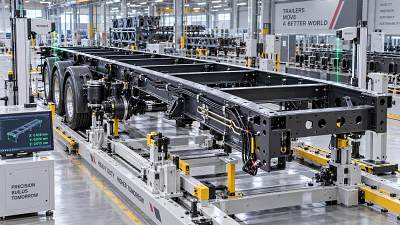
In 2026, choosing a heavy truck chassis manufacturer with R&D capability requires more than checking catalogs or price lists. Technical evaluators need clear evidence of engineering depth, testing standards, customization strength, and long-term production reliability. This guide explains how to assess real innovation capability, reduce supplier risk, and identify partners that can support demanding transport, construction, and industrial applications.
Why the benchmark for a heavy truck chassis manufacturer with R&D capability is rising
The heavy transport equipment market is changing faster than many sourcing models can follow.
Fleet demands now include weight optimization, fuel efficiency, modular design, telematics readiness, and stronger compliance across different regions.
That shift makes a heavy truck chassis manufacturer with R&D capability far more valuable than a low-cost assembler.
In 2026, buyers increasingly need chassis platforms tailored for logistics corridors, mining roads, municipal fleets, and construction operations.
A supplier that only copies standard drawings often struggles with durability, integration, and future adaptation.
By contrast, a heavy truck chassis manufacturer with R&D capability can verify loads, redesign structures, and support region-specific applications.
Key trend signals shaping chassis sourcing decisions in 2026
Several market signals show why technical verification has become central to supplier evaluation.
- Export markets are tightening safety, emissions, and documentation requirements.
- Application-specific chassis demand is rising across construction, logistics, and special transport.
- Downtime costs are increasing, raising the value of fatigue-tested frame designs.
- OEM integration now requires stronger electrical, hydraulic, and body-mount coordination.
- Regional road conditions require stronger adaptation than universal standard platforms can provide.
These signals all point to one conclusion.
A heavy truck chassis manufacturer with R&D capability should be evaluated as an engineering partner, not only a component supplier.
What is driving this shift toward deeper supplier vetting
This is also why global B2B platforms have become more important.
The Global Heavy Truck Industry Platform helps users compare suppliers, review product categories, and study market signals across the heavy truck supply chain.
That broader visibility improves early-stage filtering before factory-level validation begins.
How a real heavy truck chassis manufacturer with R&D capability reveals itself
A credible supplier usually leaves technical evidence across design, testing, production, and after-sales support.
1. Engineering structure is visible
Ask whether the company has dedicated frame, suspension, braking, electrical, and vehicle integration engineers.
A true heavy truck chassis manufacturer with R&D capability can explain internal team roles clearly.
2. Design tools are documented
Look for CAD, CAE, finite element analysis, load simulation, and tolerance control workflows.
If design changes happen only by workshop experience, risk remains high.
3. Prototype and test capacity exists
Request evidence of bench tests, fatigue tests, road tests, weld inspection, and corrosion evaluation.
A heavy truck chassis manufacturer with R&D capability should connect test results to design improvements.
4. Customization is controlled, not improvised
Many suppliers promise customization, but only some manage version control, change logs, and repeatable specifications.
That difference matters for future batches and spare parts compatibility.
Which technical documents should carry the most weight
Documents often reveal more than sales presentations.
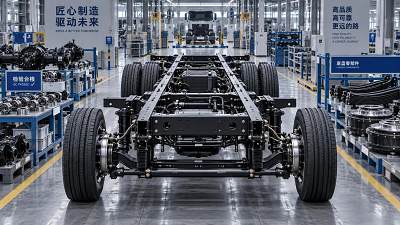
- General arrangement drawings with dimensions and axle positions
- Frame material specifications and heat treatment details
- Load calculation reports and fatigue analysis summaries
- Welding procedure specifications and inspection records
- BOM control and revision history
- Validation reports for braking, steering, and stability performance
A heavy truck chassis manufacturer with R&D capability should present these materials in a structured way.
Disorganized files often suggest weak engineering governance.
How this trend affects supply chain reliability and project outcomes
The impact goes beyond frame performance.
A weak supplier can create delays in body installation, axle matching, certification, and after-sales troubleshooting.
That increases hidden cost across the entire road transport equipment chain.
A heavy truck chassis manufacturer with R&D capability improves cross-functional coordination.
Better engineering usually means fewer fitment errors, faster issue resolution, and stronger support for market expansion.
This matters especially for export projects involving truck chassis, complete trucks, trailers, and specialized transport equipment.
What deserves the closest attention during evaluation
- Whether the supplier owns original frame designs or depends on copied references
- Whether prototype modifications are traced through formal engineering approval
- Whether material sourcing is stable and linked to performance records
- Whether welding quality control matches structural safety expectations
- Whether the factory can support low-volume special configurations without quality drift
- Whether after-sales teams can escalate failures back to engineering teams
These checkpoints help distinguish a sales-oriented supplier from a heavy truck chassis manufacturer with R&D capability.
A practical framework for judging future readiness
This framework supports better long-term decisions, especially when comparing several international suppliers remotely.
How to move from supplier screening to confident next steps
Start with platform-based research and narrow the list using technical filters, not pricing alone.
Then request drawings, validation data, sample project records, and production process evidence.
If possible, compare how each heavy truck chassis manufacturer with R&D capability responds to the same application brief.
The quality of questions, assumptions, and engineering feedback often reveals the real capability level.
For global sourcing, the Global Heavy Truck Industry Platform can simplify this process.
It brings together suppliers, product categories, market resources, and industry insights across truck chassis, complete trucks, trailers, machinery, and spare parts.
In a market where durability, adaptation, and compliance matter more each year, choosing a heavy truck chassis manufacturer with R&D capability is a strategic decision.
Use data, technical evidence, and structured comparison to identify partners that can support reliable road transport equipment projects in 2026 and beyond.
Trending News
- What drives logging truck cost beyond the base purchase price?
- How to match lowbed trailer deck height to your hauling equipment
- What documents are needed to export a low bed trailer to Southeast Asia?
- What to verify before choosing a delivery truck supplier for school transportation
- What an excavator manufacturer catalog should show before you compare models
Tag
Recommended News
 Buying GuideHow to match lowbed trailer deck height to your hauling equipmentLowbed trailer deck height guide: match equipment clearance, ramp geometry, axle loads, tractor fit, and route limits for safer, more efficient hauling.
 Buying GuideWhat to verify before choosing a delivery truck supplier for school transportationDelivery truck supplier for school transportation: verify route fit, payload, safety, compliance, service support, and total cost before choosing a reliable partner.
 Buying GuideWhat an excavator manufacturer catalog should show before you compare modelsExcavator manufacturer catalog guide: verify supplier identity, configurations, hydraulics, compliance, parts support, and delivery readiness before comparing models.
 Buying GuideWhat to check before appointing a bulldozer distributorBulldozer distributor selection guide: evaluate service, parts availability, warranty, pricing, compliance, and lifecycle value to reduce downtime and protect fleet investment.
 Buying GuideWhat to verify before choosing a truck cement mixer supplierTruck cement mixer supplier checklist: verify chassis fit, drum quality, hydraulics, compliance, spare parts, and after-sales support before you buy.
 Buying GuideHow to verify a truck spare parts supplier before placing a bulk orderTruck spare parts supplier verification made practical: learn how to check part specifications, factory control, test records, samples, pricing, and delivery capability before placing a bulk order.
 Buying GuideWhat size truck container is right for a typical freight load?Truck container sizing made simple: compare payload, volume, pallet layouts, route access, and loading needs to choose the most efficient freight solution.
 Buying GuideWhat drives semi trailer price differences between similar models?Semi trailer price differences come down to frame materials, axles, suspension, coating, and configuration. Compare specifications line by line to choose lasting value.
 Buying GuideHow to compare excavator manufacturer price lists before requesting quotesCompare an excavator manufacturer price list with confidence. Learn to normalize configurations, calculate landed costs, assess options and service, and create stronger RFQs.
 Buying GuideHow to choose a mixer truck drum capacity for your concrete pourMixer truck capacity guide: match drum size to pour rate, legal payload, site access, and delivery cycles for efficient, reliable concrete placement.
 Buying GuideHow to size a bulldozer for construction site grading workBulldozer for construction sizing guide: match weight, blade, traction, grade control, and transport needs to improve grading productivity and costs.
 Buying GuideHow to assess a truck cement manufacturer’s build quality before orderingTruck cement manufacturer build quality: assess tank steel, welding, chassis integration, pneumatic systems, factory QC, and inspection evidence before ordering.
 Buying GuideWhen does a truck trailer OEM make sense for private-label fleets?Truck trailer OEM programs help private-label fleets cut lifecycle costs, standardize operations, and improve uptime. Learn when customization delivers real commercial value.
 Buying GuideWhat to verify before choosing a water truck OEM for your fleetWater truck OEM selection guide: verify chassis compatibility, tank quality, pump performance, compliance, and service support to build a safer, more reliable fleet.
 Buying GuideHow to size a cab chassis truck for a fire department apparatusCab chassis truck for fire department sizing guide: balance GVWR, axle loads, wheelbase, water tank placement, and mission needs for safer apparatus design.
 Buying GuideWhat to verify before choosing a truck chassis supplierChoose the right truck chassis supplier with a practical checklist for application fit, axle ratings, body integration, quality control, delivery reliability, and after-sales support.
 Buying GuideHow to choose a logging truck for steep and rough forest roadsLogging truck selection for steep, rough forest roads: compare traction, braking, gearing, chassis strength, tires, and supplier support for safer, more reliable hauling.
 Buying GuideHow to choose a flatbed trailer deck length for oversized loadsFlatbed trailer deck length guide for oversized loads: balance cargo support, axle weight, securement space, overhang, and route access for safer transport.
 Buying GuideHow to assess a truck chassis supplier for trailer manufacturingTruck chassis supplier for trailer manufacturing: learn how to assess technical fit, quality control, engineering support, and delivery reliability for smarter sourcing.
 Buying GuideIs the SHACMAN H3000 6×4 Cement Mixer suitable for large projects?SHACMAN H3000 6×4 Cement Mixer: assess payload, cycle time, traction, and service support to see if it can keep large concrete projects moving efficiently.
 Buying GuideHow to evaluate heavy duty trucks for sale in Russia before buyingHeavy duty trucks for sale in Russia: learn how to compare specifications, winter readiness, service support, supplier reliability, and total ownership costs before buying.
 Buying GuideWhat to verify before choosing a logging truck producerChoose a logging truck producer with confidence: verify chassis strength, load security, compliance, service support, and delivery control for demanding forestry routes.
 Buying GuideHow to choose a truck excavator for confined construction sitesTruck excavator selection for confined sites: explore access, reach, stability, attachments, and safety factors to choose a productive, space-efficient solution.
 Buying GuideHow to choose a bulk trailer for high-volume aggregate haulingBulk trailer selection guide for high-volume aggregate hauling—optimize payload, body type, safety, compliance, and total cost for reliable fleet performance.
 Buying GuideHow to compare truck tire rolling resistance for lower fleet fuel costsTruck tire rolling resistance explained: compare test data, tread design, maintenance, and total cost to cut fleet fuel costs with confidence.