Heavy Duty Trucks for Sale in Russia: Key Specs for Harsh Road Conditions
Heavy Duty Trucks for Sale in Russia: Key Specs for Harsh Road Conditions
When evaluating heavy duty trucks for sale in Russia, price is only one part of the decision.
The operating environment is far more demanding than many export markets.
Extreme winter starts, uneven regional roads, long-haul routes, and mixed cargo profiles change what “good specification” really means.
That is why technical selection should focus on uptime, serviceability, and lifecycle performance.
For buyers comparing heavy duty trucks for sale in Russia, the right setup usually comes from matching road conditions with engine durability, axle layout, suspension strength, fuel tolerance, and cold-climate support systems.
Why Russia Requires a Different Truck Specification
Russia covers vast distances, and route quality can change quickly between regions.
A truck may run on highways one day and enter frozen, muddy, or broken access roads the next.
This creates pressure on driveline components, frame structure, brakes, and tires.
Cold weather adds another layer of risk.
Low temperatures affect battery output, lubricant flow, fuel quality, air systems, and cab comfort. In practice, heavy duty trucks for sale in Russia must be specified as working assets, not catalog products.
Typical operating challenges
- Sub-zero starts over long winter periods
- Variable diesel quality across remote areas
- High GVW demands in mining, timber, and infrastructure transport
- Extended service intervals due to limited workshop access
- Road vibration that accelerates fatigue on suspension and frame parts
These factors explain why standard export units may underperform, even if purchase cost looks attractive at first.
Engine and Powertrain Specs That Matter Most
Engine choice is central when screening heavy duty trucks for sale in Russia.
Peak horsepower alone does not tell enough.
What matters more is torque delivery at low and mid-range RPM, cold-start reliability, and stable performance under heavy load.
Recommended engine evaluation points
- Displacement sized for route profile and payload class
- High torque available at lower revs
- Preheating systems for winter starting
- Fuel filtration suited to inconsistent diesel quality
- Proven durability under extended idle and stop-start cycles
For long-haul and mixed regional work, engines in the 400 hp to 540 hp range are common.
The right selection depends on terrain, trailer type, and legal weight limits.
A smaller engine may reduce initial cost, but it can drive higher fuel use and faster wear if the truck is constantly overstressed.
Transmission and driveline considerations
Manual, AMT, and automatic options each have tradeoffs.
For many fleets, AMT offers a strong balance between driver consistency and fuel control.
Still, transmission software must be calibrated for loaded starts, gradients, and winter traction.
Retarder availability, axle reduction ratio, differential lock design, and PTO compatibility should also be checked early in the buying process.
Axle Configuration and Chassis Strength for Russian Roads
Axle layout has a direct effect on traction, payload flexibility, and road adaptability.
That makes it one of the first filters when reviewing heavy duty trucks for sale in Russia.
A 4x2 tractor may work for stable paved routes.
A 6x4 setup is often preferred for general freight and construction hauling.
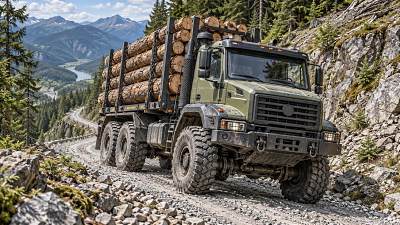
For severe terrain, off-road access, or winter-heavy regions, 6x6 or 8x4 platforms may offer better operational security.
How to match axle setup to application
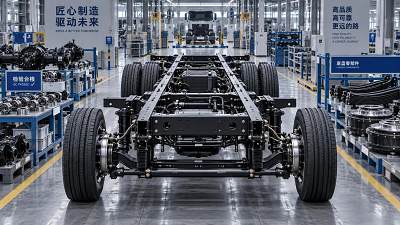
Chassis material and frame reinforcement also deserve close attention.
Poor frame matching often leads to cracking, body twist, or premature suspension failure.
In real fleet operations, these issues cost much more than a higher-spec chassis ordered from the start.
Suspension, Braking, and Tire Selection
Harsh roads expose weak suspension systems very quickly.
For many heavy duty trucks for sale in Russia, suspension design is a make-or-break factor.
Leaf spring systems remain popular in rugged applications because they are simple and durable.
Air suspension can improve ride quality and cargo protection, but it must be tested for winter robustness.
Suspension and brake checkpoints
- Spring or airbag capacity versus actual axle loads
- Shock absorber durability on corrugated roads
- Brake lining life under mountain and winter duty
- ABS and EBS reliability in low temperatures
- Air dryer performance to prevent line freezing
Tire choice should follow route reality, not brochure claims.
Regional haulage may need deeper tread, stronger sidewalls, and winter compounds.
Ignoring tire specification often increases rolling failures, fuel waste, and unplanned roadside downtime.
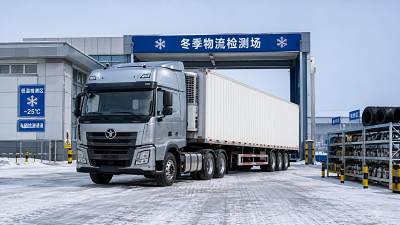
Cold-Climate Features That Protect Uptime
A truck that looks competitive on paper may still fail winter operations without the right support systems.
This is a common risk when sourcing heavy duty trucks for sale in Russia from general export inventories.
Essential winterization items
- Engine block heater or intake air preheater
- Battery insulation and higher cold-cranking capacity
- Heated fuel lines and multi-stage filtration
- Cab heater, mirror heater, and seat comfort support
- Antifreeze protection matched to the real climate zone
Cab insulation also matters more than many buyers expect.
Better insulation reduces driver fatigue, supports visibility, and improves overnight operating comfort.
That translates into better safety and more stable vehicle use across long Russian routes.
Fuel Adaptability, Maintenance Access, and Supplier Evaluation
Technical decisions do not stop at the truck itself.
When choosing heavy duty trucks for sale in Russia, maintenance logistics and supplier support affect total ownership cost just as much as hardware specification.
Fuel quality tolerance is especially important.
Engines with sensitive emission systems may require stricter fuel management and cleaner operating conditions.
That does not make them unsuitable, but it does require realistic operating planning.
Supplier screening questions
- Are spare parts available regionally, or only through import channels?
- Is technical documentation complete for diagnostics and repairs?
- Can the supplier provide cold-region configuration records?
- Are axle, engine, and gearbox brands supported locally?
- What warranty terms apply under severe-duty usage?
A capable sourcing platform can simplify this process.
The Global Heavy Truck Industry Platform helps buyers compare suppliers, identify configuration differences, and access a broader pool of commercial vehicle resources.
That is valuable when decisions involve cross-border procurement, mixed fleet planning, and long service horizons.
A Practical Buying Framework
The best heavy duty trucks for sale in Russia are not always the highest-powered or lowest-priced units.
They are the trucks with specifications aligned to climate, route quality, payload pattern, and service support.
A practical decision framework usually includes four steps.
- Define route severity, seasonal temperature, and cargo type.
- Match engine, axle, and suspension specs to that duty cycle.
- Verify winterization, fuel adaptability, and maintenance access.
- Compare suppliers by uptime support, not price alone.
That approach reduces technical mismatch and protects lifecycle value.
In today’s market, that is often the difference between a truck that works and a truck that constantly needs recovery.
For teams assessing heavy duty trucks for sale in Russia, a disciplined specification review is the fastest path to better uptime, lower risk, and a more defensible purchase decision.
Trending News
- When does heavy equipment transport require a lowboy trailer?
- When does a light commercial vehicle for urban delivery save fleet costs?
- How to choose an off road truck for steep and unstable job sites
- How to match crane truck lifting capacity to your jobsite loads
- What drives logging truck cost beyond the base purchase price?
Tag
Recommended News
 Buying GuideWhen does heavy equipment transport require a lowboy trailer?Does your heavy equipment need a lowboy trailer? Discover how loaded height, weight distribution, loading access, and route limits determine the right choice for safe transport.
 Buying GuideHow to choose an off road truck for steep and unstable job sitesChoose the right off road truck for steep, unstable job sites. Compare traction, braking, stability, clearance, payload, and route-test essentials.
 Buying GuideHow to match crane truck lifting capacity to your jobsite loadsCrane truck capacity planning made clear: calculate gross load, radius, rigging, outriggers, and ground conditions to select safer, job-ready lifting equipment.
 Buying GuideHow to match lowbed trailer deck height to your hauling equipmentLowbed trailer deck height guide: match equipment clearance, ramp geometry, axle loads, tractor fit, and route limits for safer, more efficient hauling.
 Buying GuideWhat to verify before choosing a delivery truck supplier for school transportationDelivery truck supplier for school transportation: verify route fit, payload, safety, compliance, service support, and total cost before choosing a reliable partner.
 Buying GuideWhat an excavator manufacturer catalog should show before you compare modelsExcavator manufacturer catalog guide: verify supplier identity, configurations, hydraulics, compliance, parts support, and delivery readiness before comparing models.
 Buying GuideWhat to check before appointing a bulldozer distributorBulldozer distributor selection guide: evaluate service, parts availability, warranty, pricing, compliance, and lifecycle value to reduce downtime and protect fleet investment.
 Buying GuideWhat to verify before choosing a truck cement mixer supplierTruck cement mixer supplier checklist: verify chassis fit, drum quality, hydraulics, compliance, spare parts, and after-sales support before you buy.
 Buying GuideHow to verify a truck spare parts supplier before placing a bulk orderTruck spare parts supplier verification made practical: learn how to check part specifications, factory control, test records, samples, pricing, and delivery capability before placing a bulk order.
 Buying GuideWhat size truck container is right for a typical freight load?Truck container sizing made simple: compare payload, volume, pallet layouts, route access, and loading needs to choose the most efficient freight solution.
 Buying GuideWhat drives semi trailer price differences between similar models?Semi trailer price differences come down to frame materials, axles, suspension, coating, and configuration. Compare specifications line by line to choose lasting value.
 Buying GuideHow to compare excavator manufacturer price lists before requesting quotesCompare an excavator manufacturer price list with confidence. Learn to normalize configurations, calculate landed costs, assess options and service, and create stronger RFQs.
 Buying GuideHow to choose a mixer truck drum capacity for your concrete pourMixer truck capacity guide: match drum size to pour rate, legal payload, site access, and delivery cycles for efficient, reliable concrete placement.
 Buying GuideHow to size a bulldozer for construction site grading workBulldozer for construction sizing guide: match weight, blade, traction, grade control, and transport needs to improve grading productivity and costs.
 Buying GuideHow to assess a truck cement manufacturer’s build quality before orderingTruck cement manufacturer build quality: assess tank steel, welding, chassis integration, pneumatic systems, factory QC, and inspection evidence before ordering.
 Buying GuideWhen does a truck trailer OEM make sense for private-label fleets?Truck trailer OEM programs help private-label fleets cut lifecycle costs, standardize operations, and improve uptime. Learn when customization delivers real commercial value.
 Buying GuideWhat to verify before choosing a water truck OEM for your fleetWater truck OEM selection guide: verify chassis compatibility, tank quality, pump performance, compliance, and service support to build a safer, more reliable fleet.
 Buying GuideHow to size a cab chassis truck for a fire department apparatusCab chassis truck for fire department sizing guide: balance GVWR, axle loads, wheelbase, water tank placement, and mission needs for safer apparatus design.
 Buying GuideWhat to verify before choosing a truck chassis supplierChoose the right truck chassis supplier with a practical checklist for application fit, axle ratings, body integration, quality control, delivery reliability, and after-sales support.
 Buying GuideHow to choose a logging truck for steep and rough forest roadsLogging truck selection for steep, rough forest roads: compare traction, braking, gearing, chassis strength, tires, and supplier support for safer, more reliable hauling.
 Buying GuideHow to choose a flatbed trailer deck length for oversized loadsFlatbed trailer deck length guide for oversized loads: balance cargo support, axle weight, securement space, overhang, and route access for safer transport.
 Buying GuideHow to assess a truck chassis supplier for trailer manufacturingTruck chassis supplier for trailer manufacturing: learn how to assess technical fit, quality control, engineering support, and delivery reliability for smarter sourcing.
 Buying GuideIs the SHACMAN H3000 6×4 Cement Mixer suitable for large projects?SHACMAN H3000 6×4 Cement Mixer: assess payload, cycle time, traction, and service support to see if it can keep large concrete projects moving efficiently.
 Buying GuideHow to evaluate heavy duty trucks for sale in Russia before buyingHeavy duty trucks for sale in Russia: learn how to compare specifications, winter readiness, service support, supplier reliability, and total ownership costs before buying.
 Buying GuideWhat to verify before choosing a logging truck producerChoose a logging truck producer with confidence: verify chassis strength, load security, compliance, service support, and delivery control for demanding forestry routes.