Heavy Duty Trucks for Sale in Canada: Key Specs to Compare Before You Buy
Heavy Duty Trucks for Sale in Canada: Key Specs to Compare Before You Buy
Exploring heavy duty trucks for sale in Canada requires more than checking price tags.
A strong purchase decision starts with matching truck specs to route conditions, load type, and long-term operating costs.
In Canada, that evaluation is even more important.
Cold weather, long-haul distances, regional regulations, and mixed terrain can quickly expose the wrong truck specification.
This guide breaks down the main points to compare before buying heavy duty trucks for sale in Canada.
The goal is simple: reduce sourcing risk, compare suppliers faster, and secure better lifecycle value.
Start with the Job Requirement, Not the Truck Listing
Many buyers begin with available inventory.
That is practical, but it can lead to expensive mismatches.
Before reviewing heavy duty trucks for sale in Canada, define the actual working profile.
- Average payload and peak payload
- Highway, regional, off-road, or mixed operation
- Annual mileage and daily utilization
- Trailer type and coupling requirements
- Winter start conditions and idling demand
- Maintenance support across provinces
This step creates a realistic benchmark.
It also makes supplier comparison more objective, especially when multiple brands offer similar headline specifications.
Compare GVWR, Payload, and Axle Ratings First
Payload capability is one of the first filters when reviewing heavy duty trucks for sale in Canada.
Still, payload should never be reviewed alone.
Check GVWR, front axle rating, rear axle rating, and legal operating limits together.
A truck may look strong on paper, yet fail to support your real axle load distribution.
This matters for bulk haulage, construction materials, forestry, and municipal applications.
If the truck needs add-ons, include those weights early.
Common examples include hydraulic systems, dump bodies, cranes, PTO equipment, and winterized accessories.
Engine Power and Torque Should Match the Route
When comparing heavy duty trucks for sale in Canada, engine output deserves a more careful read.
Horsepower gets attention, but torque often affects real working performance more directly.
For mountain routes, stop-and-go hauling, or winter traction challenges, low-end torque can be decisive.
Over-specifying the engine is not always efficient.
It may increase fuel use, acquisition cost, and maintenance burden without improving productivity.
A practical review should include these questions:
- What gross combination weight will the truck handle regularly?
- How often will it run on steep grades or rough sites?
- Does the operation prioritize speed, fuel economy, or pulling force?
- Are emissions systems proven in cold Canadian climates?
That last point is often underestimated when screening heavy duty trucks for sale in Canada.
Cold-weather reliability can affect uptime more than a small horsepower difference.
Choose the Right Axle Configuration and Drivetrain
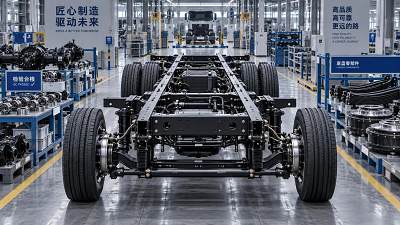
Axle configuration shapes traction, maneuverability, and payload flexibility.
Common choices include 4x2, 6x4, 6x6, and 8x4 layouts.
The right choice depends on terrain and duty cycle, not simply preference.
- 4x2: Better for lighter highway transport and fuel efficiency.
- 6x4: A common fit for long-haul, heavy cargo, and mixed road use.
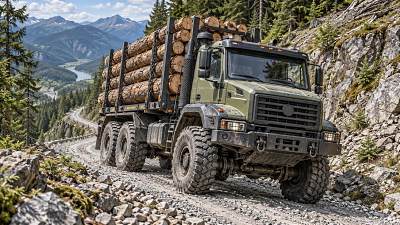
- 6x6: Suitable for off-road, remote projects, and severe weather conditions.
- 8x4: Often used in construction and heavy payload applications.
For heavy duty trucks for sale in Canada, traction support systems also matter.
Ask about differential locks, suspension design, tire compatibility, and ground clearance.
These details have a direct effect on winter performance and jobsite access.
Transmission, Fuel Efficiency, and Total Operating Cost
Purchase price is only one part of the decision.
For most fleets, operating cost will shape the real return over time.
This is why transmission setup and fuel economy deserve close attention.
Automated manual transmissions are widely used because they balance driver comfort and efficiency.
Manual options may still fit specialized operations or experienced owner-operators.
When assessing heavy duty trucks for sale in Canada, compare these cost drivers:
- Fuel consumption under loaded conditions
- Engine idle management features
- Transmission service intervals
- Availability of replacement parts
- Expected downtime during repairs
- Warranty coverage on major powertrain components
A cheaper truck can become the more expensive one if fuel burn and service downtime are poorly controlled.
Cab Design, Safety, and Driver Retention Matter More Than Before
From recent market shifts, a clearer signal is the rising value of driver usability.
Even in B2B sourcing, cab design now affects recruitment, retention, and fatigue control.
That means heavy duty trucks for sale in Canada should be reviewed beyond engine and payload specs.
Look for visibility, insulation, seat ergonomics, sleeper configuration, heating performance, and control layout.
Safety technology is equally important.
- Electronic stability control
- Collision mitigation systems
- Lane departure alerts
- Brake performance under full load
- Cold-weather visibility support
In actual operations, these features protect uptime as much as they protect drivers.
Supplier Support, Parts Access, and Compliance Should Not Be an Afterthought
A truck specification is only part of the buying decision.
The supplier behind it can change the outcome significantly.
For heavy duty trucks for sale in Canada, strong after-sales support often separates a smooth rollout from a costly disruption.
Review the supplier on several practical points:
- Can they provide documentation for Canadian compliance requirements?
- Do they maintain parts channels across your service region?
- How fast can they support warranty claims and technical issues?
- Do they understand application-specific customization?
- Can they provide reliable lead times for repeat orders?
This is where global sourcing platforms add value.
A professional industry platform can help compare manufacturers, verify supply capabilities, and shorten the path from inquiry to qualified supplier selection.
A Practical Checklist Before You Request Final Quotations
Before moving to final negotiation, use a structured comparison sheet.
It keeps the decision grounded in measurable value.
- Confirm payload, axle ratings, and body compatibility.
- Match horsepower and torque to the actual route profile.
- Check drivetrain layout for climate and terrain.
- Estimate fuel cost over annual mileage, not per trip.
- Review emissions and cold-start reliability data.
- Score supplier responsiveness and parts access.
- Verify warranty terms, service network, and delivery timing.
When comparing heavy duty trucks for sale in Canada, the best deal is rarely the lowest bid.
The stronger decision is the one that balances compliance, uptime, cost control, and application fit.
That is especially true when sourcing across multiple brands or international suppliers.
A reliable digital marketplace can make that work easier.
By bringing together truck manufacturers, suppliers, product categories, and industry insights, it supports faster and better-informed evaluation.
For buyers navigating heavy duty trucks for sale in Canada, that kind of visibility is no longer optional.
It is a practical advantage when the goal is long-term performance, dependable supply, and smarter procurement outcomes.
Trending News
- When does heavy equipment transport require a lowboy trailer?
- When does a light commercial vehicle for urban delivery save fleet costs?
- How to choose an off road truck for steep and unstable job sites
- How to match crane truck lifting capacity to your jobsite loads
- What drives logging truck cost beyond the base purchase price?
Tag
Recommended News
 Buying GuideWhen does heavy equipment transport require a lowboy trailer?Does your heavy equipment need a lowboy trailer? Discover how loaded height, weight distribution, loading access, and route limits determine the right choice for safe transport.
 Buying GuideHow to choose an off road truck for steep and unstable job sitesChoose the right off road truck for steep, unstable job sites. Compare traction, braking, stability, clearance, payload, and route-test essentials.
 Buying GuideHow to match crane truck lifting capacity to your jobsite loadsCrane truck capacity planning made clear: calculate gross load, radius, rigging, outriggers, and ground conditions to select safer, job-ready lifting equipment.
 Buying GuideHow to match lowbed trailer deck height to your hauling equipmentLowbed trailer deck height guide: match equipment clearance, ramp geometry, axle loads, tractor fit, and route limits for safer, more efficient hauling.
 Buying GuideWhat to verify before choosing a delivery truck supplier for school transportationDelivery truck supplier for school transportation: verify route fit, payload, safety, compliance, service support, and total cost before choosing a reliable partner.
 Buying GuideWhat an excavator manufacturer catalog should show before you compare modelsExcavator manufacturer catalog guide: verify supplier identity, configurations, hydraulics, compliance, parts support, and delivery readiness before comparing models.
 Buying GuideWhat to check before appointing a bulldozer distributorBulldozer distributor selection guide: evaluate service, parts availability, warranty, pricing, compliance, and lifecycle value to reduce downtime and protect fleet investment.
 Buying GuideWhat to verify before choosing a truck cement mixer supplierTruck cement mixer supplier checklist: verify chassis fit, drum quality, hydraulics, compliance, spare parts, and after-sales support before you buy.
 Buying GuideHow to verify a truck spare parts supplier before placing a bulk orderTruck spare parts supplier verification made practical: learn how to check part specifications, factory control, test records, samples, pricing, and delivery capability before placing a bulk order.
 Buying GuideWhat size truck container is right for a typical freight load?Truck container sizing made simple: compare payload, volume, pallet layouts, route access, and loading needs to choose the most efficient freight solution.
 Buying GuideWhat drives semi trailer price differences between similar models?Semi trailer price differences come down to frame materials, axles, suspension, coating, and configuration. Compare specifications line by line to choose lasting value.
 Buying GuideHow to compare excavator manufacturer price lists before requesting quotesCompare an excavator manufacturer price list with confidence. Learn to normalize configurations, calculate landed costs, assess options and service, and create stronger RFQs.
 Buying GuideHow to choose a mixer truck drum capacity for your concrete pourMixer truck capacity guide: match drum size to pour rate, legal payload, site access, and delivery cycles for efficient, reliable concrete placement.
 Buying GuideHow to size a bulldozer for construction site grading workBulldozer for construction sizing guide: match weight, blade, traction, grade control, and transport needs to improve grading productivity and costs.
 Buying GuideHow to assess a truck cement manufacturer’s build quality before orderingTruck cement manufacturer build quality: assess tank steel, welding, chassis integration, pneumatic systems, factory QC, and inspection evidence before ordering.
 Buying GuideWhen does a truck trailer OEM make sense for private-label fleets?Truck trailer OEM programs help private-label fleets cut lifecycle costs, standardize operations, and improve uptime. Learn when customization delivers real commercial value.
 Buying GuideWhat to verify before choosing a water truck OEM for your fleetWater truck OEM selection guide: verify chassis compatibility, tank quality, pump performance, compliance, and service support to build a safer, more reliable fleet.
 Buying GuideHow to size a cab chassis truck for a fire department apparatusCab chassis truck for fire department sizing guide: balance GVWR, axle loads, wheelbase, water tank placement, and mission needs for safer apparatus design.
 Buying GuideWhat to verify before choosing a truck chassis supplierChoose the right truck chassis supplier with a practical checklist for application fit, axle ratings, body integration, quality control, delivery reliability, and after-sales support.
 Buying GuideHow to choose a logging truck for steep and rough forest roadsLogging truck selection for steep, rough forest roads: compare traction, braking, gearing, chassis strength, tires, and supplier support for safer, more reliable hauling.
 Buying GuideHow to choose a flatbed trailer deck length for oversized loadsFlatbed trailer deck length guide for oversized loads: balance cargo support, axle weight, securement space, overhang, and route access for safer transport.
 Buying GuideHow to assess a truck chassis supplier for trailer manufacturingTruck chassis supplier for trailer manufacturing: learn how to assess technical fit, quality control, engineering support, and delivery reliability for smarter sourcing.
 Buying GuideIs the SHACMAN H3000 6×4 Cement Mixer suitable for large projects?SHACMAN H3000 6×4 Cement Mixer: assess payload, cycle time, traction, and service support to see if it can keep large concrete projects moving efficiently.
 Buying GuideHow to evaluate heavy duty trucks for sale in Russia before buyingHeavy duty trucks for sale in Russia: learn how to compare specifications, winter readiness, service support, supplier reliability, and total ownership costs before buying.
 Buying GuideWhat to verify before choosing a logging truck producerChoose a logging truck producer with confidence: verify chassis strength, load security, compliance, service support, and delivery control for demanding forestry routes.